
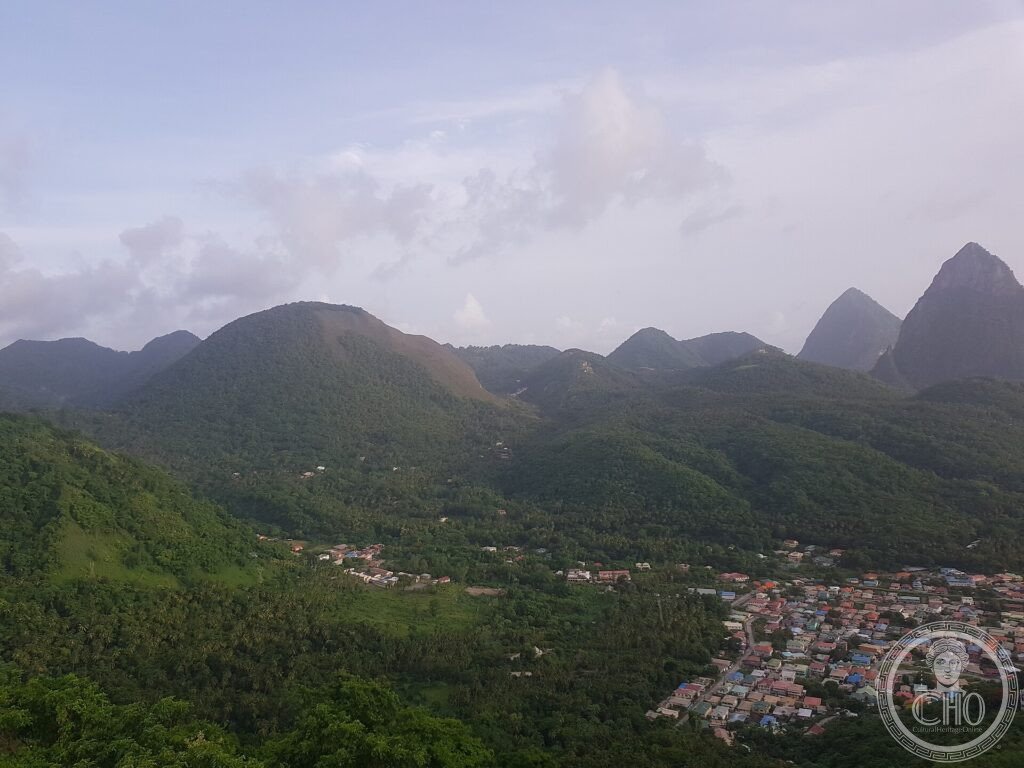
Sull’isola caraibica di Santa Lucia si innalzano due guglie verdi e affilate che precipitano direttamente nel mare: il Gros Piton e il Petit Piton, simbolo dell’isola. Sono antichi tappi di lava di vulcani, circondati da sorgenti termali fumanti, foreste e barriere coralline: un piccolo concentrato di forze vulcaniche.
At a glance
The Pitons Management Area, on the south-western coast of the Caribbean island of Saint Lucia, is centred on two dramatic volcanic spires: Gros Piton and Petit Piton, sharp forested cones rising straight from the sea to around 770 m. They are the eroded cores of ancient volcanoes, set within a still-active volcanic landscape of geothermal fields, hot springs and fumaroles, and fringed by coral reefs. This striking concentration of volcanic features was inscribed by UNESCO in 2004.
Key facts
- UNESCO: World Heritage since 2004 (Pitons Management Area)
- Twin spires: Gros Piton and Petit Piton rising from the sea
- Volcanic cores: the eroded plugs of ancient volcanoes
- Geothermal field: hot springs, fumaroles and a “drive-in volcano”
- Coral reefs: rich marine life along the coast
- Island symbol: the Pitons are the emblem of Saint Lucia
History
The Pitons are the lava cores of volcanoes that built this part of Saint Lucia, left standing as sheer spires after softer rock eroded away. They rise within the Soufrière volcanic centre, where the island’s volcanic life continues underground: hot springs, steaming fumaroles and sulphurous pools mark the geothermal field nearby, including a crater visitors can drive into.
Clothed in tropical forest and ringed by coral reefs, the Pitons and their surroundings form a small but intense showcase of volcanic and marine nature. Long the symbol of Saint Lucia, the Pitons Management Area was inscribed by UNESCO in 2004 for its scenery and geology.
What you see
The Pitons dominate the coast around the town of Soufrière: Gros Piton can be climbed on a steep guided hike, while the Sulphur Springs nearby offer the “drive-in volcano” with its steaming, bubbling geothermal field and hot mineral pools. Boats and beaches between the two peaks give the classic views, and the reefs draw snorkellers and divers.
The image of the two green spires soaring from the blue Caribbean is the emblem of Saint Lucia.
Practical information
- Area: around Soufrière; Gros Piton hike, Sulphur Springs, beaches
- Best time: the drier season (December–April)
- Time needed: a day or more
- Note: climb Gros Piton with a guide; it is strenuous
Getting there
The Pitons are on the south-western coast of Saint Lucia, around the town of Soufrière, reached by road from the capital Castries or by boat. GPS: 13.80° N, 61.07° W.
Nearby
- Soufrière — the town between the peaks
- Sulphur Springs — the “drive-in volcano” geothermal field
- Marigot Bay — a scenic harbour to the north
Sources
- UNESCO World Heritage Centre — “Pitons Management Area” (ref. 1161)
- Saint Lucia National Trust — official body
- Encyclopaedia Britannica — Saint Lucia
Find it on the map
See this place and what’s around it →📷 Become a Cultural Heritage Online photographer
Share your photos of places: they stay published under your name as the author. The more they're seen, the more you get noticed — and soon a contest will reward the most appreciated photos.
Log in or sign up free to add a photo