

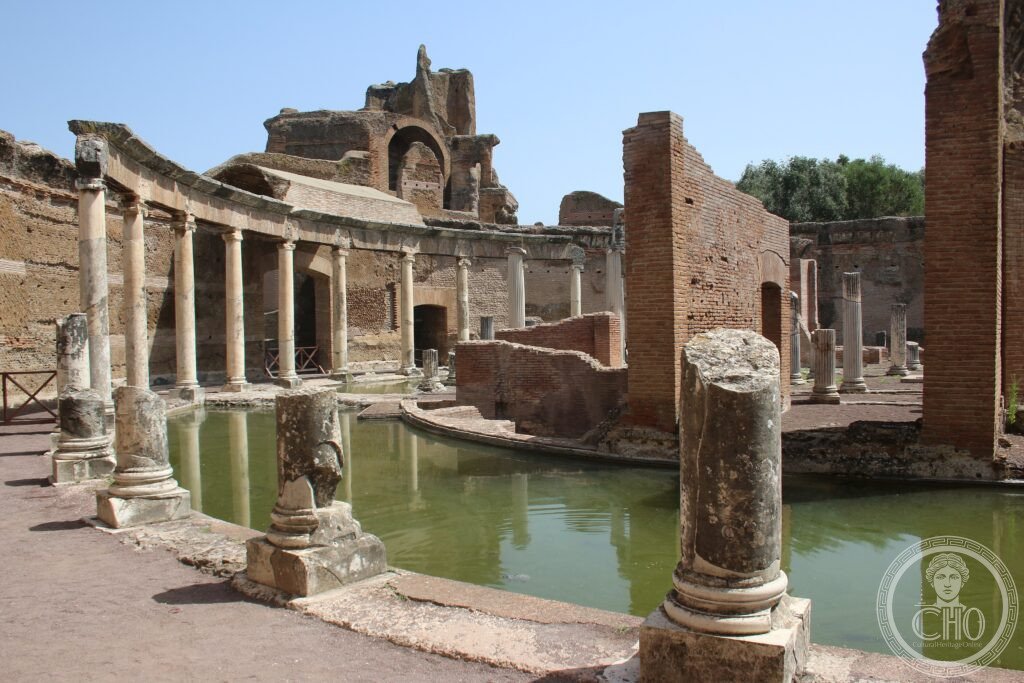
Spread across roughly 120 hectares outside Tivoli, Villa Adriana is the largest Roman imperial residence to survive from antiquity. Built by the emperor Hadrian between 118 and 134 CE, it recreates in miniature the architecture he admired on his travels, from Egyptian canals to Athenian porticoes, and its sculptures still fill museums across Europe.
At a glance
Villa Adriana lies a short distance from Tivoli, on the edge of the Roman countryside. Hadrian conceived it not as a single palace but as a sequence of buildings and gardens, each echoing a place or a building he had seen on his travels around the empire. More than thirty major structures survive across the site, along with extensive underground service corridors that once let slaves and staff move unseen beneath the main buildings.
The complex is inscribed on the UNESCO World Heritage List, entered in 1999 under reference 907.
Key facts
- Built by: the emperor Hadrian (76–138 CE, reigned 117–138 CE)
- Construction: 118–134 CE, in three main building phases
- Extent: around 120 hectares, with over thirty major structures identified
- Status: UNESCO World Heritage Site, inscribed 1999, reference 907
- Principal features: the Canopo, the Teatro Marittimo, the Pecile, the Piazza d’Oro and the Serapeo
History
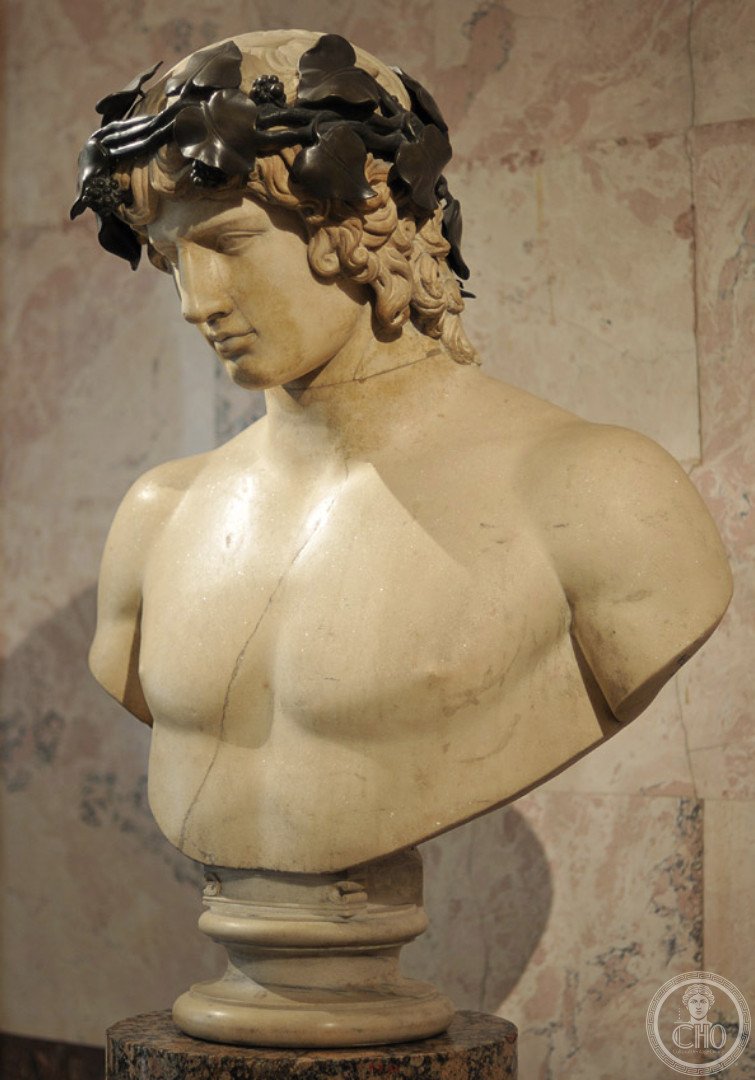
Hadrian is credited with designing Villa Adriana himself; the ancient biography known as the Scriptores Historiae Augustae records simply that at Tibur he built a villa wonderfully. Building proceeded in stages. The first years, from 118 CE, laid down the villa’s infrastructure: aqueducts were tapped to feed a system of cisterns, and cryptoporticoes were cut underground to allow servants to move between buildings out of sight. The Pecile and the Teatro Marittimo, the emperor’s private retreat, followed in the 120s. The Canopo, built after Hadrian’s journey to Egypt in 130 CE, is thought to commemorate his companion Antinous, who drowned in the Nile during that trip and was afterwards deified.
After Hadrian’s death in 138 CE the villa remained in use under his successors Antoninus Pius and Marcus Aurelius, then was gradually abandoned from the third century CE. Its most damaging looting came in the Renaissance, when Cardinal Ippolito II d’Este stripped the site of marble, floors, capitals and sculpture to build Villa d’Este nearby. The Italian state acquired the site from the Braschi family in 1870, and it was inscribed on the UNESCO World Heritage List in 1999.
What you see
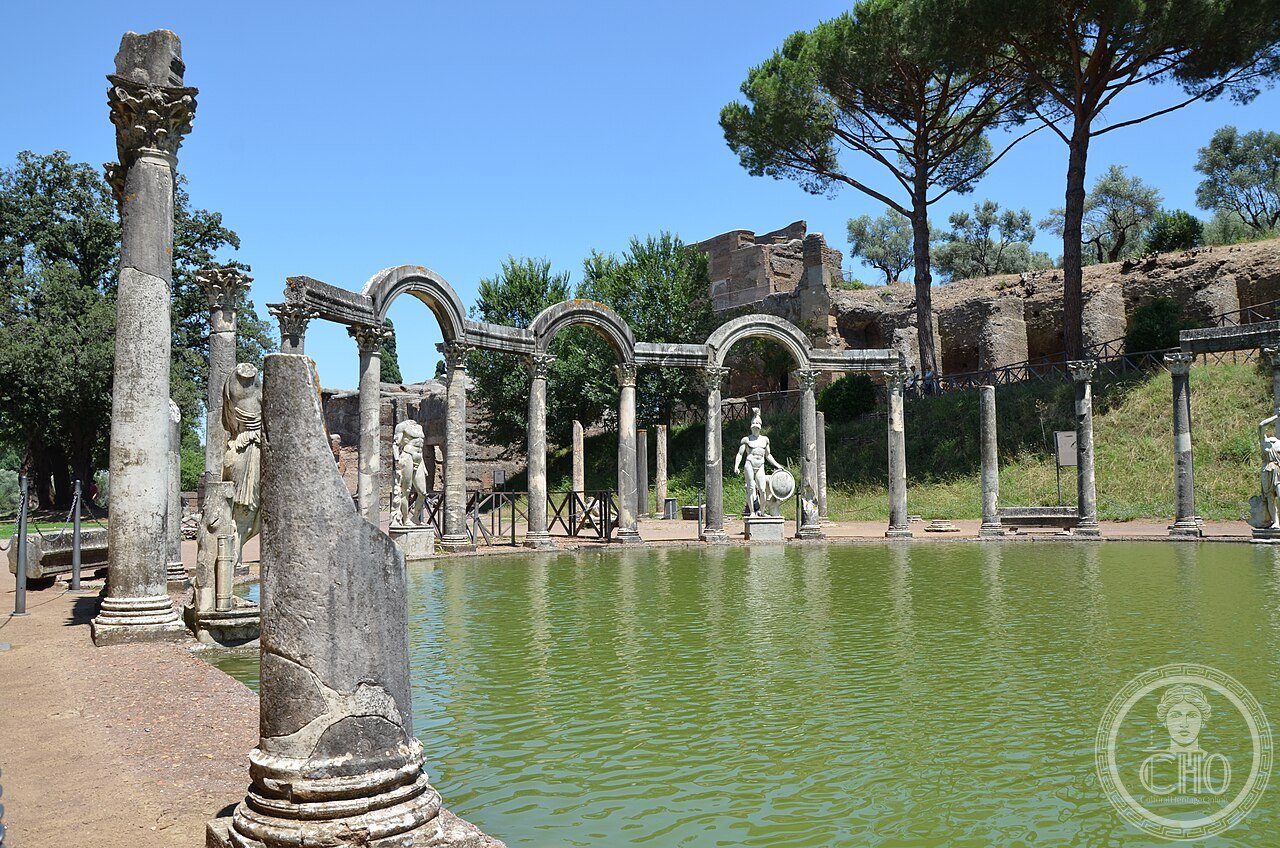
The Canopo is the villa’s best-known feature, a long rectangular pool modelled on the canal linking Alexandria to the Egyptian town of Canopus. A colonnade of Corinthian columns runs along one side, copies of Greek originals, interspersed with caryatid figures copying those of the Erechtheion on the Athenian Acropolis. At its head stands the Serapeo, a nymphaeum built to resemble an artificial grotto, with a coffered vault in stone and brick that once sheltered an open-air summer dining room.
The Teatro Marittimo, a circular island ringed by a canal and an Ionic colonnade, held Hadrian’s most private quarters: a small dining room, a bedroom, a bath suite with underfloor heating, and a compact library. Access was controlled by retractable wooden bridges that could be turned aside to cut the island off entirely.
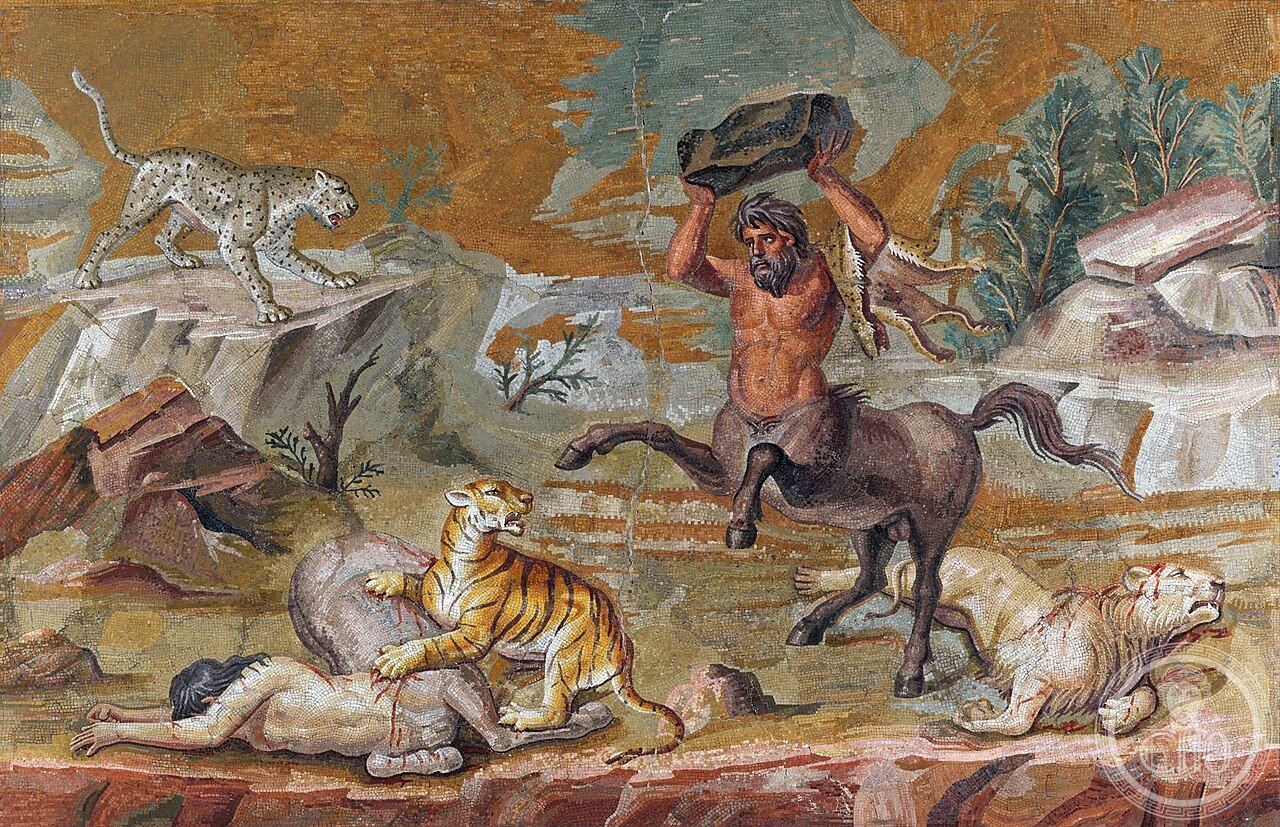
The Pecile reproduces the Stoa Poikile, the painted portico of ancient Athens, framing a long garden pond edged with olive trees. The Piazza d’Oro, the most elaborate of the villa’s gardens, centres on an ornate vestibule. Many of the original sculptures found across the site are now held in the Vatican Museums, the Museo Nazionale Romano and other collections including the British Museum, the Louvre and the Capitoline Museums; the villa’s own on-site museum, the Museo di Scultura Classica, displays material found at the site.
Practical information
- On-site museum: the Museo di Scultura Classica di Villa Adriana displays finds recovered from the villa.
- Admission and hours: these vary by season, so visitors should check the official channels of the Ministero della Cultura before travelling.
- Time needed: a thorough visit taking in the main monuments is a matter of hours rather than a quick stop.
Getting there
Villa Adriana lies a few kilometres from the centre of Tivoli, itself within reach of Rome. Local buses run from Tivoli to the site entrance on Via di Villa Adriana; current routes and timetables are best checked with the local transport operator before setting out.
Nearby
- Villa d’Este — about 6 km away in Tivoli, built by Cardinal Ippolito II d’Este partly with material quarried from Villa Adriana.
- Tivoli — the nearby town, historic seat of the Este family and gateway to the villa.
- Rome — roughly 40 km distant, the imperial capital Hadrian ruled from and periodically left for Tivoli.
Sources
- UNESCO
- Ministero della Cultura
- Scriptores Historiae Augustae, Vita Hadriani
Gallery
Find it on the map
See this place and what’s around it →📷 Become a Cultural Heritage Online photographer
Share your photos of places: they stay published under your name as the author. The more they're seen, the more you get noticed — and soon a contest will reward the most appreciated photos.
Log in or sign up free to add a photo