
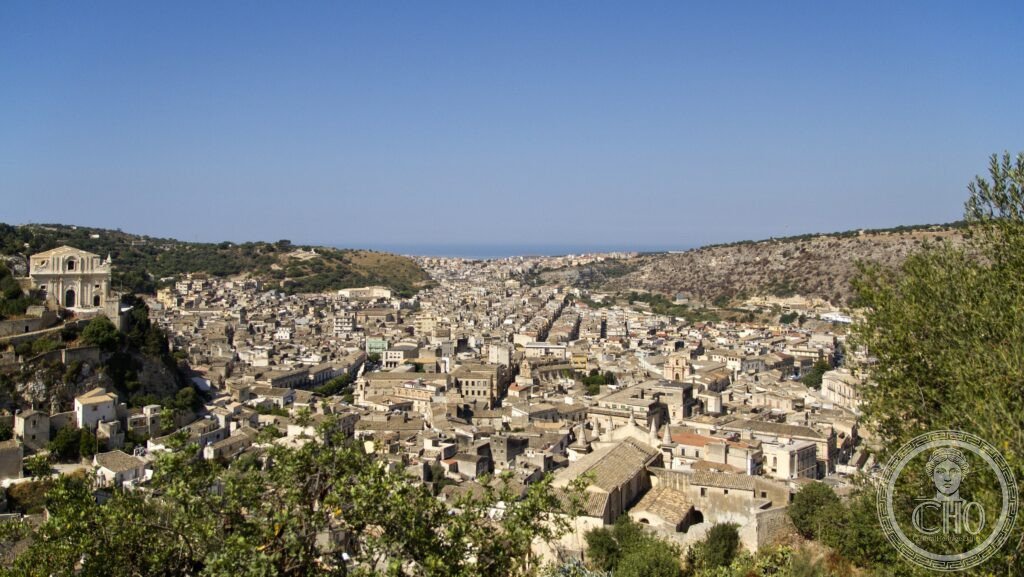
Rebuilt on a straight-street grid after the 1693 earthquake destroyed the medieval hilltop town, Scicli preserves one of the most complete Baroque townscapes of the Val di Noto, and later became known as the fictional police headquarters in the Montalbano television series.
At a glance
Scicli sits in a valley framed by three limestone hills, San Matteo, Junchi and Croce, where the medieval town once stood before the earthquake of January 1693 forced its abandonment. The present centro storico occupies the flat valley floor between the hills, laid out on a regular grid under a Bourbon reconstruction plan, and is considered the most complete application of that post-earthquake urban model among the towns of the Val di Noto.
The Val di Noto Late Baroque Towns are inscribed as a UNESCO World Heritage Site, a serial listing covering eight municipalities: Caltagirone, Militello in Val di Catania, Catania, Modica, Noto, Palazzolo Acreide, Ragusa and Scicli. The inscription takes in the rebuilt Baroque urban fabric across all eight towns.
Key facts
- Location: Scicli, province of Ragusa, Sicily
- UNESCO status: part of the Late Baroque Towns of the Val di Noto, inscribed 2002, reference 1024
- Main axis: Via Francesco Mormino Penna, a 600-metre straight street laid out after 1693
- Key building: Palazzo Beneventano dell’Aquila, around 1770, with nine carved mascheroni above its window keystones
- Screen fame: the historic Municipio on Via Mormino Penna served as the fictional police station in the Inspector Montalbano television series
History
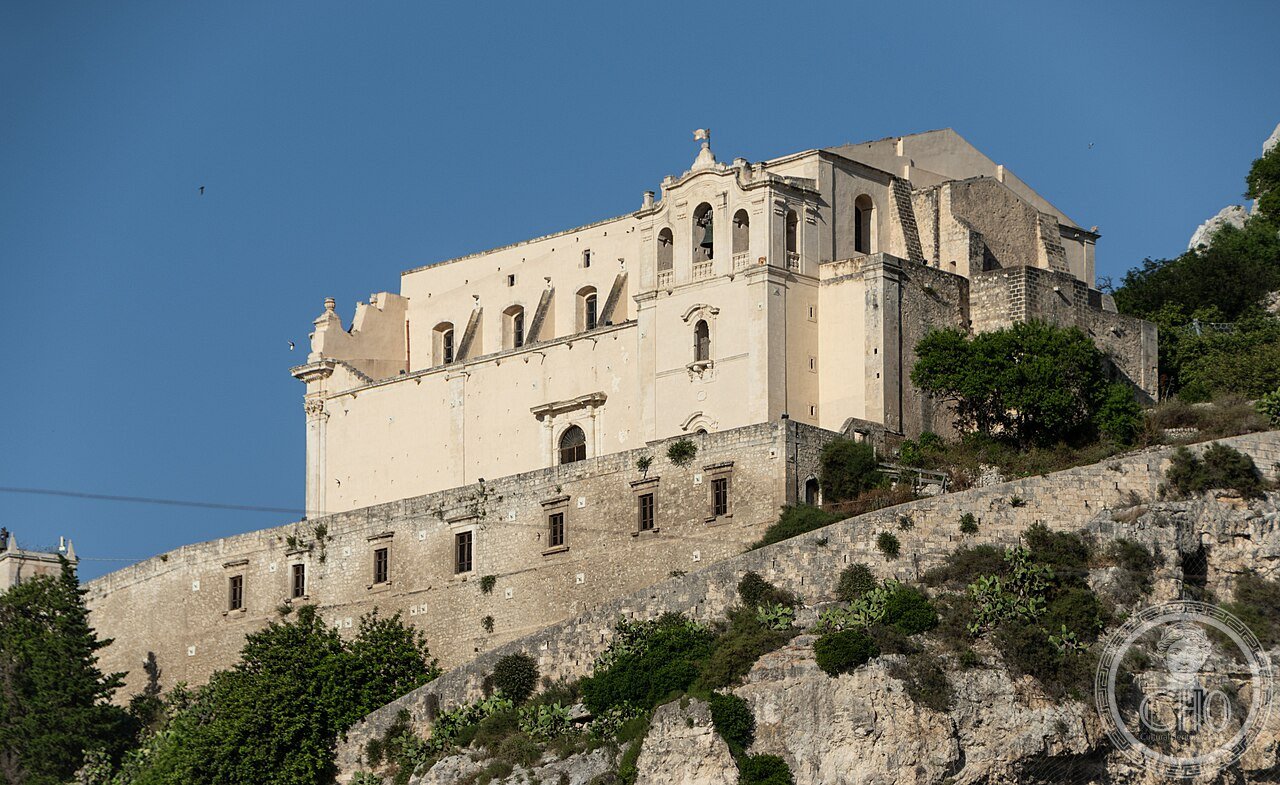
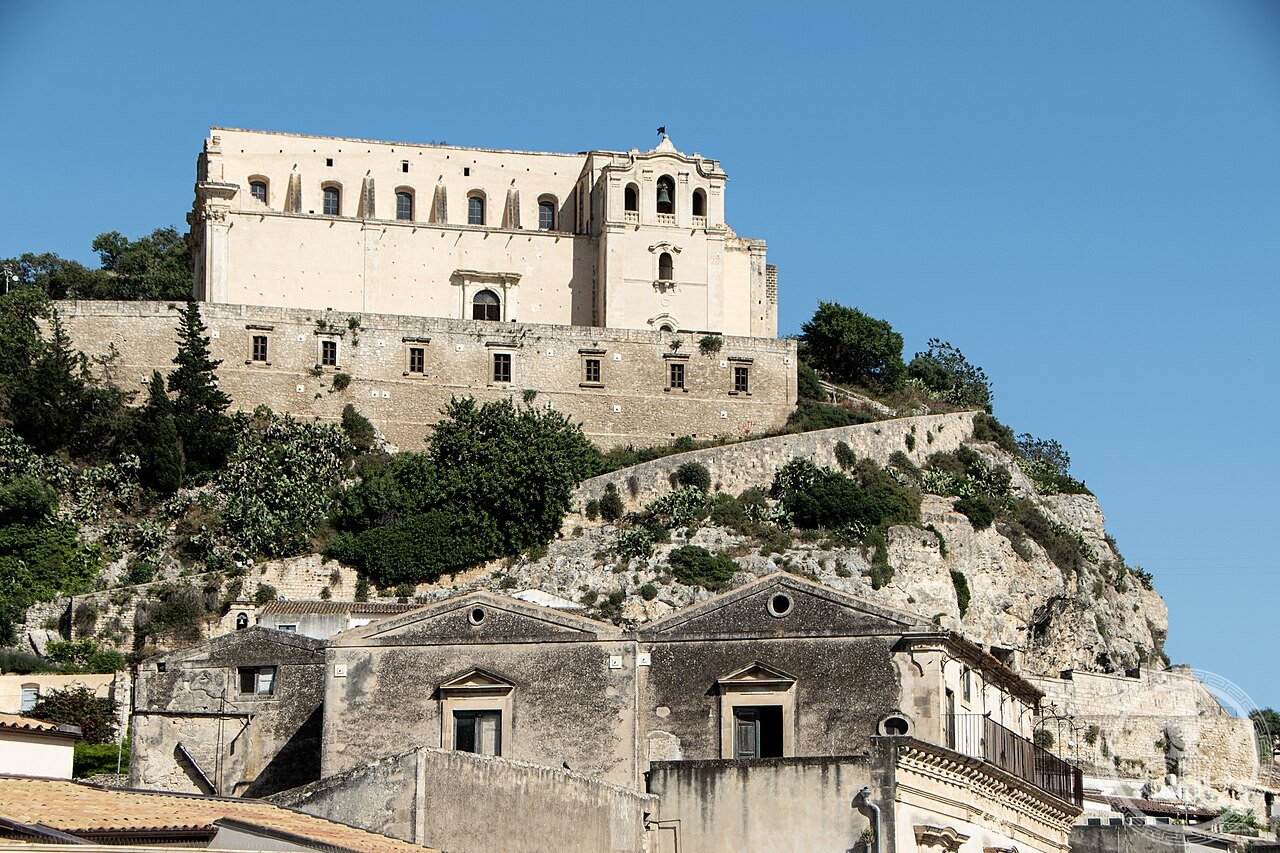
Before 1693 Scicli stood on the hills of San Matteo, Junchi and Croce, with archaeological evidence of settlement there going back to the Bronze Age. In 1093 Count Roger I of Sicily took the town from the Saracens and built a castle on San Matteo; the remains of three Norman churches still stand, partially ruined, on the summit.
On the night of 11 January 1693 an earthquake, estimated at magnitude 7.4, struck eastern Sicily and devastated the Val di Noto, killing around 11,000 people in the area and roughly 1,600 of Scicli’s 8,000 inhabitants. The buildings on Scicli’s hilltops collapsed, and a tsunami generated by the earthquake struck the nearby coast, flooding the area around what is now Marina di Scicli.
Within days the civic council met among the ruins and decided against rebuilding on the damaged hills, choosing instead the valley floor below, which offered stable ground and room to expand. Reconstruction, carried out between 1693 and 1750 under a regulation issued by the Bourbon viceroy Pedro Ramón de Rubì, imposed a regular grid of straight streets wide enough for carriages. The Val di Noto towns, including Scicli, were inscribed on the UNESCO World Heritage List in 2002.
What you see
The historic centre can be explored entirely on foot, with its principal sights clustered close to Via Mormino Penna. The former Municipio, now known for its role as the fictional Commissariato di Vigàta in the Montalbano series, has a Baroque façade dating from 1814 and an eighteenth-century courtyard visible through the main portal.
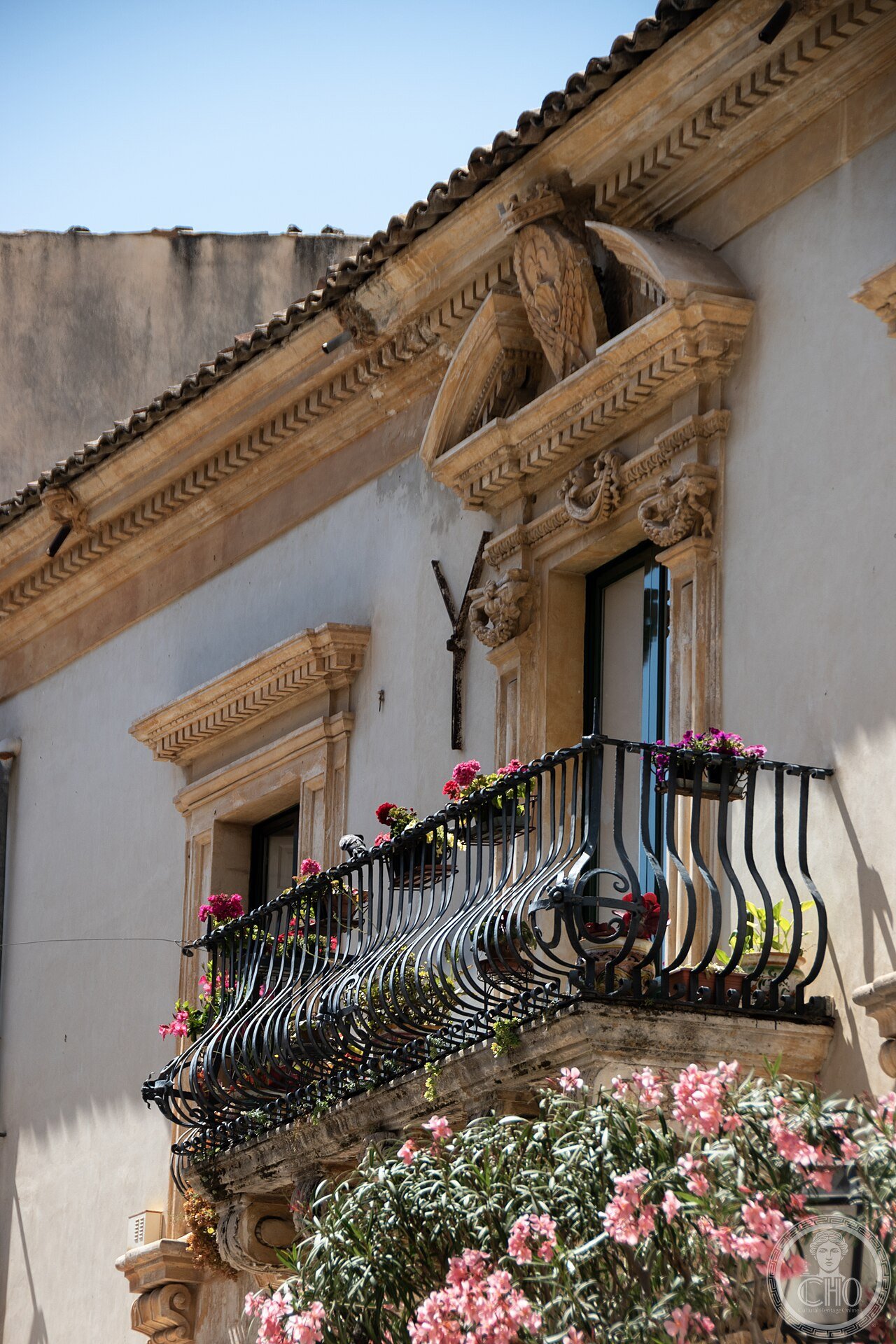
A short distance along the same street stands the Palazzo Beneventano dell’Aquila, built around 1770, whose nine mascheroni carved above the window keystones depict individual faces, from a Moor and a satyr to an old man and a young woman with an elaborate hairstyle, each rendered down to strands of hair. The church of San Giovanni Evangelista, also on Via Mormino Penna, shows the concave and convex bays typical of the curvilinear Baroque style associated with the Val di Noto.
A climb up to the Rocca di San Matteo, reached by a stair from Via San Matteo, gives the only vantage point over the entire post-earthquake street grid below, and leads to the ruined shells of the three Norman churches, open to the sky since 1693.
Practical information
- Getting around: the centro storico is best explored on foot; sites of interest lie within a short walk of Via Mormino Penna
- Regional itinerary: Scicli is often visited together with Ragusa Ibla and Modica; a car is generally more practical than local bus services for combining the three towns in a day
- Interior access: some historic buildings, including the former Municipio, have limited opening times for interior visits; check locally before planning a visit
Getting there
Scicli lies in the province of Ragusa in south-eastern Sicily, close to Modica and Ragusa Ibla. It is most easily reached by road, and is commonly combined with visits to the neighbouring Val di Noto towns.
Nearby
- Ragusa Ibla — a short drive away, another of the eight Val di Noto Baroque towns
- Modica — nearby, also part of the Val di Noto UNESCO listing and linked to the Montalbano filming locations
- Punta Secca — the coastal village used as Montalbano’s fictional home, Marinella
- Marina di Scicli — the coastal area below the town, affected by the 1693 tsunami
Sources
- UNESCO
- Archivio di Stato di Ragusa
- RAI Uno
Gallery
Find it on the map
See this place and what’s around it →Historical events at this place (2)
📷 Become a Cultural Heritage Online photographer
Share your photos of places: they stay published under your name as the author. The more they're seen, the more you get noticed — and soon a contest will reward the most appreciated photos.
Log in or sign up free to add a photo