

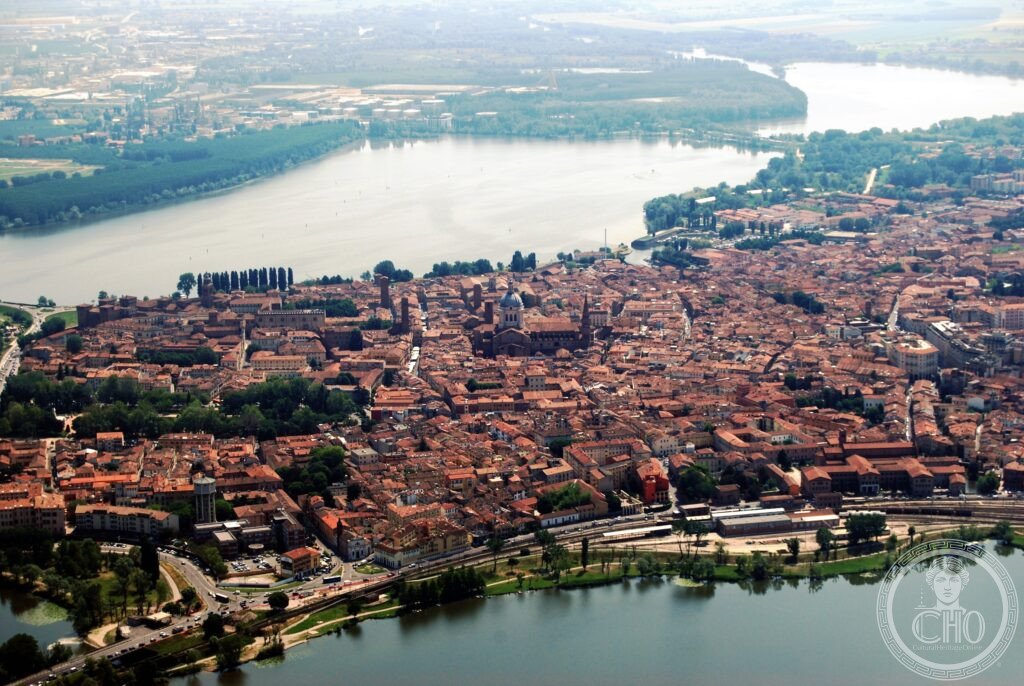
Mantua’s old town sits almost entirely surrounded by three lakes formed from the river Mincio, and holds two turning points in Western art: Mantegna’s illusionistic Camera degli Sposi and Giulio Romano’s Sala dei Giganti at the Palazzo Te.
At a glance
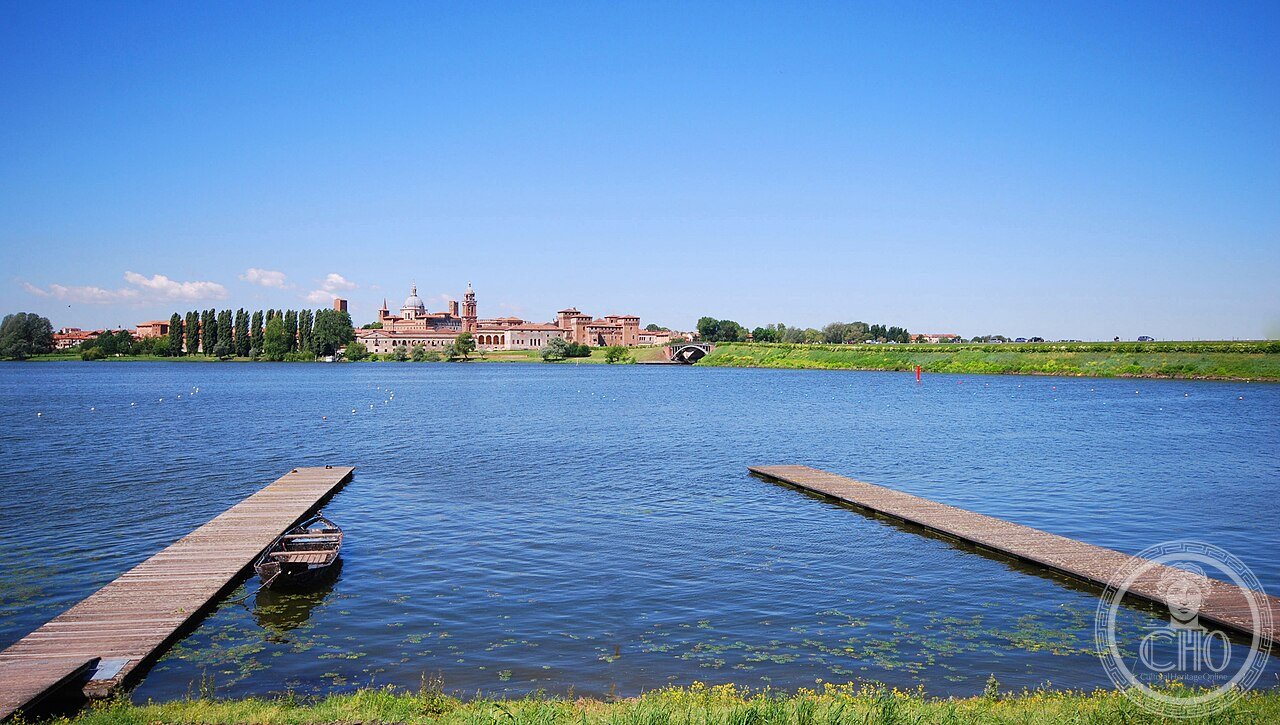
Mantua’s historic centre occupies a peninsula shaped by the Lago Superiore, Lago di Mezzo and Lago Inferiore, artificial lakes formed by damming the Mincio. The Palazzo Ducale, seat of the Gonzaga signoria, stands in the north-eastern quarter facing the Lago di Mezzo, while the Palazzo Te, Federico II Gonzaga’s summer villa, occupies an island to the south-west. The Basilica di Sant’Andrea, with its Alberti façade of 1472 and octagonal dome added by Filippo Juvara in 1732, anchors the centre.
Mantua and nearby Sabbioneta were jointly inscribed on the UNESCO World Heritage List in 2008 as a single serial site. Sabbioneta, about 30 kilometres to the south-west, was founded as a planned Renaissance city by Vespasiano Gonzaga Colonna and retains the Teatro all’Antica of 1588–90 by Vincenzo Scamozzi, the second purpose-built theatre in Italy after Palladio and Scamozzi’s Teatro Olimpico in Vicenza.
Key facts
- Historic centre: a peninsula almost fully enclosed by three lakes formed from the river Mincio.
- Camera degli Sposi: painted by Andrea Mantegna around 1465–74 for Ludovico II Gonzaga, with an illusionistic oculus regarded as the first systematic Western ceiling of its kind.
- Palazzo Te: built 1525–35 by Giulio Romano for Federico II Gonzaga, containing the Sala dei Giganti, a room frescoed continuously across walls, ceiling and floor.
- Basilica di Sant’Andrea: façade by Alberti, 1472, with a dome by Filippo Juvara added in 1732.
- UNESCO status: inscribed in 2008 as part of the joint listing ‘Mantua and Sabbioneta’, reference 1220.
History
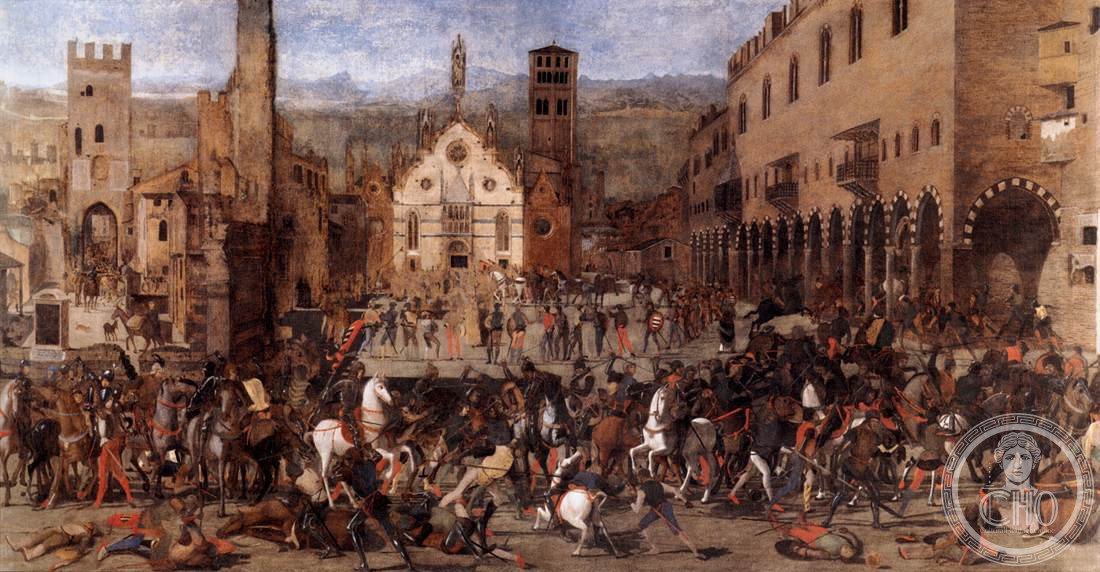
Mantua’s civic identity has long been tied to the poet Virgil, born in a village near the city, and the town has used him as an emblem since the Middle Ages, with a piazza, a fountain and a museum bearing his name. In 1328 Luigi I Gonzaga overthrew the ruling Bonacolsi family in a battle fought in what is now Piazza Sordello, an episode later recorded in a fresco by Domenico Morone inside the Palazzo Ducale. The Gonzaga then ruled Mantua without interruption until 1707.
Gonzaga patronage brought Andrea Mantegna to the court as official painter from 1460, producing the Camera degli Sposi and later the nine canvases of the Triumph of Caesar, which passed to Charles I of England in 1628 and remain in the Royal Collection at Hampton Court. Giulio Romano, a pupil of Raphael who had left Rome after a scandal over illustrations for Pietro Aretino’s erotic sonnets, arrived in Mantua in 1524 and built the Palazzo Te for Federico II Gonzaga between 1525 and 1535, later adding to the Palazzo Ducale. Claudio Monteverdi served as court musician from 1590 to 1612, composing L’Orfeo, first performed at the Gonzaga court in 1607 and now considered the earliest opera still regularly performed.
In 1630 Habsburg forces sacked Mantua during the War of the Mantuan Succession, an event described as the most severe assault on an Italian city since the Sack of Rome in 1527. The Gonzaga art collection, one of the most significant in seventeenth-century Italy, had already been sold to Charles I of England in 1627–28, shortly before the sack. The city’s historic centre, together with Sabbioneta, was inscribed on the UNESCO World Heritage List in 2008.
What you see
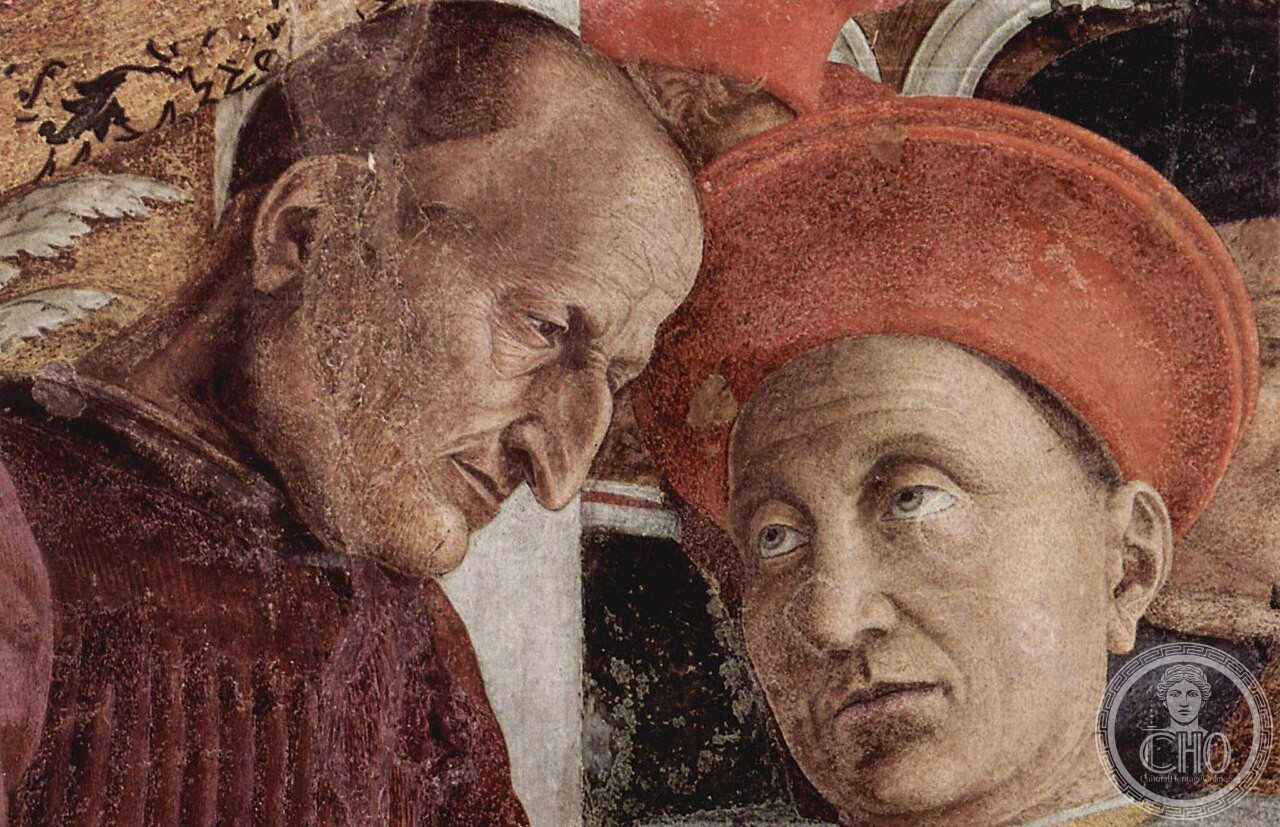
The Palazzo Ducale complex includes the Camera degli Sposi, painted by Mantegna between around 1465 and 1474 inside the Castello San Giorgio. Its walls show Ludovico II Gonzaga with his court, including his wife Barbara of Brandenburg and identifiable courtiers, and a scene of the Gonzaga welcoming a visiting dignitary. Above, the painted oculus opens onto a sky where court ladies, putti and a peacock, symbol of the goddess Juno and the Gonzaga dynasty, look down over a painted balustrade, blurring the line between the real room and the painted space above.
At the Palazzo Te, the exterior itself carries a Mannerist message: triglyph blocks appear to have slipped from the frieze, a deliberate break with classical convention signalling the villa’s playful, informal character. Inside, the Sala dei Giganti covers every surface, floor, walls and ceiling, with the continuous scene of the Giants being crushed by collapsing masonry as the Olympian gods hurl thunderbolts from above; the room’s curved vault produces a marked acoustic echo, reinforcing the effect for anyone standing inside it.
The Basilica di Sant’Andrea presents Alberti’s fifteenth-century façade beneath Juvara’s later dome, and the wider centre also includes the Appartamento dei Nani in the Palazzo Ducale, a suite of rooms built at reduced scale for the court’s dwarfs.
Practical information
- Camera degli Sposi: visits are limited to small groups on timed slots and advance booking is strongly recommended through the official Mantova Cultura channel.
- Palazzo Ducale ticket: covers the Camera degli Sposi and the Appartamento Ducale; check current prices and hours on the official site before visiting.
- Sabbioneta: reachable as a half-day addition from Mantua, roughly 30 kilometres to the south-west, to see the Teatro all’Antica.
Getting there
Mantua’s historic centre is compact and best explored on foot, with the Palazzo Ducale standing on Piazza Sordello and the Palazzo Te a short distance to the south-west across the Mincio. Sabbioneta lies further out and is normally reached by car or local bus.
Nearby
- Sabbioneta — about 30 km south-west, the planned Renaissance city of Vespasiano Gonzaga Colonna, part of the same UNESCO listing.
- Basilica di Sant’Andrea — in the historic centre, Alberti’s 1472 façade with Juvara’s later dome.
- Palazzo Te — south-west of the centre on the Isola del Te, Giulio Romano’s summer villa for Federico II Gonzaga.
Sources
- UNESCO
- Royal Collection (Hampton Court)
Gallery
Find it on the map
See this place and what’s around it →📷 Become a Cultural Heritage Online photographer
Share your photos of places: they stay published under your name as the author. The more they're seen, the more you get noticed — and soon a contest will reward the most appreciated photos.
Log in or sign up free to add a photo