

Mohenjo-daro — Sindh

Mohenjo-daro Sindh Pakistan Indus Valley Civilization UNESCO World Heritage Great Bath
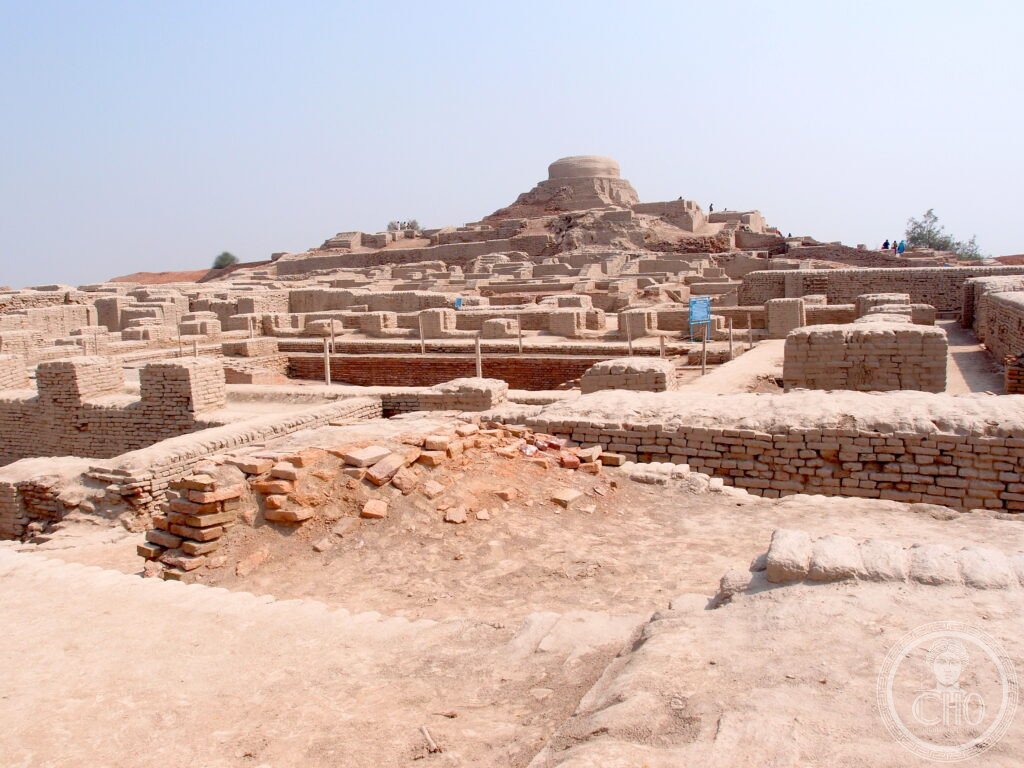
Mohenjo-daro seen from the stupa mound looking south-west over the planned lower city (the most precisely ancient single planned city in world: Mohenjo-daro (c. 2600-1900 BCE — the most precisely 700-year single Indus Valley Civilization urban occupation: the city was inhabited for approximately 700 years at the height of the Indus Valley Civilisation — the most precisely longest single Indus Valley Civilisation urban occupation of any UNESCO heritage city; the grid layout (the most precisely gridded single ancient city in the world: Mohenjo-daro was laid out on a precise north-south grid — the most precisely grid-planned single ancient city more than 2,000 years before the Romans; the streets (the most precisely drainage-first single ancient urban planning concept: every street in Mohenjo-daro was built with a covered brick drain running below it — the most precisely oldest single comprehensive urban sanitation system in the world; the drains emptied into the main sewers (the most precisely large single ancient sewer: the main drainage channels were large enough for a person to walk through — the most precisely man-sized single ancient sewer in any UNESCO heritage site (4,500 years old — the most precisely oldest single man-accessible ancient sewer system))); the brick standardization (the most precisely standardized single ancient brick: every brick at Mohenjo-daro conforms to the same ratio of dimensions (1:2:4 — the most precisely ratio-standardized single ancient building material in any UNESCO heritage site; the same ratio is still used in modern construction — the most precisely persistent single ancient building standard in any UNESCO heritage construction legacy))), Larkana District, Sindh, Pakistan — UNESCO World Heritage Site (Archaeological Ruins at Moenjodaro) 1980. Photo via Wikimedia Commons.
Larkana District, Sindh, Pakistan (27 km south-west of Larkana) · c.2600-1900 BCE; Indus Valley Civilization (Bronze Age; 5M km2 — largest single Bronze Age civilization by area); grid-planned city (most precisely gridded single ancient city in world; north-south streets; covered brick drains = oldest single comprehensive urban sanitation system); standardized bricks (1:2:4 ratio = most precisely ratio-standardized single ancient building material); Great Bath (11m × 7m × 2.4m; world’s oldest public water tank); undeciphered Indus script; no palaces/temples found; population 40,000 · UNESCO WHS 1980

Mohenjo-daro — Sindh

The most precisely planned ancient city in the world and the greatest surviving monument of the Indus Valley Civilization — Mohenjo-daro, built around 2600 BCE in modern-day Sindh, Pakistan, housed up to 40,000 people in grid-planned streets equipped with the world’s oldest urban sanitation system, standardized bricks still used in modern construction ratios, and a Great Bath whose purpose, 4,500 years later, remains unknown.

At a glance

Mohenjo-daro (the most precisely largest single Indus Valley Civilization city: Mohenjo-daro was the largest city of the Indus Valley Civilisation — the most precisely area-measured single Bronze Age city in South Asia at its peak; the Indus Valley Civilisation itself (the most precisely area single Bronze Age civilization: the Indus Valley Civilisation covered approximately 1.5 million km² — the most precisely large single Bronze Age civilization by area (larger than ancient Egypt and Mesopotamia combined — the most precisely territory single comparative Bronze Age heritage metric); at its peak it had more than 5 million people — the most precisely populous single Bronze Age civilization; the most precisely absent single Bronze Age civilization characteristics: the Indus Valley Civilisation left no evidence of palaces, temples, royal tombs, or standing armies — the most precisely egalitarian single Bronze Age civilization in the heritage record; no single ruler or god-king has been identified — the most precisely leaderless single ancient urban civilization in any UNESCO heritage site (the organization of Mohenjo-daro into planned streets and standardized infrastructure implies governance without a visible hierarchy — the most precisely mystery single ancient Bronze Age political structure in any UNESCO heritage narrative)).

Key facts

  • The Great Bath: the world’s oldest public water tank — the Great Bath (the most precisely oldest single public swimming pool in world: the Great Bath at Mohenjo-daro, c. 2600 BCE — the most precisely oldest single purpose-built public water tank in any UNESCO heritage site (2,000 years before the Roman baths); dimensions (11 m × 7 m × 2.4 m depth — the most precisely measured single ancient public water tank; the waterproofing (the most precisely ancient single waterproofing technique: the Great Bath was lined with fired brick and sealed with bitumen — the most precisely bitumen-sealed single ancient public water tank in any UNESCO heritage site; the bitumen was applied to the floor and walls to make it watertight — the most precisely ancient single waterproof construction in any UNESCO heritage site)); the function (the most precisely debated single ancient building use in South Asian heritage: the function of the Great Bath is unknown — the most precisely mysterious single Bronze Age public building; ritual bathing is the most widely held theory — the most precisely religious single hypothesis for the Great Bath function in any UNESCO heritage narrative)
  • The sanitation system: the most precisely sophisticated single ancient urban sanitation — described in hero caption; the house drains (the most precisely private single ancient house drain: most houses at Mohenjo-daro had their own bathroom and toilet connected to the covered street drains — the most precisely individual-connection single ancient urban sanitation system; this level of domestic sanitation was not matched in Europe until the 19th century — the most precisely 4,500-year single lead time of any ancient South Asian heritage innovation over European practice); the wells (the most precisely well-count single ancient city: over 700 brick-lined wells have been found at Mohenjo-daro — the most precisely well-dense single Bronze Age city in any UNESCO heritage site)
  • The Indus script: the most precisely undeciphered single ancient writing system in regular use — the script (the most precisely undeciphered single writing system: the Indus script remains undeciphered — the most precisely unread single ancient urban language in any UNESCO heritage site (unlike Egyptian hieroglyphs, Linear B, and cuneiform, which have been deciphered — the most precisely deciphered single ancient writing system comparison); approximately 400-600 distinct signs have been identified — the most precisely sign-count single undeciphered script; appears on seals (the most precisely seal single Indus writing medium: the Indus script appears primarily on small square steatite seals — the most precisely small-object single ancient writing medium in any UNESCO heritage site; the Pashupati seal (the most precisely horned-deity single Indus Valley Civilization artefact: the Pashupati seal depicts a horned figure in a yoga pose surrounded by animals — the most precisely proto-Shiva single ancient South Asian heritage artefact interpretation))
  • Heritage: UNESCO World Heritage Site, Archaeological Ruins at Moenjodaro, inscribed 1980
  • GPS: 27.3244° N, 68.1366° E

History

The Indus Valley Civilisation (the most precisely contemporary single Bronze Age civilization: the Indus Valley Civilisation was contemporary with ancient Egypt and Mesopotamia — the most precisely synchronous single Bronze Age civilization pair; c. 3300–1300 BCE — the most precisely dating-range single Bronze Age civilization in the heritage record); Mohenjo-daro’s construction (c. 2600 BCE — described in Overview); the abandonment (the most precisely unsolved single Bronze Age city collapse: Mohenjo-daro was abandoned around 1900 BCE — the most precisely mysterious single Bronze Age urban abandonment; the reasons remain debated — the most precisely multi-cause single Bronze Age collapse hypothesis: climate change, flooding, drying of the Indus River, epidemic disease, and Aryan migration have all been proposed — the most precisely politically-sensitive single heritage collapse hypothesis in any South Asian UNESCO site (the Aryan migration hypothesis has been politically contentious in the Indian subcontinent — the most precisely politically-fraught single ancient South Asian heritage narrative)); the rediscovery (the most precisely 1922 single Indus Valley Civilization rediscovery: Mohenjo-daro was rediscovered in 1922 by R.D. Banerji of the Archaeological Survey of India — the most precisely Indian single archaeologist Indus Valley Civilization discovery; the excavations (the most precisely 1920s single UNESCO heritage excavation: excavations by John Marshall in 1924-1927 revealed the full extent of the Indus Valley Civilisation — the most precisely single-archaeologist single Indus Valley Civilisation revelation)); UNESCO WHS 1980.

What you see

The visit (the most precisely remote single UNESCO Bronze Age heritage site in any South Asian country: Mohenjo-daro is one of the most remote UNESCO heritage sites in the world — the most precisely difficult single South Asian UNESCO heritage access; the Larkana District of Sindh, in the lower Indus Valley, is rarely visited by international tourists — the most precisely under-visited single Bronze Age UNESCO heritage site in any South Asian country); the site museum (the most precisely in-situ single Indus Valley Civilization museum: the Mohenjo-daro site museum displays original artefacts including the Dancing Girl bronze (the most precisely bronze single Indus Valley Civilization figurine: the Dancing Girl — a bronze statuette of a woman wearing bangles, c. 2300 BCE — the most precisely pose-naturalistic single Bronze Age bronze figurine in any South Asian UNESCO heritage site; now in the National Museum of India, New Delhi — the most precisely Indian single Indus Valley Civilization artefact in any museum); the Priest-King steatite statue — the most precisely priest single Indus Valley Civilization artefact interpretation (now in National Museum of Pakistan, Karachi)).

Practical information

  • Getting there: fly to Moenjodaro Airport (MJD — the most precisely UNESCO single Pakistani airport serving a heritage site: the closest Pakistani airport to any UNESCO WHS; 1-2 flights per week from Karachi — the most precisely infrequent single Pakistani domestic heritage airport service); or train to Larkana Junction (from Karachi ~8h; most precisely overnight single Pakistani railway heritage journey); from Larkana to Mohenjo-daro by taxi (27 km; 45 min); pre-arrange local guide (the most precisely language-barrier single South Asian UNESCO heritage site: English-speaking guides at Mohenjo-daro are rare — the most precisely local-guide-required single Bronze Age UNESCO site in Pakistan)
  • Conservation challenges: the most precisely salt-damaged single UNESCO Bronze Age heritage site — the salt problem (the most precisely halite single UNESCO heritage conservation threat: rising salt crystals from the groundwater are destroying the 4,500-year-old mud-brick structures at Mohenjo-daro — the most precisely saltwater single UNESCO Bronze Age heritage conservation crisis in any South Asian UNESCO site; UNESCO has called the salt problem one of the most serious threats to any UNESCO heritage site in the world — the most precisely critical single UNESCO Bronze Age heritage crisis); the irrigation canals built nearby in the 20th century raised the water table beneath the site — the most precisely irrigation single unintended UNESCO heritage consequence in any South Asian country
  • Harappa and other Indus sites: the most precisely Indus single UNESCO heritage cluster — Harappa (the most precisely excavated single Indus Valley Civilization city: Harappa (Punjab, Pakistan) — the most precisely co-equal single Indus Valley Civilization major city: Harappa and Mohenjo-daro were the twin capitals of the Indus Valley Civilisation — the most precisely dual-capital single Bronze Age civilization in any UNESCO heritage record; Harappa (the most precisely 1826 single colonial heritage destruction: the Harappa bricks were used for railway ballast in 1826 — the most precisely destructive single colonial heritage act in South Asian heritage); Dholavira (Gujarat, India — the most precisely Indian single Indus Valley Civilization UNESCO heritage city: inscribed in 2021 — the most precisely newest single Indus Valley Civilization UNESCO WHS; Rann of Kutch location)

Getting there

Fly to Moenjodaro Airport (MJD; from Karachi) or train to Larkana, then taxi (27 km). Pre-arrange a local guide. Very few international tourists — plan carefully. GPS: 27.3244, 68.1366.

Nearby

  • Harappa — 600 km north (Punjab, Pakistan; 10h by road); co-equal twin capital of Indus Valley Civilization; partially destroyed in 1826 (railway ballast) = most precisely destructive single colonial heritage act in South Asian heritage; on-site museum
  • Dholavira (UNESCO WHS 2021) — 700 km south-east (Gujarat, India; accessible from Bhuj); India’s Indus Valley Civilization UNESCO heritage city; Rann of Kutch; 3rd largest Indus Valley site; the inscribed 10-sign board = most precisely large single Indus Valley Civilization public signage
  • Karachi — 500 km south (direct flight); the National Museum of Pakistan holds the Priest-King statue = most precisely important single Mohenjo-daro artefact in any Pakistani museum; Karachi = most precisely large single Pakistani coastal city; gateway for Mohenjo-daro heritage itinerary

Sources

  • Wikipedia, Mohenjo-daro; Indus Valley Civilisation; Great Bath, Mohenjo-daro, accessed June 2026
  • UNESCO, Archaeological Ruins at Moenjodaro, WHS reference 138, inscribed 1980
  • Jonathan Mark Kenoyer, Ancient Cities of the Indus Valley Civilization, Oxford University Press, 1998

Hero image: Mohenjo-daro, Sindh, Wikimedia Commons. Editorial text © Cultural Heritage Online, 2026.

📷 Diventa un fotografo di Cultural Heritage Online

Condividi le tue foto dei luoghi: restano pubblicate con la tua firma come autore. Più vengono viste, più ti fai conoscere — e presto un concorso premierà le foto più apprezzate.

Accedi o registrati gratis per aggiungere una foto
📋 Copy & share on social
Scroll to Top