
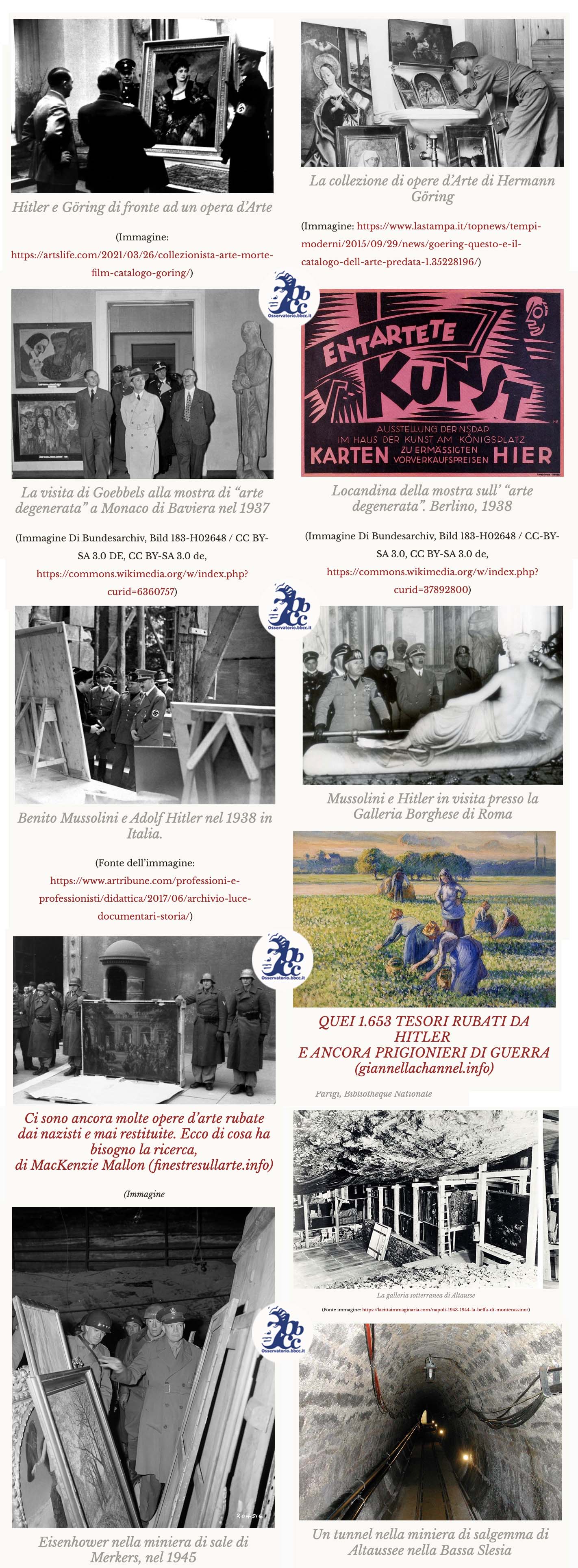
During the Nazi era, a comprehensive program of artistic control and cultural definition was implemented from the early years onward. In 1927, Alfred Rosenberg and Heinrich Himmler established a National Socialist society for German culture, seeking to counter contemporary art labeled as “degenerate art” and foreign “propaganda art.” In 1933, Joseph Goebbels created the Reich Chamber of Culture, placing the visual arts department under Adolf Zeiger from 1936 to 1943. This body aimed to prevent politically engaged artists from exhibiting work contrary to Nazi cultural principles, threatening severe penalties and exile for those deemed threats to the National Socialist state.
Cubism, Fauvism, and German Expressionism were marginalized under Hitler’s vision of art, which demanded adherence to Realism and Neoclassicism to glorify German tradition through monumental forms. During World War II, the Nazi regime confiscated approximately 5 million artworks from occupied nations, ostensibly to preserve them. Hermann Göring became a central figure in this systematic plunder, initiating the requisition of Polish cultural heritage in 1939 and acquiring works from the Louvre in 1940.
Propaganda and the “Degenerate Art” Campaign
In 1937, the Nazis organized an exhibition titled “Degenerate Art” in Munich, displaying works by artists including Paul Klee and Vincent van Gogh alongside sketches by psychiatric patients to discredit modernist expression. Simultaneously, the regime sought to sell or confiscate artworks not destined for destruction, creating an art market outside Germany. Hitler commissioned the Führermuseum in Linz, conceived to house ancient and Renaissance masterpieces according to his personal aesthetic vision. During the war, many stolen artworks were stored in salt mines to protect them from Allied bombing campaigns.
Recovery and Ongoing Losses
The Monuments Men and other Allied researchers, including Italian spy Rodolfo Siviero, successfully recovered numerous masterpieces from Nazi hiding places, including the Ghent Altarpiece and the Madonna of Bruges. However, many artworks stored in these depots remain unrecovered today, having disappeared during the final months of World War II.
Frequently asked questions
How many artworks did the Nazis confiscate during World War II?
The Nazi regime confiscated approximately 5 million artworks from occupied nations during World War II.
Who was Hermann Göring and what was his role in art looting?
Hermann Göring was a key figure in Nazi art plundering, initiating the requisition of Polish cultural heritage in 1939 and acquiring works from the Louvre in 1940.
Which famous artworks were recovered by the Monuments Men?
The Monuments Men and researcher Rodolfo Siviero successfully recovered masterpieces including the Ghent Altarpiece and the Madonna of Bruges from Nazi hiding places.


