
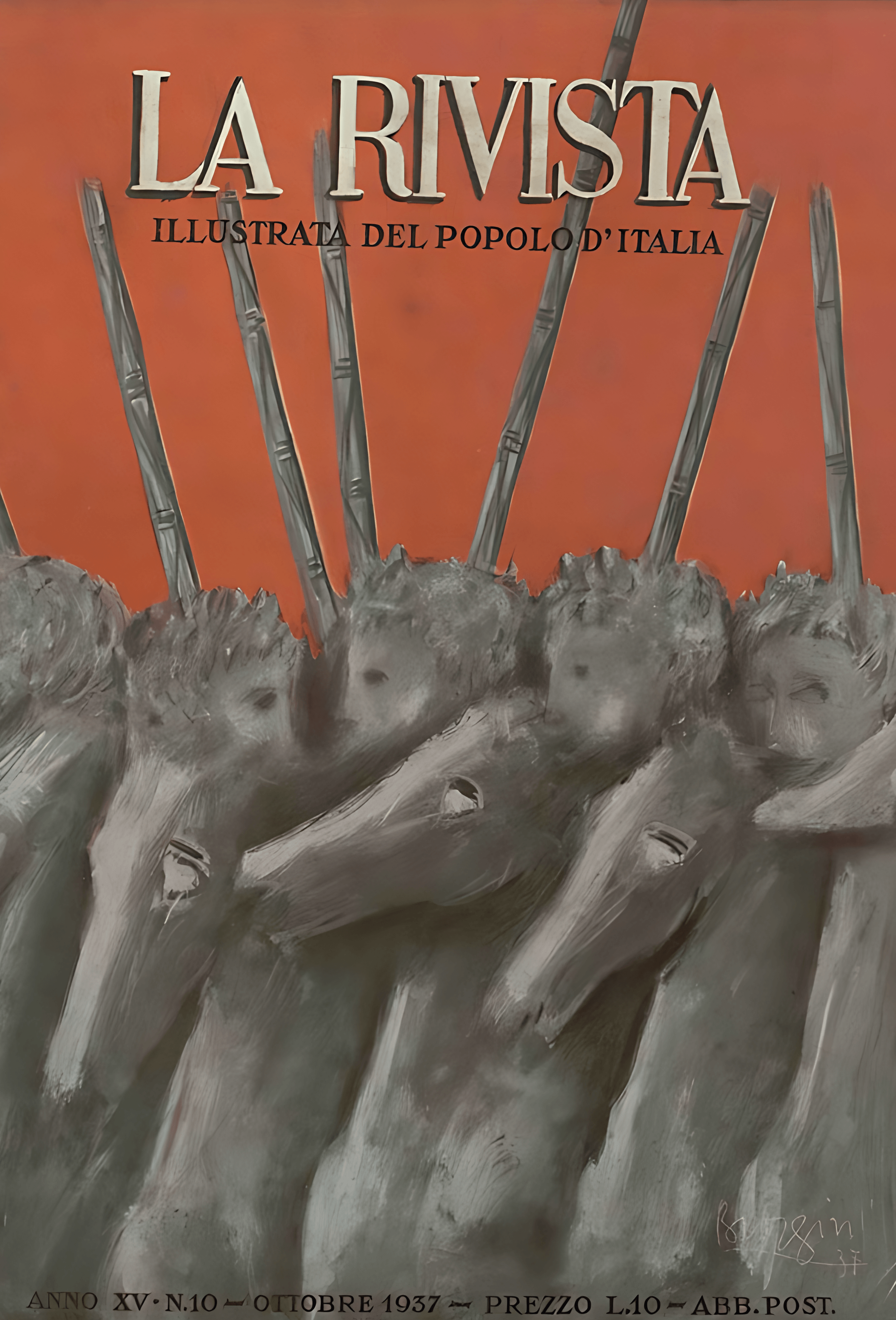
A magazine cover illustrated by Luigi Broggini in 1937. Broggini was an Italian sculptor and a prominent figure in the nation’s figurative arts during the interwar years and the Second World War era.
Broggini trained at the Accademia di Brera under Adolfo Wildt. During the Fascist period, he moved in liberal and cosmopolitan circles. He spent time in exile in Paris, where he studied the work of Degas rather than the avant-garde movements, and also lived in Switzerland for a period. His early sculptures, dating from 1928 onwards, marked a direction distinct from official and traditional approaches. He drew on French Impressionism while developing a new conception of the relationships between architecture and sculpture, employing plastic elements such as chiaroscuro and pictorial luminism. Expressionism also influenced his practice. Later, in 1952, he created the famous six-legged dog mascot for Agip, though the attribution remained unclear until after his death.
About Luigi Broggini
Born in Cittiglio on 28 January 1908 and died in Milan on 27 January 1983, Broggini was a sculptor who also published poetry collections. His work bridged modernist sensibilities with humanistic concerns, positioning him as a distinctive voice in twentieth-century Italian art.
Details
- Creator: Luigi Broggini
- Year: 1937
- Object type: Magazine cover illustration
- Movement: Italian figurative modernism, influenced by Impressionism and Expressionism
- Period: Interwar period
Frequently asked questions
Who was Luigi Broggini?
An Italian sculptor and artist born in Cittiglio in 1908, Broggini trained under Adolfo Wildt at the Accademia di Brera and became a prominent figure in Italian figurative arts during the interwar period and World War II era. He is also known for designing the six-legged dog logo for Agip in 1952.
What artistic influences shaped Broggini’s work?
Broggini drew inspiration from French Impressionism, particularly the work of Degas, as well as Expressionism. He developed a distinctive approach to the relationship between architecture and sculpture, employing techniques of chiaroscuro and pictorial luminism in his three-dimensional works.
Why did Broggini work in exile during the Fascist period?
Although Broggini moved in liberal and cosmopolitan circles during Fascism, he spent time in Paris and Switzerland. His artistic direction, marked by modernist sensibilities rather than official or traditional approaches, reflected his independent stance during this period.


