
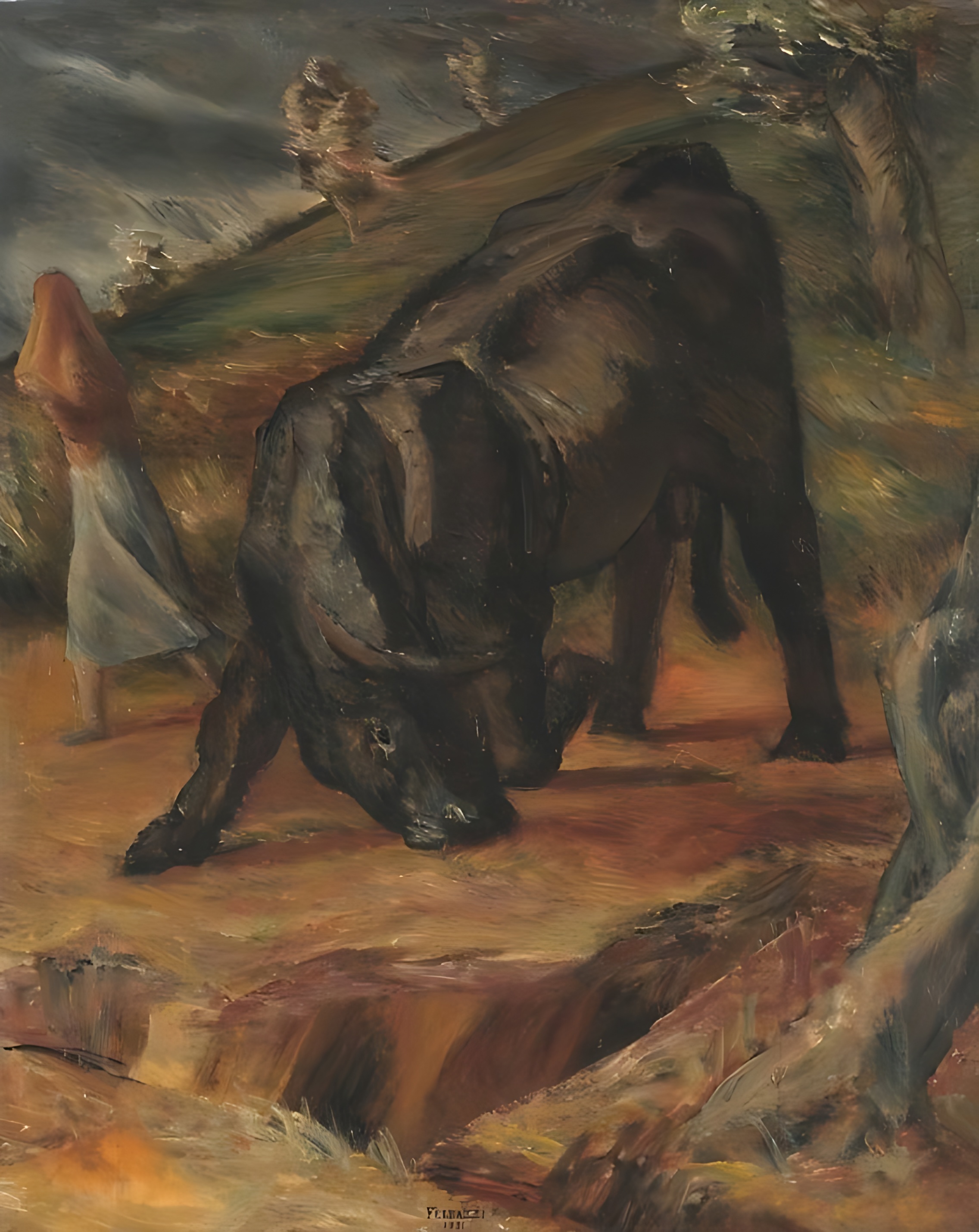
La tempesta is a painting by Ferruccio Ferrazzi, created in 1931. Ferrazzi (1891–1978) was an Italian painter and sculptor who served as a professor at the Accademia di Belle Arti in Rome, where he exerted significant influence on postwar Italian art.
The work dates from the mature period of Ferrazzi’s career, following decades of artistic experimentation that ranged from Futurist compositions to works informed by the Post-Impressionist method of Georges Seurat. By 1931, Ferrazzi had established himself as a central figure in Rome’s artistic community, having first exhibited publicly in 1907 and received national recognition through a state art pension in 1913. His studio on Via Ripetta became a focal point for artistic activity.
About Ferruccio Ferrazzi
Born in Rome as the son of sculptor Stanislao Ferrazzi, Ferruccio trained under Francesco Bergamini and studied at the Scuola Libera del Nudo and Accademia di Francia. His early work synthesized modern movements, bridging Futurism and Cézannian approaches before developing a distinctive mature style that anchored him within early twentieth-century European modernism.
Details
- Artist: Ferruccio Ferrazzi
- Year: 1931
- Medium: Painting
- Creator’s location: Rome
Explore more: 509 heritage places in Roma
Frequently asked questions
Who was Ferruccio Ferrazzi?
Ferruccio Ferrazzi (1891–1978) was a Roman painter and sculptor who studied under Francesco Bergamini and exhibited internationally from 1907 onward. He became a professor at Rome’s Accademia di Belle Arti and was influenced by Post-Impressionism, particularly the work of Georges Seurat.
When was La tempesta created?
La tempesta was painted in 1931, during the mature phase of Ferrazzi’s artistic career in Rome.
What artistic movements influenced Ferrazzi’s work?
Ferrazzi’s practice evolved through Futurism and Post-Impressionist approaches before developing his own modernist style, synthesizing influences ranging from Seurat’s method to Cézannian composition.


