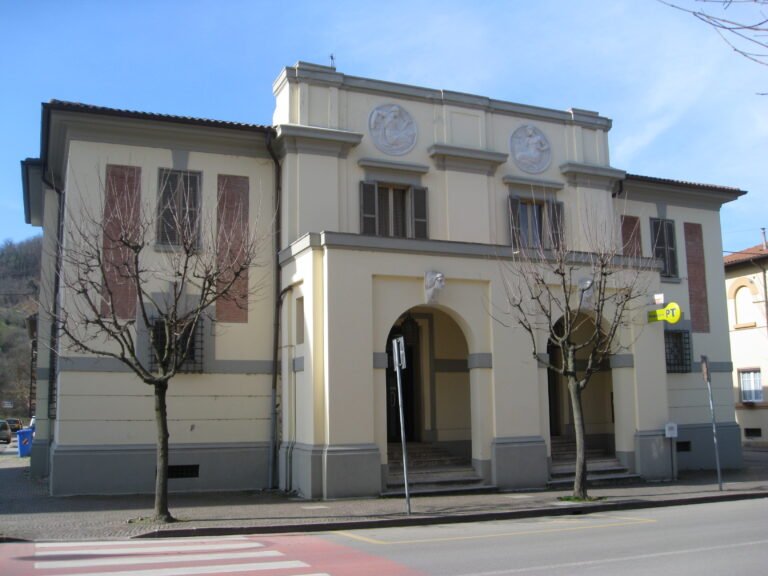
Relief sculptures ornament Palazzo della Libertà in Bergamo, a building constructed between 1937 and 1940 to a design by architect Alziro Bergonzo. Originally known as Casa Littoria, the structure was intended to serve as the local seat of the National Fascist Party.
The building replaced the former San Marco hospital on its site. Its design was selected through a public tender in November 1936, with urban planner Marcello Piacentini—who had devised Bergamo’s master plan in the 1920s—among the commission members. Bergonzo conceived the Casa Littoria as the conceptual completion of Piacentini’s Centro piacentiniano urban vision. The architect emphasized that the building, as a centre of provincial political and spiritual life, was to function as a monument and historical record rather than merely functional office space.
The palazzo opened on 28 October 1939, the anniversary of the March on Rome. The structure has been protected as a cultural monument since 2011 and is now known as Palazzo della Libertà.
About Alziro Bergonzo
Bergonzo was an architect active in Italy during the mid-twentieth century, working within the rational architectural vocabulary of his era.
Details
- Constructed 1937–1940
- Architect: Alziro Bergonzo
- Location: Bergamo, Lombardy, Italy
- Original function: Casa Littoria (National Fascist Party headquarters)
- Current name: Palazzo della Libertà
- Protected monument status: since 2011
Explore more: 13 heritage places in Bergamo
Frequently asked questions
Who designed this building?
Architect Alziro Bergonzo designed the palazzo. His project was selected through a public tender in November 1936.
When was it built and what was it originally used for?
The building was constructed between 1937 and 1940 and served as the local headquarters of the National Fascist Party under the name Casa Littoria. It has been called Palazzo della Libertà since 2011.
What happened to the building after the war?
The palazzo has survived and has been legally protected as a cultural monument since 2011, now serving civic functions under its current name.
Sources
- S1 — Ciucci, Giorgio. Gli architetti e il fascismo: architettura e città 1922-1944. Einaudi, 1989. ISBN 978-88-06-11656-9.
- S2 — Danesi, Silvia, and Luciano Patetta, eds. Il razionalismo e l'architettura in Italia durante il fascismo. Electa, 1976. ISBN 978-88-435-0394-0.
Spotted an error? Write to editorial@culturalheritageonline.com and we correct it the same day.