
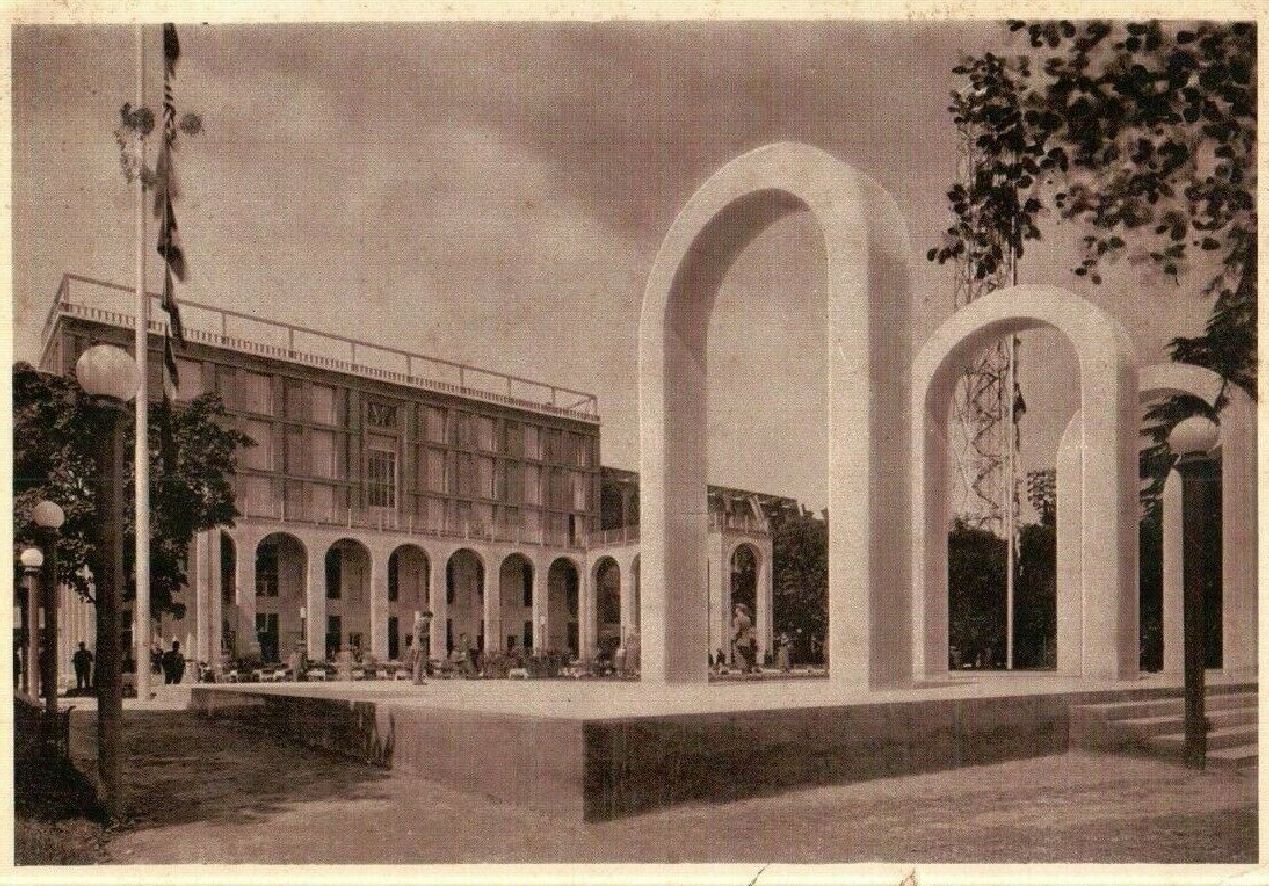
The Palazzo della Triennale in Milan is a building designed by architect Giovanni Muzio and constructed between 1931 and 1933.
Muzio (1893–1982) was a Milanese architect closely associated with the Novecento Italiano movement, a stripped-down neoclassicism that simplified and modernized classical decoration. After establishing his studio in Milan in 1920, Muzio became a central figure in the city’s architectural culture, collaborating with prominent figures including Gio Ponti and Mario Sironi on major exhibition buildings and pavilions throughout the late 1920s and 1930s. The Palazzo della Triennale represents his mature practice during this period of experimentation with modernized classical forms.
About Giovanni Muzio
Muzio was born and died in Milan. He studied in the city and served in the First World War before opening his practice in 1920. His 1922 residential block, the Ca’ Brutta on Via Moscova, became one of the best-known works of the Novecento movement, establishing his reputation for a distinctive style combining classical patterning with modern simplification.
Details
- Architect: Giovanni Muzio
- Year: 1931–1933
- Location: Milan, Lombardy
- Movement: Novecento Italiano
Explore more: 193 heritage places in Milano
Frequently asked questions
Who designed the Palazzo della Triennale?
The building was designed by Giovanni Muzio, a Milanese architect born in 1893 who was closely associated with the Novecento Italiano movement.
What architectural movement does the palazzo represent?
The building exemplifies Novecento Italiano, a movement characterized by stripped-down neoclassicism that simplified classical decoration for modern use.
When was the Palazzo della Triennale built?
Construction took place between 1931 and 1933.
Sources
- S1 — Gramigna, Giuliana, and Sergio Mazza. Milano. Un secolo di architettura milanese dal Cordusio alla Bicocca. Hoepli, 2001. ISBN 978-88-203-2913-6.
- S2 — Ciucci, Giorgio. Gli architetti e il fascismo: architettura e città 1922-1944. Einaudi, 2002. ISBN 978-88-06-16310-5.
Spotted an error? Write to editorial@culturalheritageonline.com and we correct it the same day.


