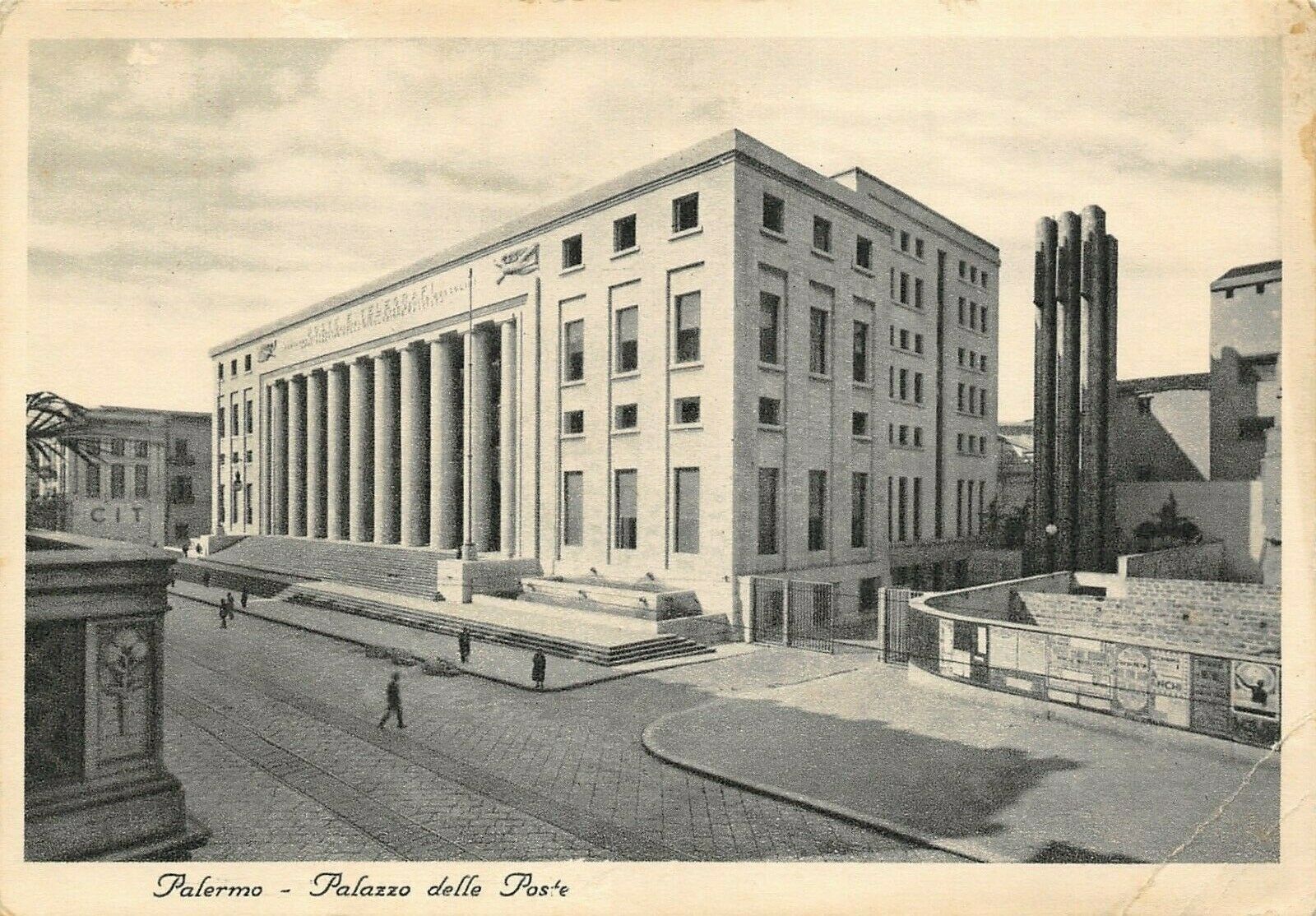
The Palazzo delle Poste in Palermo is a public post office building designed by architect Angiolo Mazzoni and completed in 1934.
Mazzoni (1894–1979) was a prolific Italian architect and engineer who rose to prominence as state architect during Italy’s interwar period. From 1924 onward, working first with the Ministry of Communications and subsequently as chief architect for the State Railways, he designed hundreds of public buildings, post offices, and train stations across the country. His work exemplified the modernist Rationalist idiom favored for institutional architecture of the era, combining functional planning with geometric clarity and contemporary materials.
The Palazzo delle Poste stands as part of Mazzoni’s extensive portfolio of communications infrastructure, reflecting the period’s investment in modern civic facilities. The building’s design demonstrates the architectural conventions of Italian Rationalism as applied to postal administration.
About Angiolo Mazzoni
Born in Bologna in 1894, Mazzoni trained at the Academy of Fine Arts there and studied briefly under Marcello Piacentini in 1920. He entered state service in 1924 and became a prominent figure in public architecture throughout the 1920s and 1930s, designing institutional buildings that shaped Italy’s modernist urban landscape during the interwar years.
Details
- Architect: Angiolo Mazzoni
- Year completed: 1934
- Location: Palermo, Sicily
- Building type: Post office (Palazzo delle Poste)
- Architectural movement: Italian Rationalism
Explore more: 67 heritage places in Palermo
Frequently asked questions
Who designed the Palazzo delle Poste in Palermo?
Angiolo Mazzoni, an Italian architect and engineer born in Bologna in 1894, designed the building and completed it in 1934.
What architectural style does the building represent?
The Palazzo delle Poste exemplifies Italian Rationalism, the modernist movement that dominated institutional architecture during Italy’s interwar period.
What was Mazzoni’s role in Italian architecture?
Mazzoni served as state architect and chief architect for the Ministry of Communications and State Railways from 1924 onward, designing hundreds of public buildings, post offices, and train stations throughout the 1920s and 1930s.
Sources
- S1 — Barbera, Paola. Architettura in Sicilia tra le due guerre. Sellerio, 2002. ISBN 978-88-389-1834-6.
- S2 — Ciucci, Giorgio. Gli architetti e il fascismo: architettura e città 1922-1944. Einaudi, 2002. ISBN 978-88-06-16310-5.
Spotted an error? Write to editorial@culturalheritageonline.com and we correct it the same day.