
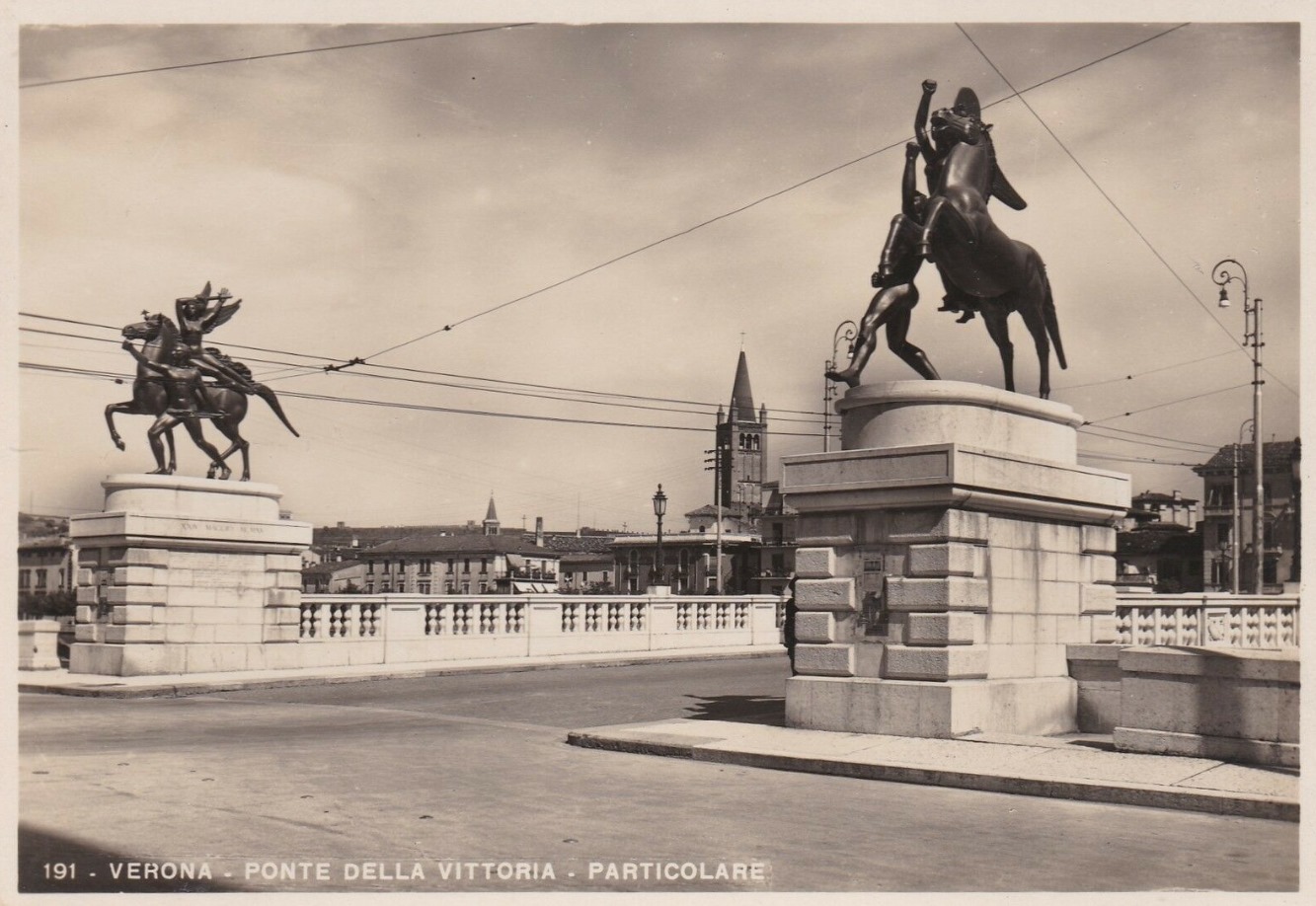
The Ponte della Vittoria in Verona is a bridge designed by architect Ettore Fagiuoli and engineer Ferruccio Cipriani, constructed between 1928 and 1931. This photograph captures an architectural detail of the structure, documenting a significant work from the interwar period in the Veneto region.
Fagiuoli (1884–1961) was a Veronese architect and scenographer whose career spanned decades of professional practice in the Veneto, ranging from eclecticism to later modernist approaches. His collaboration with engineer Cipriani on this bridge project represents an important moment in Verona’s infrastructural development during the early twentieth century.
About Ettore Fagiuoli
Fagiuoli studied at the Politecnico di Milano, graduating in 1908 after training at the Accademia di Brera and studies in Padua. Following early professional experience in eclectic design, he returned to Verona in 1911 and became a prominent figure in the city’s architectural culture, collaborating with the Superintendent of Monuments for Verona, Mantua, and Cremona.
Details
- Architects and Engineers: Ettore Fagiuoli, Ferruccio Cipriani
- Location: Verona, Veneto, Italy
- Completion Date: 1928–1931
- Documented by: Stefano Vigolo
Explore more: 35 heritage places in Verona
Frequently asked questions
Who designed the Ponte della Vittoria?
The bridge was designed by architect Ettore Fagiuoli and engineer Ferruccio Cipriani.
When was the Ponte della Vittoria completed?
Construction took place between 1928 and 1931.
What was Ettore Fagiuoli’s background?
Fagiuoli (1884–1961) was a Veronese architect trained at the Politecnico di Milano and the Accademia di Brera, whose work ranged across eclecticism and modern design.


