
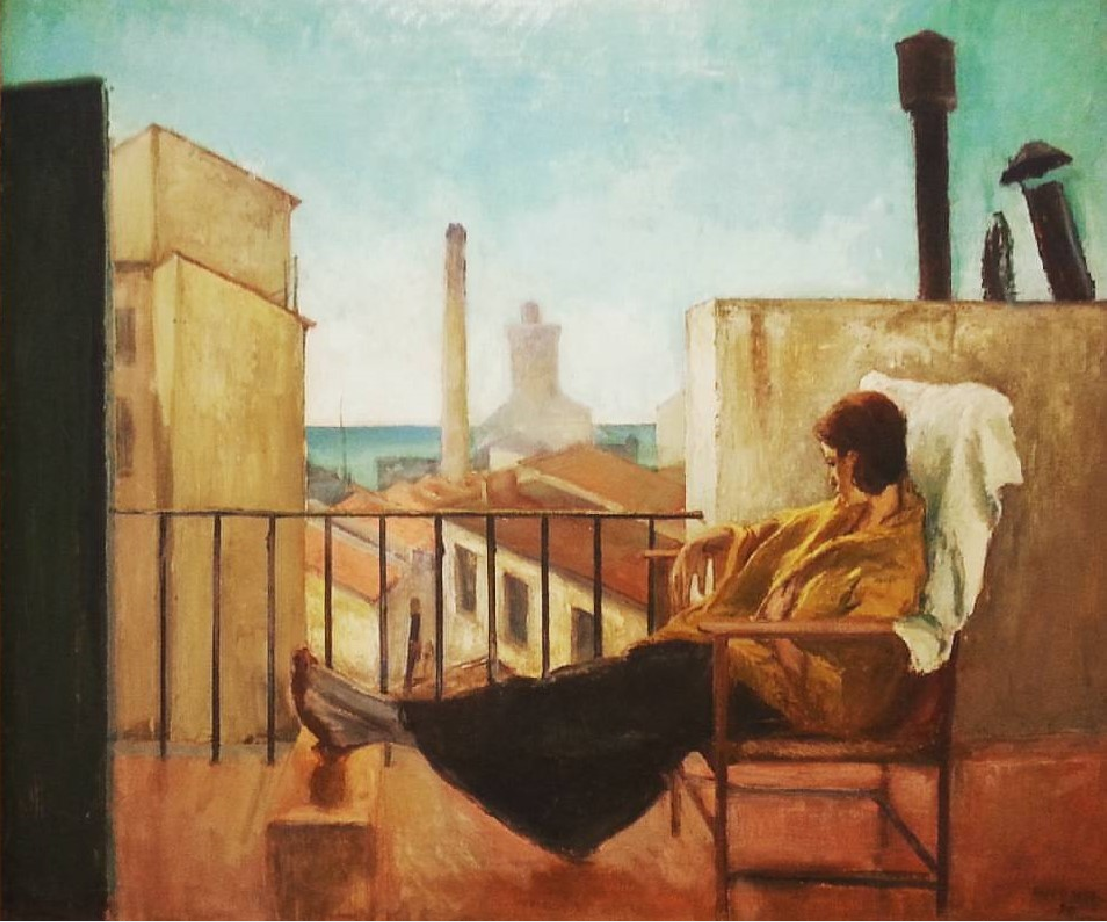
Convalescente is a painting by Baccio Maria Bacci, created in 1930. Bacci (1888–1974) was a Florentine painter central to the Tuscan Novecento movement, a figurative tradition that defined Italian modernism across the interwar decades.
Born in Florence, Bacci traveled to Paris in 1908 and returned home two years later to establish himself in artistic circles. His early work, produced between 1913 and 1918, engaged with Futurist aesthetics, as evidenced by canvases titled Aeropittoriche. By 1930, the year of Convalescente, Bacci had moved toward the more grounded figurative language characteristic of the Novecento. In his later career, he undertook commissions for churches and developed mosaic designs, expanding his practice beyond easel painting.
About Baccio Maria Bacci
Bacci was encouraged early in his career by prominent cultural figures including critic Emilio Cecchi and art historian Matteo Marangoni. Beyond painting, he contributed to discourse on contemporary art through published writings on modern movements.
Details
- Artist: Baccio Maria Bacci (1888–1974)
- Title: Convalescente
- Year: 1930
- Movement: Tuscan Novecento
- Location: Florence
Explore more: 118 heritage places in Firenze
Frequently asked questions
Who was Baccio Maria Bacci?
Baccio Maria Bacci was a Florentine painter (1888–1974) and key figure in the Tuscan Novecento movement. He initially worked in a Futurist-influenced style before transitioning to the figurative language for which he became known.
What artistic movements influenced Bacci’s work?
Bacci’s early period (1913–1918) reflected Futurist aesthetics. He later became associated with the Novecento Italiano, a figurative modernist movement dominant in Italy during the interwar period.
What other work did Bacci undertake beyond painting?
In his later years, Bacci created mosaic designs and accepted commissions for churches. He also published writings on contemporary art movements.
Sources
- S1 — Pontiggia, Elena. Il Novecento Italiano. Abscondita, 2003. ISBN 978-88-8416-048-5.
- S2 — Ciucci, Giorgio. Gli architetti e il fascismo: architettura e città 1922-1944. Einaudi, 2002. ISBN 978-88-06-16310-5.
Spotted an error? Write to editorial@culturalheritageonline.com and we correct it the same day.


