
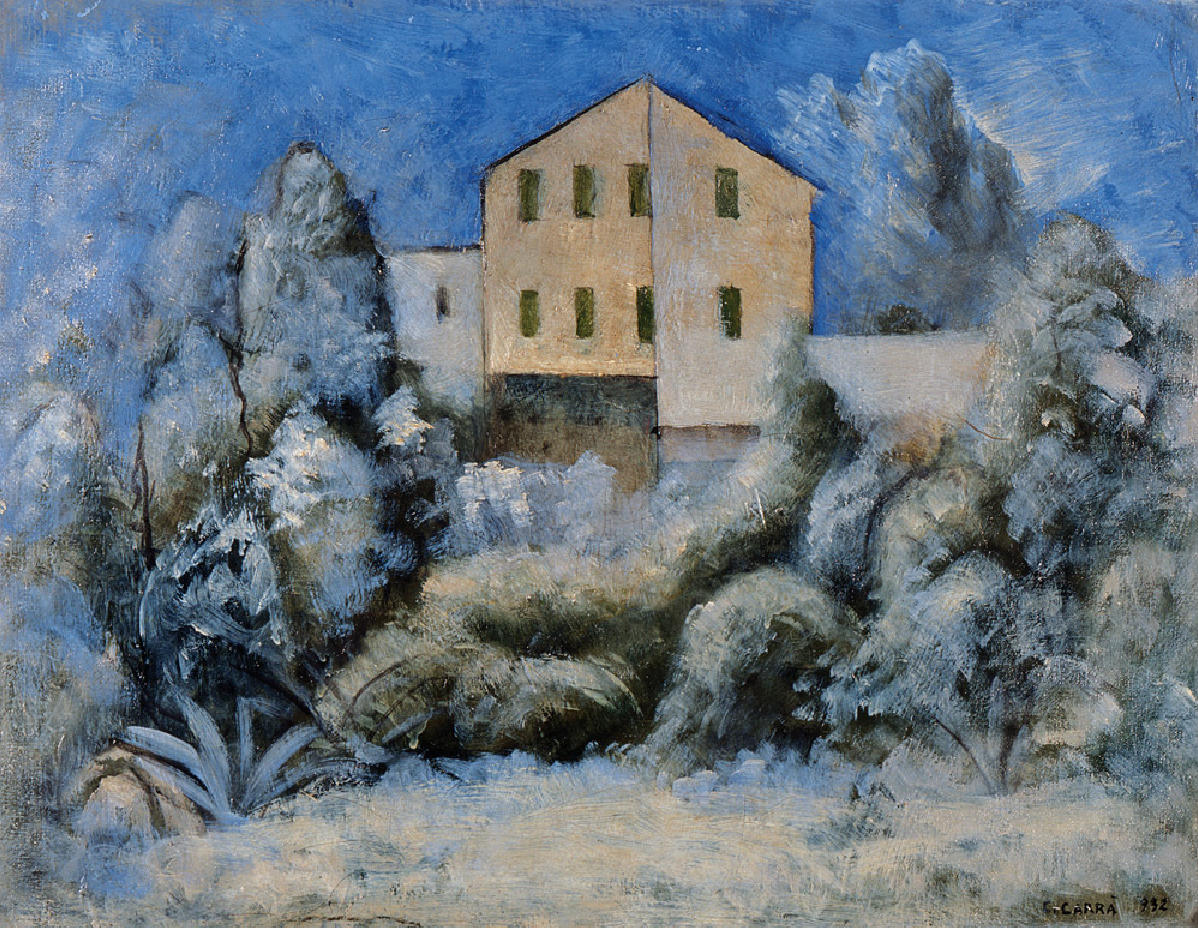
Nevicata is a 1932 painting by Carlo Carrà, the Italian painter and leading figure of the Futurist movement. Created three decades after Carrà signed the Manifesto of Futurist Painters in 1910, this work represents his practice during the later phase of his career.
Carrà was born in Quargnento, Piedmont, in 1881 and trained at Brera Academy in Milan under Cesare Tallone. His early engagement with Futurism, alongside Umberto Boccioni, Luigi Russolo, and Giacomo Balla, established his reputation as a central figure in the avant-garde movement. By the 1930s, while maintaining certain modernist sensibilities, Carrà’s approach had evolved considerably from his Futurist phase. Nevicata, with its title referring to snowfall, exemplifies the artist’s continued interest in capturing atmospheric and chromatic effects through painting.
About Carlo Carrà
Carrà (1881–1966) was among the first signatories of the Futurist Painters’ Manifesto and played a key role in defining the movement’s visual language. His career extended well beyond Futurism’s initial intensity, and he became an influential teacher in Milan, contributing to Italian modernism across multiple decades.
Details
- Artist: Carlo Carrà
- Title: Nevicata
- Year: 1932
- Movement: Italian modernism, post-Futurist period
Frequently asked questions
Who was Carlo Carrà?
Carlo Carrà (1881–1966) was an Italian painter and a leading figure of the Futurist movement. He signed the Manifesto of Futurist Painters in 1910 alongside Umberto Boccioni, Luigi Russolo, and Giacomo Balla, and later taught in Milan.
When did Carrà paint Nevicata?
Nevicata was painted in 1932, during the later phase of Carrà’s career, well after the height of the Futurist movement in the early 20th century.
What does Nevicata mean?
Nevicata is an Italian word meaning snowfall. The title references the painting’s subject matter of snow and its atmospheric effects.
Sources
- S1 — Pontiggia, Elena. Il Novecento Italiano. Abscondita, 2003. ISBN 978-88-8416-048-5.
- S2 — Ciucci, Giorgio. Gli architetti e il fascismo: architettura e città 1922-1944. Einaudi, 2002. ISBN 978-88-06-16310-5.
Spotted an error? Write to editorial@culturalheritageonline.com and we correct it the same day.


