
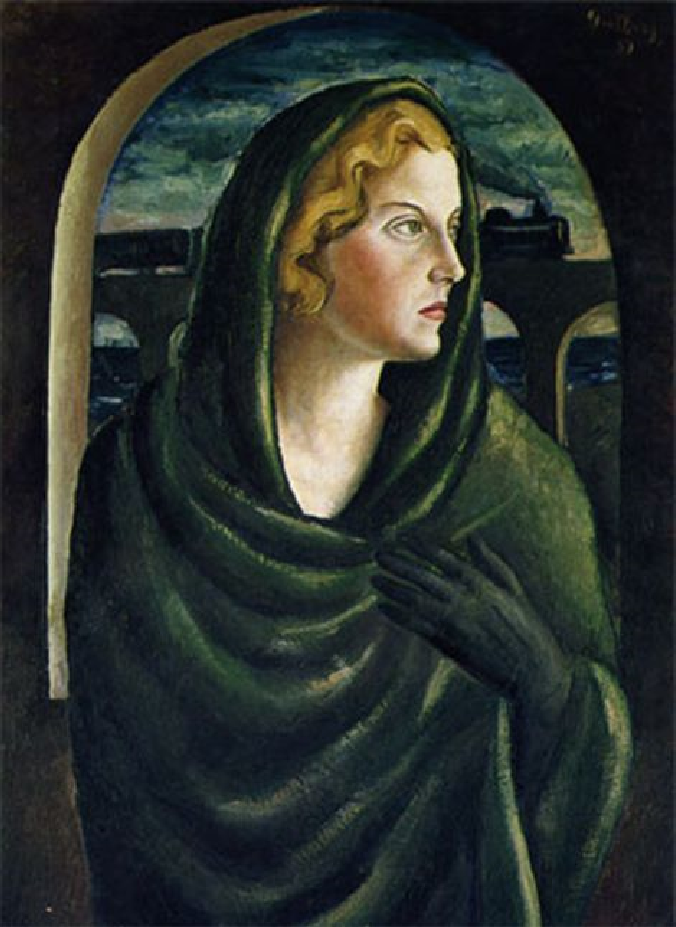
Donna ammantata is a painting by Renato Guttuso, created in 1932. The work presents a female figure rendered in the expressionist idiom that would come to define Guttuso’s artistic practice throughout the twentieth century.
Guttuso’s approach to portraiture and the human figure was rooted in direct observation and social commentary. The cloaked woman emerges as a subject of psychological and formal interest—the drapery and posture suggesting both dignity and a sense of interiority. The painting reflects the artist’s broader commitment to figuration as a vehicle for artistic and moral inquiry during the interwar period.
About Renato Guttuso
Renato Guttuso (1911–1987) was an Italian painter and prominent figure in twentieth-century expressionism. A committed political artist and longtime member of the Italian Communist Party, Guttuso integrated social and political concerns into his work. He would later serve as a senator of Italy from 1976 to 1983.
Details
- Creator: Renato Guttuso
- Year: 1932
- Medium: Painting
- Subject: Portrait of a cloaked woman
- Movement: Italian expressionism
On video
Frequently asked questions
Who was Renato Guttuso?
Renato Guttuso (1911–1987) was an Italian painter considered among the most important artists of the twentieth century and a key figure in Italian expressionism. He was also a member of the Italian Communist Party and served as a senator from 1976 to 1983.
What is the subject of this painting?
The work depicts a cloaked woman, rendered in Guttuso’s expressionist style with attention to psychological presence and formal composition.
What movement does this painting belong to?
The work is part of Italian expressionism, a movement characterized by emotional intensity and social observation that defined much of Guttuso’s artistic output.
Sources
- S1 — Pontiggia, Elena. Il Novecento Italiano. Abscondita, 2003. ISBN 978-88-8416-048-5.
- S2 — De Fusco, Renato. Storia del design. Laterza, 2002. ISBN 978-88-420-6623-1.
Spotted an error? Write to editorial@culturalheritageonline.com and we correct it the same day.


