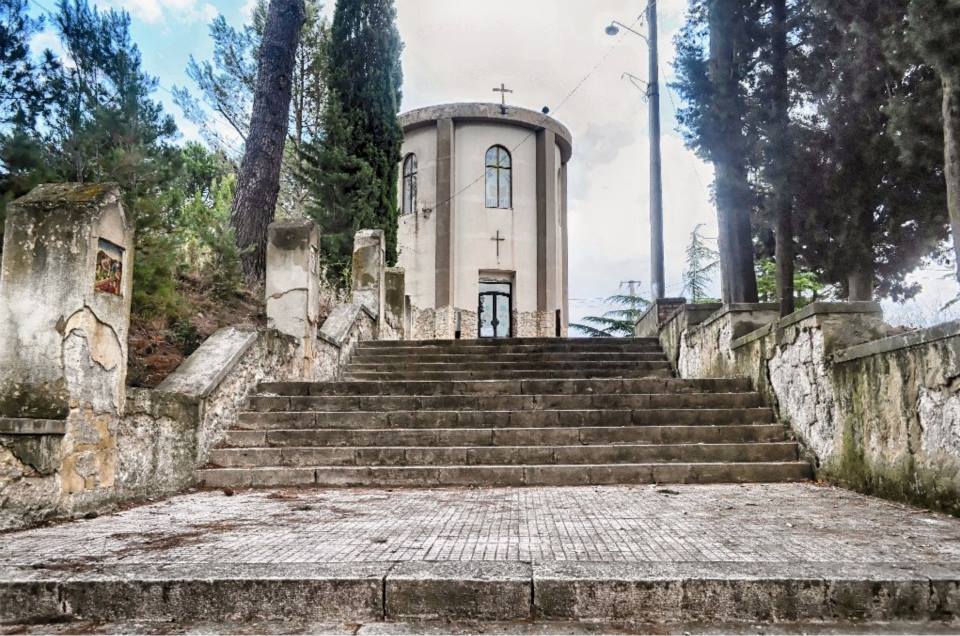
This church stands in Borgo Petilia, a rural settlement 6.5 kilometres north of Caltanissetta, Sicily. The church was designed by architect Edoardo Caracciolo as part of the Borgo Petilia project, conceived in 1939.
Borgo Petilia, originally named Borgo Gattuso, was one of eight new rural settlements planned across Sicily during the interwar period. The project emerged from the broader reorganization of Sicilian agriculture between 1939 and 1940, following legislation that established the Ente di colonizzazione del latifondo siciliano. The settlement was constructed on expropriated land in the Garistoppa district, north of Caltanissetta. These new borghi were designed to attract agricultural workers and labourers to otherwise remote areas by providing essential services and communal structures, including a church.
About Edoardo Caracciolo
Caracciolo was an architect active during the interwar period in Sicily, where he contributed to the design of rural administrative and religious infrastructure.
Details
- Architect: Edoardo Caracciolo
- Year: 1939
- Location: Borgo Petilia, Caltanissetta, Sicily
- Type: Church
- Context: Interwar rural settlement programme
On video
Frequently asked questions
Who designed Borgo Petilia and its church?
Architect Edoardo Caracciolo was commissioned to design the church and the broader settlement in 1939.
Why was Borgo Petilia established?
The settlement was built to attract agricultural workers to remote areas of Sicily by providing housing, services and communal facilities, including this church, as part of a larger programme of agricultural reorganization between 1939 and 1940.
What was the original name of this borough?
Borgo Petilia was originally called Borgo Gattuso. It was one of eight new rural settlements planned across Sicily during this period.
Sources
- S1 — Barbera, Paola. Architettura in Sicilia tra le due guerre. Sellerio, 2002. ISBN 978-88-389-1834-6.
- S2 — Ciucci, Giorgio. Gli architetti e il fascismo: architettura e città 1922-1944. Einaudi, 2002. ISBN 978-88-06-16310-5.
Spotted an error? Write to editorial@culturalheritageonline.com and we correct it the same day.