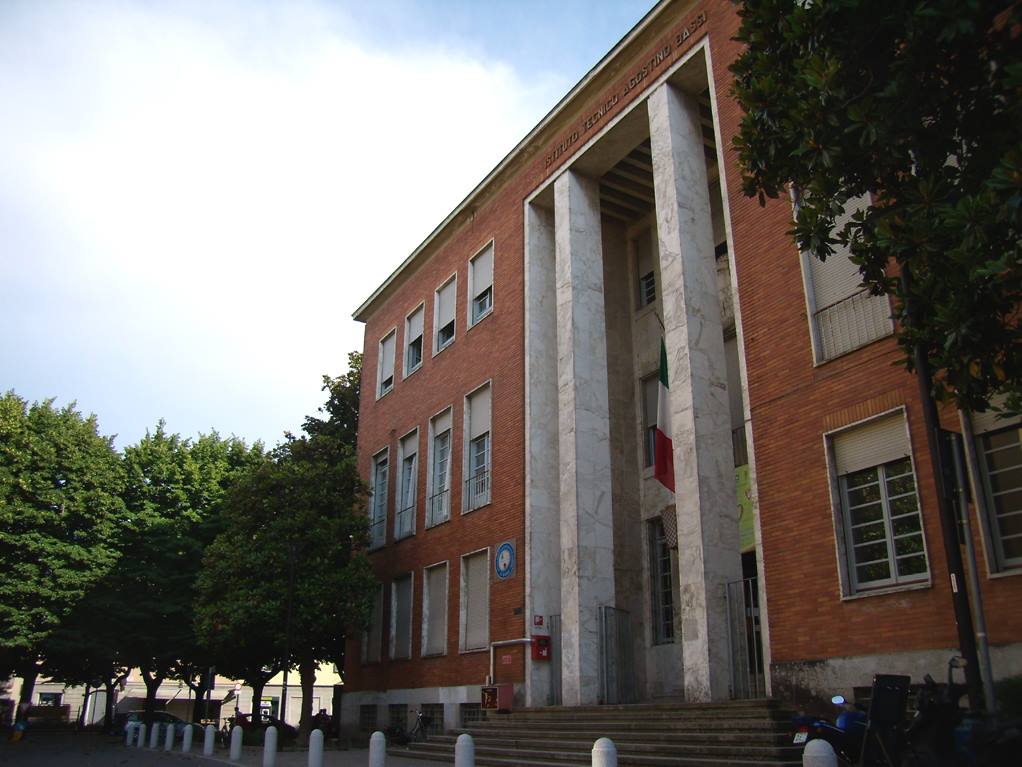
The Istituto Tecnico Commerciale Agostino Bassi is a commercial and technical secondary school in Lodi, Lombardy, named in honor of the city’s celebrated naturalist.
The institute bears the name of Agostino Bassi, a 19th-century entomologist and scientist of international significance. Bassi is recognized as a pioneer in microbiology and germ theory; he demonstrated that the muscardine disease affecting silkworms was caused by a parasitic fungus—later named Beauveria bassiana in recognition of his work. In 1844, Bassi articulated a foundational principle of modern medicine: that infectious diseases in both animals and humans are caused by living microorganisms, predating Louis Pasteur’s discoveries. His insights into the microbial origins of diseases such as measles, syphilis, and plague established him as a forerunner of epidemiological science.
The choice of Bassi’s name for this educational institution reflects Lodi’s connection to scientific advancement and its role in the history of Italian learning.
Details
- Location: Lodi, Lombardy
- Type: Commercial and technical secondary school
- Named after: Agostino Bassi (1773–1856), Italian entomologist and pioneer of germ theory
Frequently asked questions
Who was Agostino Bassi?
Agostino Bassi was an Italian entomologist and naturalist from Lodi who discovered that the muscardine disease of silkworms was caused by a fungus, and who in 1844 proposed that human diseases are also caused by microorganisms, anticipating the germ theory of disease.
Why is the school named after him?
The institute honors Bassi as a pioneering scientist and native of Lodi whose contributions to microbiology and medicine transformed scientific understanding.
Where is the school located?
The Istituto Tecnico Commerciale Agostino Bassi is located in Lodi, Lombardy, in northern Italy.
Sources
- S1 — Ciucci, Giorgio. Gli architetti e il fascismo: architettura e città 1922-1944. Einaudi, 2002. ISBN 978-88-06-16310-5.
- S2 — Nicoloso, Paolo. Mussolini architetto: Propaganda e paesaggio urbano nell'Italia fascista. Einaudi, 2008. ISBN 978-88-06-19086-6.
Spotted an error? Write to editorial@culturalheritageonline.com and we correct it the same day.