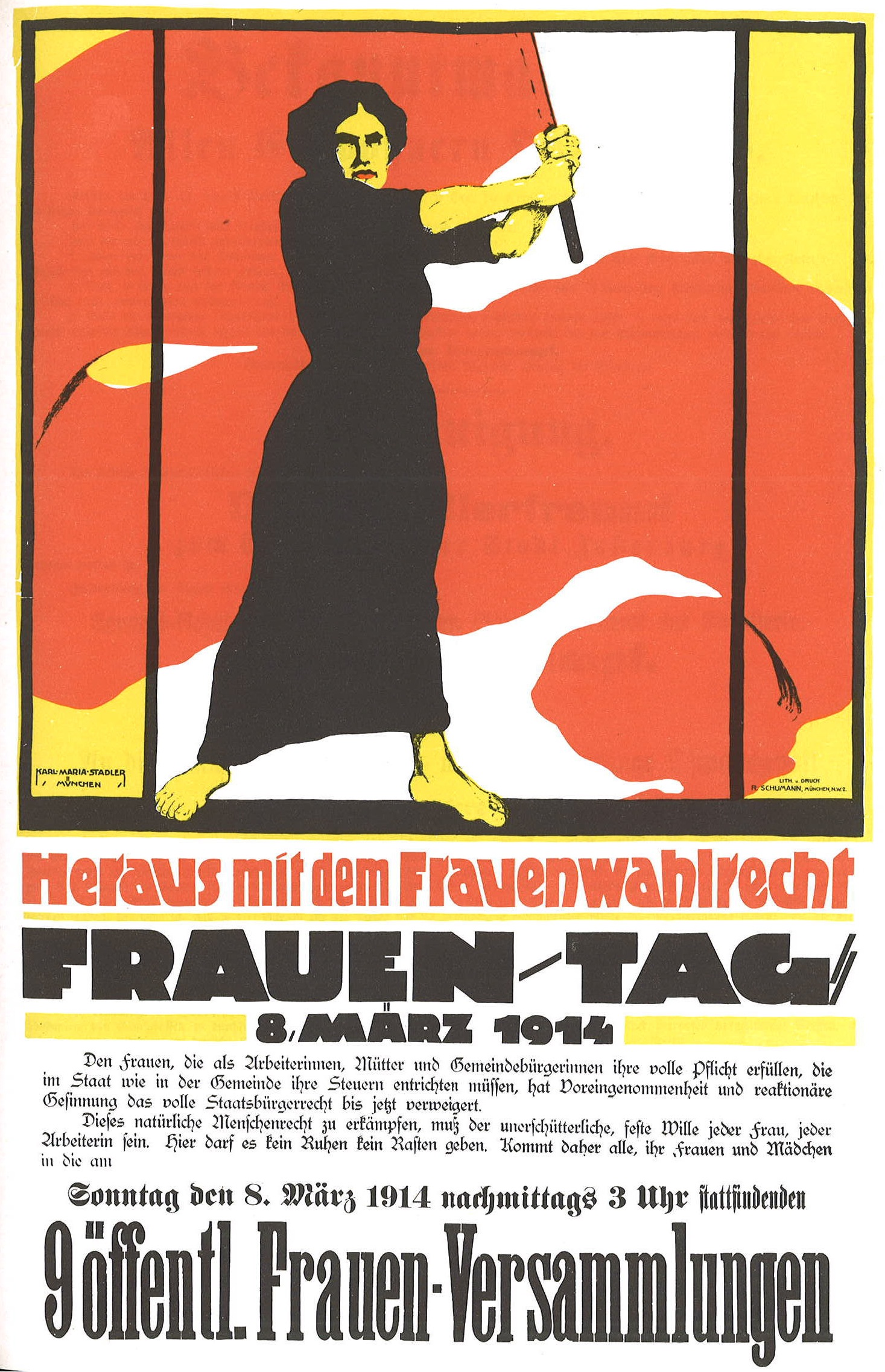
International Women’s Day, celebrated on 8 March each year, marked its first centenary in 2009. The observance, widely known in Italy as Festa della Donna, has its origins in early twentieth-century labour activism and revolutionary movements across the United States and Russia.
Early Origins in America and Russia
The first National Women’s Day was observed on 28 February 1909 in the United States, organised by the American Socialist Party to commemorate a 1908 strike by thousands of garment workers in New York who demanded better working conditions. The date 8 March itself carries significance in Russian history: on the Gregorian calendar, 8 March corresponds to 23 February in the Julian calendar, the date in 1917 when Russian women organised a strike demanding bread and peace. Within days, the Tsar abdicated, and this date became historically marked as the beginning of the February Revolution.
Formalisation and Global Expansion
In 1921, the Second International Conference of Communist Women formally designated 8 March as the International Day of the Woman Worker. This decision established the framework for extending the celebration beyond communist movements to encompass all women. Some accounts attribute the establishment of the day to commemoration of the Triangle Factory fire in New York on 25 March 1911, in which more than 140 female workers perished. Following these foundational years, 8 March became the standardised date for International Women’s Day and rapidly acquired global dimensions, evolving into the worldwide observance known today.
On video
Frequently asked questions
When was the first National Women’s Day observed?
The first National Women’s Day was held on 28 February 1909 in the United States, organised by the American Socialist Party to honour a strike by garment workers in 1908.
Why is 8 March significant in Russian history?
On the Gregorian calendar, 8 March corresponds to 23 February in the Julian calendar, the date in 1917 when Russian women organised a strike demanding bread and peace, an event that preceded the Tsar’s abdication and the February Revolution.
How did International Women’s Day become a global observance?
In 1921, the Second International Conference of Communist Women formally designated 8 March as the International Day of the Woman Worker, establishing the framework for extending the celebration to all women worldwide.
Sources
- S1 — Settis, Salvatore. Italia S.p.A.. L'assalto al patrimonio culturale. Einaudi, 2002. ISBN 978-88-06-16973-2.
- S2 — Casarin, Francesco. Il marketing dei musei e delle istituzioni culturali. Il Mulino, 2019. ISBN 978-88-15-28514-0.
Spotted an error? Write to editorial@culturalheritageonline.com and we correct it the same day.