
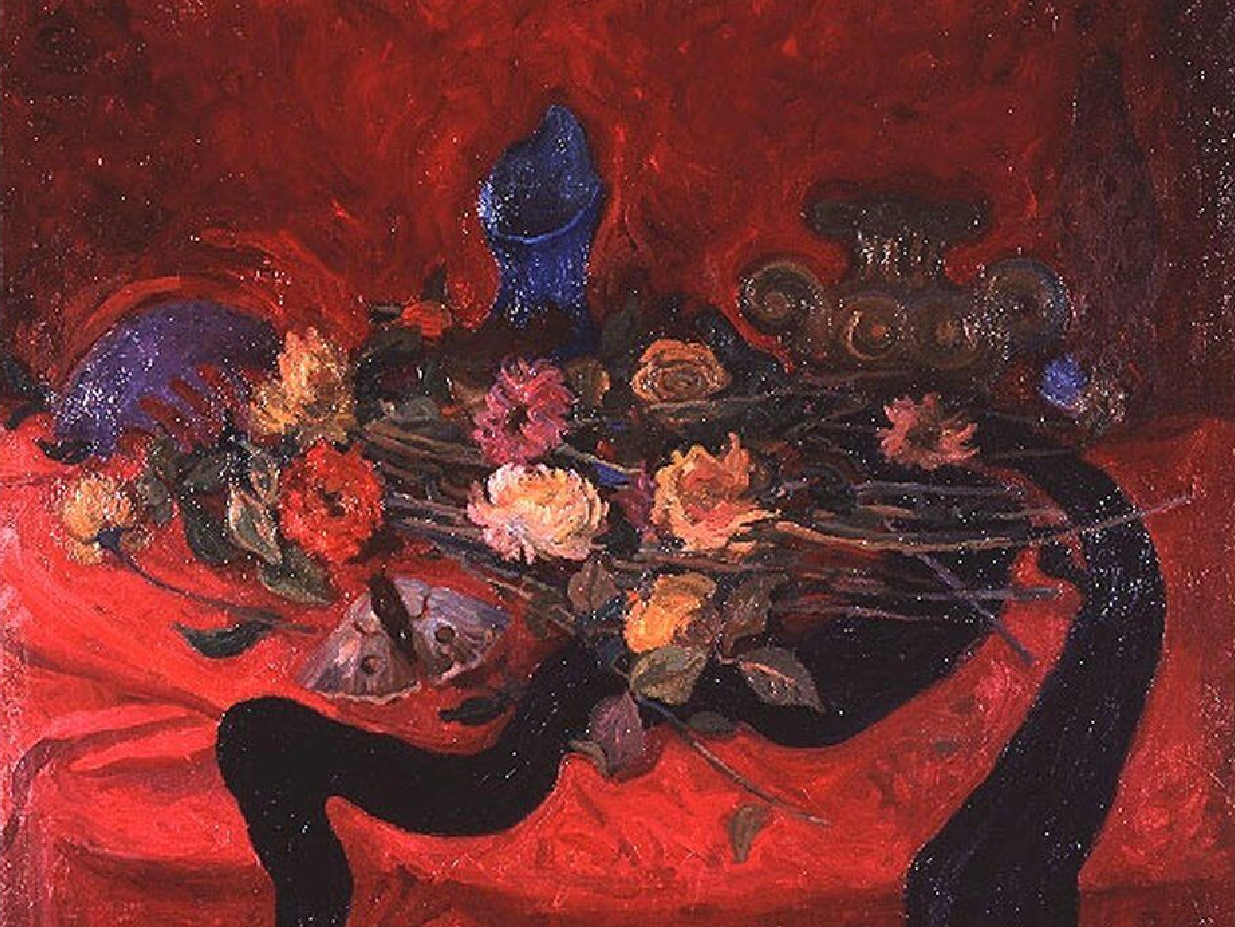
This still life with flowers was painted by Mario Mafai in 1942. The work belongs to the period of the Scuola Romana, the modern art movement founded by Mafai and his wife Antonietta Raphaël, which emerged as a distinctive voice in twentieth-century Italian painting.
Mafai’s artistic practice was marked by a deeply personal sensibility and melancholic tone. The painting dates from a particularly difficult moment in his life: during World War II, Mafai was forced into hiding due to his Jewish heritage, a period that resulted in the loss of a substantial portion of his artistic output. This still life thus carries documentary significance as a surviving work from a time of severe personal and historical disruption.
About Mario Mafai
Mario Mafai (1902–1965) was an Italian painter who, alongside his wife Antonietta Raphaël, established the Scuola Romana—a movement that represented a modern approach to Italian art. His early training came through the Scuola Libera del Nudo at the Accademia di Belle Arti di Roma, where he was influenced by Rome’s artistic heritage and museum collections.
Details
- Artist: Mario Mafai
- Year: 1942
- Movement: Scuola Romana
- Subject: Still life painting
On video
Frequently asked questions
Who was Mario Mafai?
Mario Mafai (1902–1965) was an Italian modernist painter who co-founded the Scuola Romana with his wife Antonietta Raphaël. He trained at Rome’s Accademia di Belle Arti and developed a distinctive style marked by melancholic sensibility.
What was the Scuola Romana?
The Scuola Romana was a modern art movement founded by Mario Mafai and Antonietta Raphaël, representing an important current in twentieth-century Italian painting.
When was this painting created?
This still life was painted in 1942, during World War II, a period when Mafai was forced to hide due to his Jewish heritage and many of his works were destroyed.


