
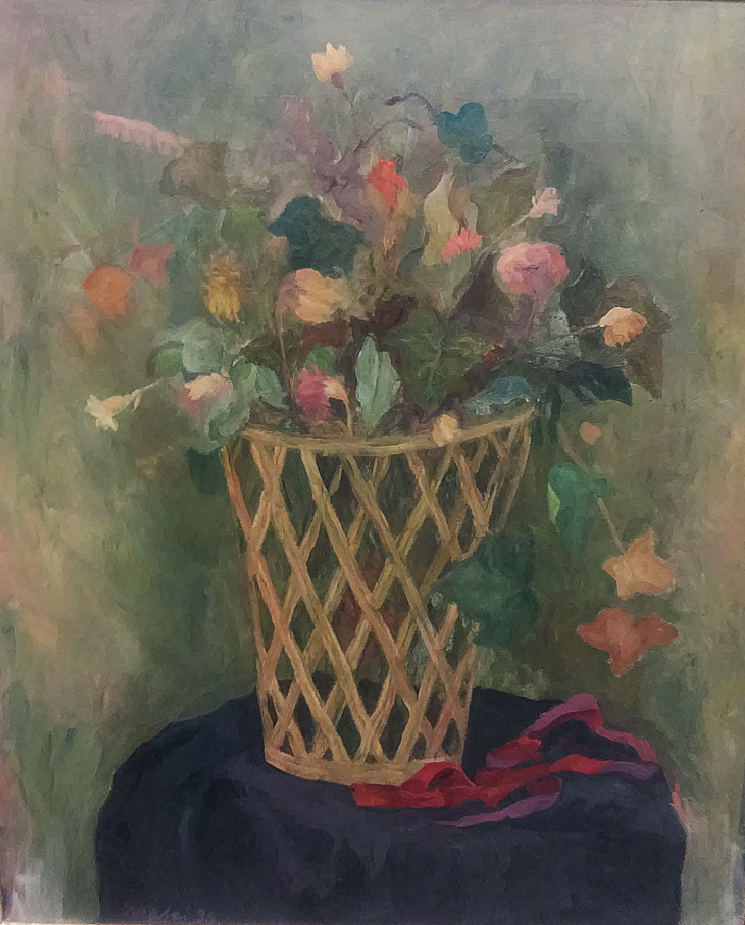
Il cestino di fiori is a still life painting by Italian modernist Mario Mafai, completed in 1938. The work belongs to the period of the Scuola Romana, the modern art movement co-founded by Mafai and his wife, painter and sculptor Antonietta Raphaël, in the 1920s. The painting exemplifies the artist’s deeply personal approach to colour and form, marked by a distinctive melancholic sensibility that permeated his artistic vision throughout his career.
Mafai’s practice drew from his early training at the Scuola Libera del Nudo, the free school of the nude attached to the Accademia di Belle Arti di Roma, where he studied alongside fellow painter Scipione. His artistic education was nourished by direct engagement with Roman galleries, museums, and the collections at Palazzo Venezia’s Fine Arts Library. This immersion in the historical and contemporary art of Rome shaped the reflective, introspective quality evident in works such as this floral still life.
About Mario Mafai
Mario Mafai (1902–1965) was a founding figure of the Scuola Romana alongside his wife Antonietta Raphaël. His work is distinguished by emotional depth and a painterly sensibility that set him apart within Italian modernism. The artist’s life was marked by significant personal challenges, including his experience during World War II, when he was forced into hiding due to his Jewish heritage.
Details
- Artist: Mario Mafai
- Year: 1938
- Medium: Painting
- Movement: Scuola Romana
On video
Frequently asked questions
Who was Mario Mafai?
Mario Mafai (1902–1965) was an Italian painter and co-founder of the Scuola Romana, a modern art movement he established with his wife Antonietta Raphaël in the 1920s. His work is characterised by a deeply personal, melancholic sensibility.
What is the Scuola Romana?
The Scuola Romana was a modern art movement founded by Mario Mafai and Antonietta Raphaël. It represented a distinctly Italian approach to modernism centred on Roman artistic traditions and contemporary practice.
When was this painting created?
The work was painted in 1938, during the interwar period when Mafai was an established figure within the Roman art scene.


