

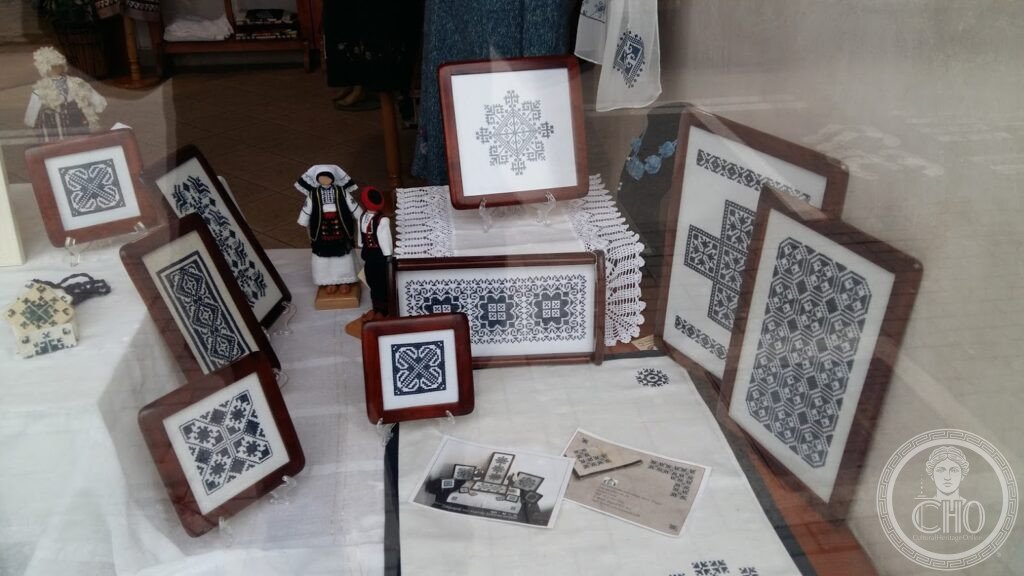
A distinctive embroidery technique practised by Serbian women in the villages of Zmijanje, on the slopes of Mount Manjača, transmitting patterns and skills through generations.
In UNESCO’s words
Zmijanje embroidery is a specific technique practised by the women of Zmijanje villages in Bosnia and Herzegovina. Traditionally, Zmijanje embroidery is used to decorate female costumes and household items, including wedding dresses, scarves, garments and bed linen. The main characteristic is the use of a deep blue thread, handmade with vegetable dyes, to embroider improvised geometrical shapes. The richness and variations of the embroidered designs determine the social status of the village women. Embroidery is usually performed among groups of women, who engage in needlework while singing and chatting. Each embroiderer adapts and reinvents the required knowledge and skills, as part of the process of transmission. The knowledge is conveyed orally and through practical work, mostly in formal educational environments. Students learn by watching experienced embroiderers combine pre-determined elements into numerous variations, and through regular and continuous practice. Zmijanje embroidery incorporates respect for diversity, creativity and non-verbal communication. It also has a sentimental and emotional value particularly for displaced populations, who use embroidered garments as an expression of national and local identity and pride. Embroidery ties together many elements of cultural heritage, such as music, rituals, oral traditions, handicrafts and symbolic expressions.
Official description, UNESCO Intangible Cultural Heritage List — Zmijanje embroidery
At a glance
Zmijanje embroidery is a needlework technique practised by women in Zmijanje villages. It uses deep blue thread, handmade with vegetable dyes, to create improvised geometrical shapes on textiles. The embroidery decorates female costumes and household items, including wedding dresses, scarves, garments and bed linen. The richness and variation of the designs reflect the social status of the women who create them.
Origins & history
The embroidery tradition of Zmijanje belongs to a broader heritage of Serbian textile arts. The technique is rooted in the domestic practices of villages on Mount Manjača, where geography and community isolation helped preserve distinct local methods over time.
The practice
Women practise Zmijanje embroidery in groups, engaging in needlework while singing and chatting. Students learn by watching experienced embroiderers combine predetermined elements into numerous variations, then practise regularly and continuously. The knowledge is transmitted mostly in formal educational environments. Each embroiderer adapts the required knowledge and skills, creating their own interpretations while building on what they observe.
Cultural significance
Zmijanje embroidery has sentimental and emotional value for communities, particularly for displaced populations who use embroidered garments to express national and local identity and pride. The practice incorporates respect for diversity, creativity and non-verbal communication. It ties together many elements of cultural heritage, including music, rituals, oral traditions, handicrafts and symbolic expressions.
Key facts
- Country: Bosnia and Herzegovina
- Inscribed: 2014
- UNESCO list: Representative List of the Intangible Cultural Heritage of Humanity
- UNESCO reference: 00990
- UNESCO vocabulary: Embroidery; Textile arts
- Map: Zmijanje — the locality named in UNESCO’s official description of this element
Where to experience it
The tradition of Zmijanje embroidery is practised by women in the Zmijanje villages of Bosnia and Herzegovina. Visitors can encounter the craft by visiting these communities where practitioners continue to work, often in groups while singing and chatting together. Local cultural institutions can provide guidance on connecting with embroiderers and learning about this deeply rooted practice, which carries profound meaning for communities expressing their national and local identity through these intricate, hand-stitched garments and household items.
Sources & resources
- UNESCO — official element page: Zmijanje embroidery
- UNESCO — open data record: Intangible Heritage List, reference 00990
- UNESCO — official photograph: Zmijanje Embroidery making workshop in the Primary School "Mladen Stojanovic," Bronzani Majdan, children form 7 to 9 grade — Dejan Kosić — 2013 by Museum of Republic of Srpska
- Reference — Wikipedia (secondary): Zmijanje embroidery — consulted as a secondary reference, not as confirmation
- Cultural Heritage Online: Our archive and city guides

Find it on the map
See this place and what’s around it →📷 Become a Cultural Heritage Online photographer
Share your photos of places: they stay published under your name as the author. The more they're seen, the more you get noticed — and soon a contest will reward the most appreciated photos.
Log in or sign up free to add a photo