
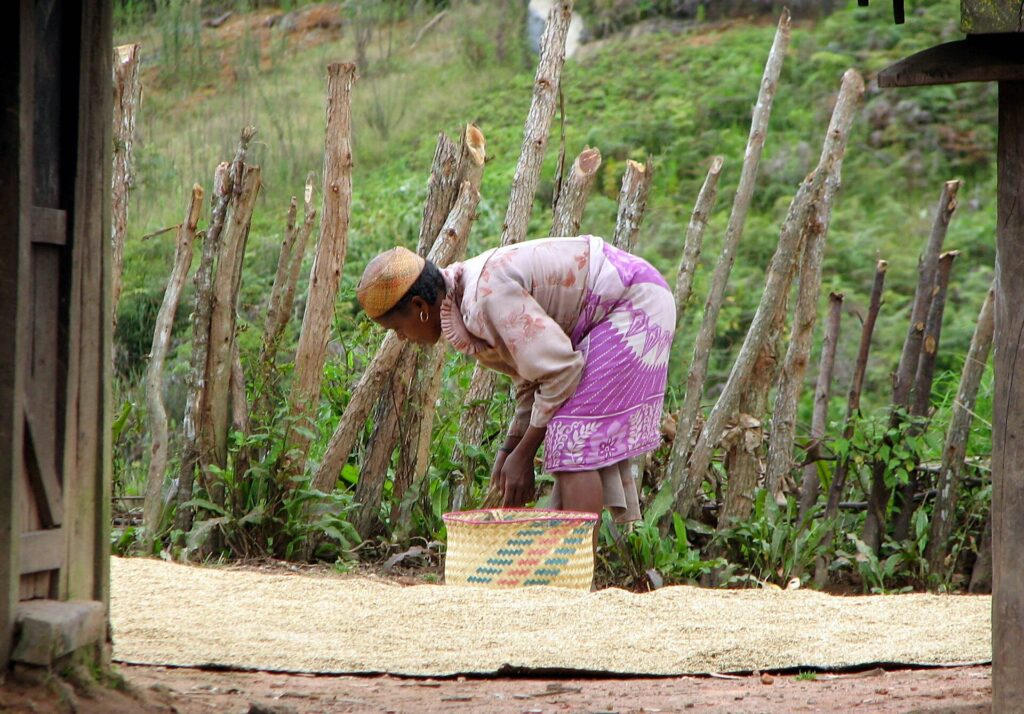
In the forested mountains of Madagascar’s southern central highlands, the Zafimaniry people preserve an ancient woodcarving tradition passed through generations, transforming timber into vessels, tools, and ritual objects that embody centuries of applied craft knowledge.
At a glance
The Zafimaniry are a sub-group of the Betsileo ethnic group living in approximately 100 villages in the highlands southeast of Ambositra. Their distinctive woodworking practice—recognized by UNESCO in 2003—represents one of Madagascar’s most significant living craft traditions, though deforestation now threatens both the forests and the knowledge itself.
Origins & history
Zafimaniry woodcarving was once common throughout Madagascar, embedded in the daily life and ritual practice of communities across the island. Over time, as deforestation reshaped the landscape and economic pressures shifted, the tradition concentrated among the Zafimaniry people of the southern highlands, where it remains central to identity and survival. Historians regard this woodworking as a living archive of Madagascar’s applied arts heritage.
The practice
Zafimaniry craftspeople work with local timber, using hand tools passed down through families to carve utilitarian and decorative objects. The practice encompasses the creation of household vessels, agricultural implements, and ritual items, each piece bearing the fingerprint of individual makers and regional variation. Knowledge of wood selection, tool use, design principles, and finishing techniques transfers from master to apprentice within families and communities, ensuring continuity across generations. The work is both intimate and public—carved in homes and workshops, then integrated into daily life and ceremonial occasions.
Cultural significance
For the Zafimaniry, woodcraft is inseparable from social structure, economic livelihood, and spiritual practice. Each carved object serves practical and symbolic functions within the community. The tradition encodes knowledge about forest ecology, material properties, aesthetic values, and ancestral connections. Its recognition as Intangible Cultural Heritage acknowledges not only the objects themselves but the living knowledge system—the ways of seeing, making, and transmitting skill that define Zafimaniry identity.
Key facts
- Anchor community: Ambositra, Madagascar (−20.51241°, 47.24527°)
- Population: approximately 25,000 Zafimaniry across roughly 100 villages
- Language: Zafimaniry dialect of Malagasy, a Malayo-Polynesian language
- UNESCO Intangible Cultural Heritage: 2003 (reference 00080)
- Primary threat: deforestation in the southern central highlands
Where to experience it
Ambositra and the surrounding forested mountains of Madagascar’s southern central highlands are the heartland of Zafimaniry woodcraft. Visitors can encounter craftspeople at work in their villages and learn directly from makers about wood selection, carving techniques, and the cultural meanings embedded in their designs. The practice remains active within family workshops and community contexts rather than in dedicated museums or festivals.
Sources & resources
- Zafimaniry — Wikipedia
- Woodcrafting Knowledge of the Zafimaniry — UNESCO Intangible Cultural Heritage
- Cultural Heritage Online
Find it on the map
See this place and what’s around it →📷 Become a Cultural Heritage Online photographer
Share your photos of places: they stay published under your name as the author. The more they're seen, the more you get noticed — and soon a contest will reward the most appreciated photos.
Log in or sign up free to add a photo