

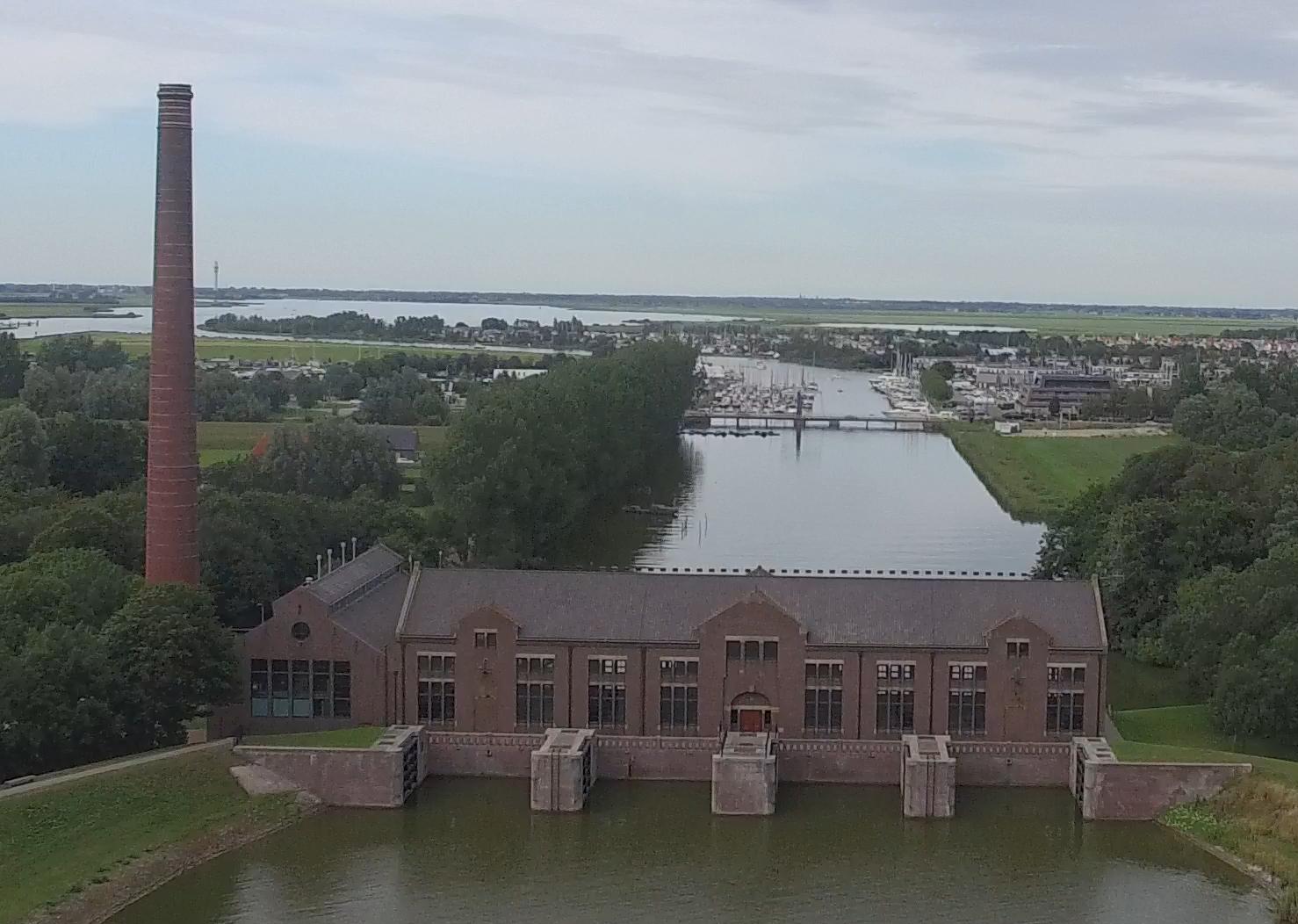
The world’s largest operational steam-powered pumping station, this monumental Dutch engineering feat has controlled Friesland’s waters for over a century.
At a glance
Built to manage excess water in the northern province of Friesland, the Wouda pumping station remains the most powerful steam-driven installation of its kind still in active use. Queen Wilhelmina officially opened the station on 7 October 1920, marking a milestone in Dutch water management technology.
History
The station was constructed to address the chronic challenge of water control in low-lying Friesland. Its inauguration by Queen Wilhelmina in 1920 demonstrated the Dutch commitment to hydraulic engineering. In 1967, the original coal-fired furnaces were converted to heavy fuel oil, extending the station’s operational life and reducing emissions while maintaining its remarkable efficiency.
What you see
The pumping station showcases turn-of-the-century industrial design. Its steam-powered machinery achieves an extraordinary pumping capacity of 4,000 cubic meters per minute. The installation represents the pinnacle of early 20th-century mechanical engineering.
Cultural significance
The Wouda station stands as a testament to Dutch ingenuity in water management—a defining national concern for centuries. Its continued operation demonstrates how heritage infrastructure can remain relevant to modern needs. UNESCO recognized its universal value, designating it a World Heritage Site in 1998.
Key facts
- Country: Netherlands
- Location: Lemmer, Friesland
- Coordinates: 52.8458, 5.6789
- Opened: 7 October 1920
- Pumping capacity: 4,000 m³/min
- UNESCO World Heritage Site: 1998
- Last major conversion: 1967 (coal to heavy fuel oil)
Practical information & getting there
The pumping station is located in Lemmer, in the province of Friesland in the northern Netherlands. It continues its operational role supplementing the J.L. Hooglandgemaal in Stavoren during exceptionally high water levels, which typically occur several times annually. Visitor information and access details are available through local tourism services.
Sources & resources
Find it on the map
See this place and what’s around it →📷 Become a Cultural Heritage Online photographer
Share your photos of places: they stay published under your name as the author. The more they're seen, the more you get noticed — and soon a contest will reward the most appreciated photos.
Log in or sign up free to add a photo