
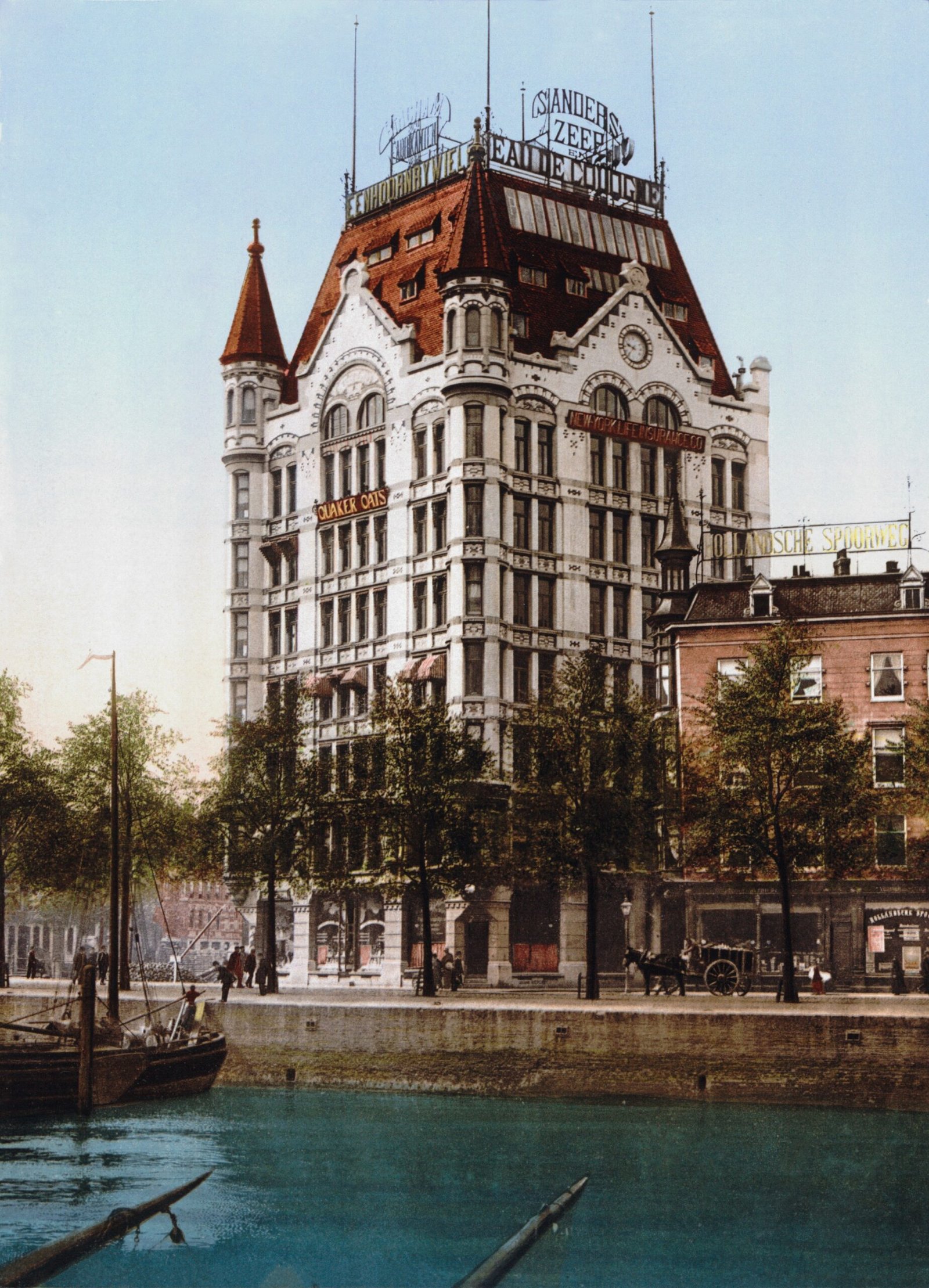
Europe’s first high-rise building, this ten-story Art Nouveau landmark rose 43 metres above Rotterdam in 1898, marking a revolutionary moment in continental architecture.
At a glance
The Witte Huis is a 43-metre, ten-storey building completed in 1898 as Europe’s inaugural high-rise structure. Designed in the Art Nouveau style, it stands as a National Heritage Site and Rijksmonument in Rotterdam’s city centre.
History
Built in 1898, the Witte Huis broke new ground as the first hoogbouw (high-rise building) constructed on the European continent. Its completion marked a turning point in architectural ambition and urban development across Europe.
What you see
The building rises 43 metres across ten floors, articulated in the fluid, organic forms characteristic of Art Nouveau. Its verticality and proportions exemplify the style’s embrace of height as an aesthetic principle.
Cultural significance
The Witte Huis represents a watershed moment in European building technology and urban ambition. As the continent’s first true high-rise, it demonstrated the feasibility and architectural potential of vertical construction at scale, influencing skyline development across Europe for decades to come.
Key facts
- Country: Netherlands
- City: Rotterdam
- Completed: 1898
- Height: 43 metres (141 feet)
- Floors: 10
- Style: Art Nouveau
- Designation: National Heritage Site, Rijksmonument
- Coordinates: 51.9188, 4.49175
Practical information & getting there
The Witte Huis is located in central Rotterdam and is visible from many vantage points in the city. As a protected heritage site, it remains an integral part of Rotterdam’s urban fabric and skyline.
Sources & resources
Find it on the map
See this place and what’s around it →📷 Become a Cultural Heritage Online photographer
Share your photos of places: they stay published under your name as the author. The more they're seen, the more you get noticed — and soon a contest will reward the most appreciated photos.
Log in or sign up free to add a photoIs this page about you?
This page is read by travellers and heritage enthusiasts who find it on Google. Tell us how you are connected to this place and we will take it from there.