
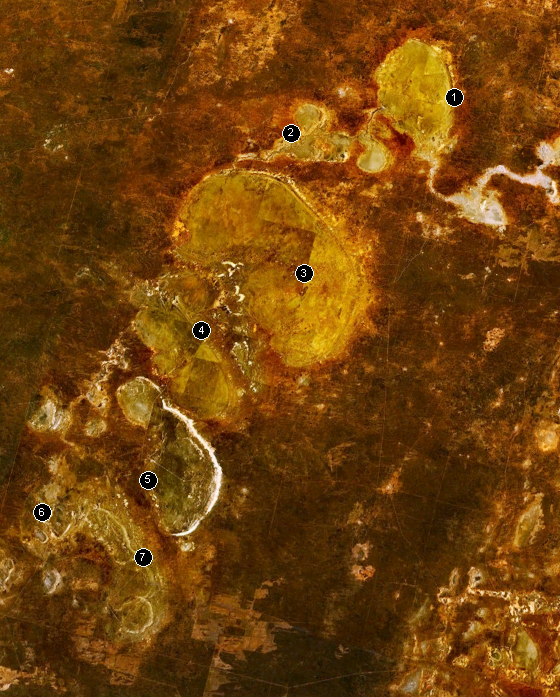
A vast archaeological landscape in inland Australia, the Willandra Lakes Region preserves exceptional evidence of human civilization spanning tens of thousands of years, including the world’s oldest known cremation.
At a glance
This 2,400-square-kilometre World Heritage Site encompasses natural and cultural features of profound significance to both Indigenous peoples and human prehistory. The region served as a traditional meeting place for the Muthi Muthi, Ngiyampaa and Paakantyi peoples, who maintained deep connections to the landscape for millennia.
History
The Willandra Lakes Region’s archaeological record extends back into deep antiquity, documenting early human settlement and ritual practices across vast spans of time. Among its most remarkable discoveries is the world’s oldest evidence of cremation, testimony to sophisticated spiritual and funeral customs.
The site was formally recognized as a World Heritage property at the 5th Session of the World Heritage Committee in 1981. Later, on 21 May 2007, the region was gazetted on the Australian National Heritage List, and it also appears on the New South Wales State Heritage Register.
What you see
The landscape itself is the primary monument here. Mungo National Park protects a portion of the region, where visitors encounter dry lake beds, ancient sand formations, and archaeological deposits exposed through natural erosion and systematic excavation. The terrain reveals layers of human occupation and environmental change.
Cultural significance
The Willandra Lakes Region holds profound meaning for the Muthi Muthi, Ngiyampaa and Paakantyi peoples, for whom it remains a place of ancestral presence and cultural continuity. Archaeologically, it documents some of humanity’s earliest known ritual behaviours and social practices, offering irreplaceable insights into the deep past.
Key facts
- Location: Far West, New South Wales, Australia
- Area: 2,400 square kilometres (930 sq mi)
- UNESCO World Heritage Site: Inscribed 1981
- Coordinates: 34°S, 143°E
- Contains world’s oldest known evidence of cremation
- Traditional territory of Muthi Muthi, Ngiyampaa and Paakantyi peoples
Practical information & getting there
Mungo National Park provides protected access to a portion of the region. The site lies in remote inland Australia; plan accordingly for distance and facilities. Contact NSW National Parks and Wildlife Service for current visiting conditions and guided tour availability.
Sources & resources
- Willandra Lakes Region – Wikipedia
- Cultural Heritage Online
Find it on the map
See this place and what’s around it →📷 Become a Cultural Heritage Online photographer
Share your photos of places: they stay published under your name as the author. The more they're seen, the more you get noticed — and soon a contest will reward the most appreciated photos.
Log in or sign up free to add a photo