

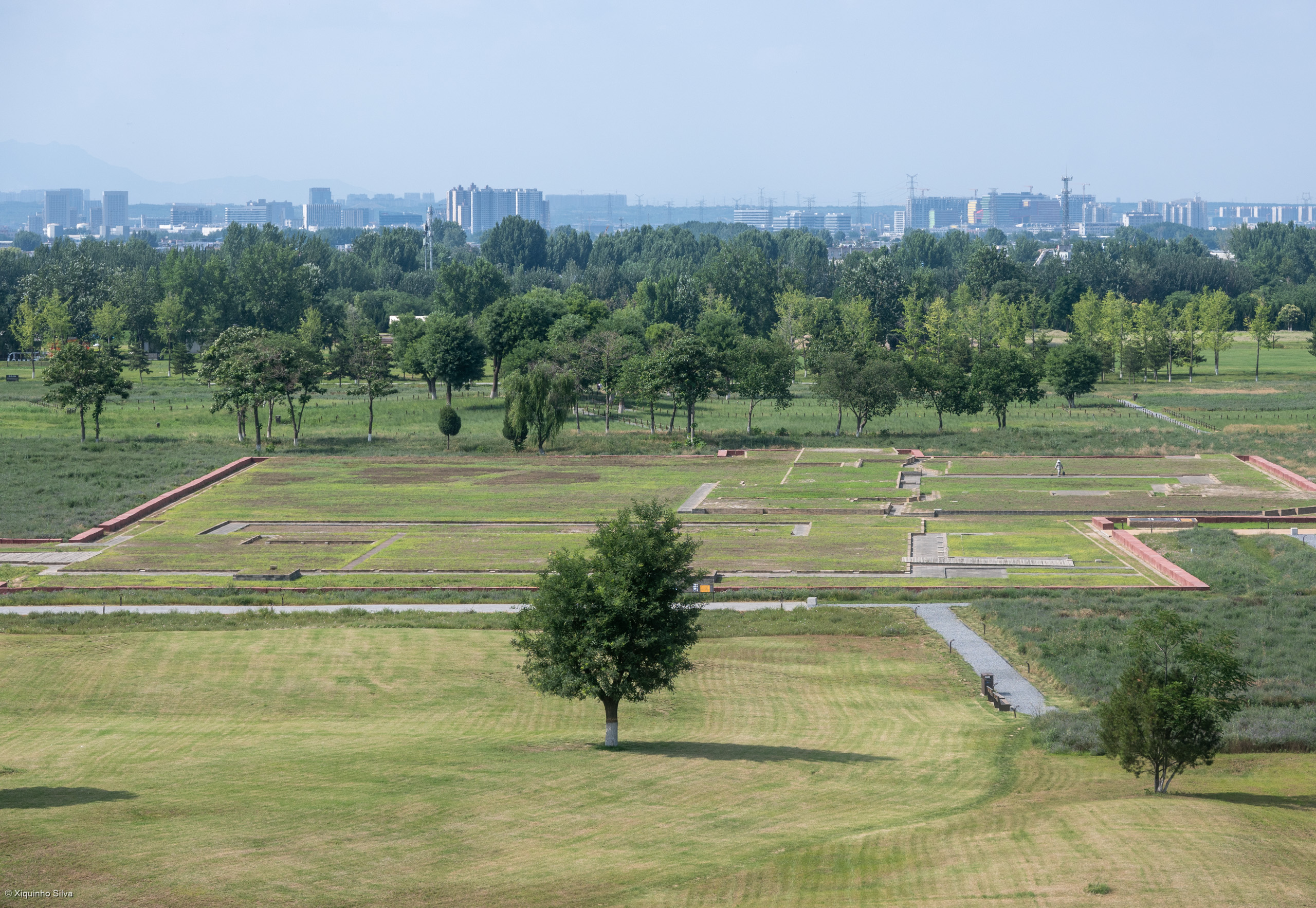
The grandest imperial palace complex ever built, Weiyang Palace served as the administrative heart of Chang’an for over eight centuries, spanning the reigns of nine dynasties before its destruction during the Tang period.
At a glance
Weiyang Palace was the primary imperial residence and administrative centre of the Western Han dynasty and numerous successor regimes. Built in 200 BC under Emperor Gaozu of Han, it covered 4.8 square kilometres—nearly seven times the size of the modern Forbidden City and eleven times larger than Vatican City. Today, archaeological remains mark what was once the most extensive palace complex on Earth.
History
Emperor Gaozu of Han commissioned the palace in 200 BC, with Prime Minister Xiao He overseeing its construction. Weiyang Palace remained the seat of power through the Western Han, Xin, Eastern Han (under Emperor Xian), Western Jin (under Emperor Min), Han-Zhao, Former Qin, Later Qin, Western Wei, Northern Zhou, and early Sui dynasties. The palace endured for nearly a millennium until the Tang dynasty, when invaders approaching the Tang capital burned it down.
What you see
Little of the original palace survives today. The scale of the complex—covering nearly five square kilometres—distinguished it as an unparalleled feat of imperial architecture. Archaeological investigation has documented its vast footprint within modern Xi’an.
Cultural significance
Weiyang Palace embodies the architectural ambition and administrative sophistication of Han dynasty governance. Its use by successive dynasties underscores its enduring symbolic importance as a seat of imperial authority. The site represents a crucial chapter in Chinese imperial history and urban development.
Key facts
- Country: China
- City: Xi’an (ancient Chang’an)
- Founded: 200 BC
- Coordinates: 34.30°N, 108.86°E
- Area: 4.8 square kilometres (1,200 acres)
- UNESCO World Heritage Site: 2014 (as part of the Silk Road)
Practical information & getting there
The archaeological site lies within Xi’an’s urban area. Visitors should consult local tourism authorities for current access and viewing opportunities, as much of the site remains under active study. The nearest major airport is Xi’an Xianyang International Airport.
Sources & resources
Find it on the map
See this place and what’s around it →📷 Become a Cultural Heritage Online photographer
Share your photos of places: they stay published under your name as the author. The more they're seen, the more you get noticed — and soon a contest will reward the most appreciated photos.
Log in or sign up free to add a photo