
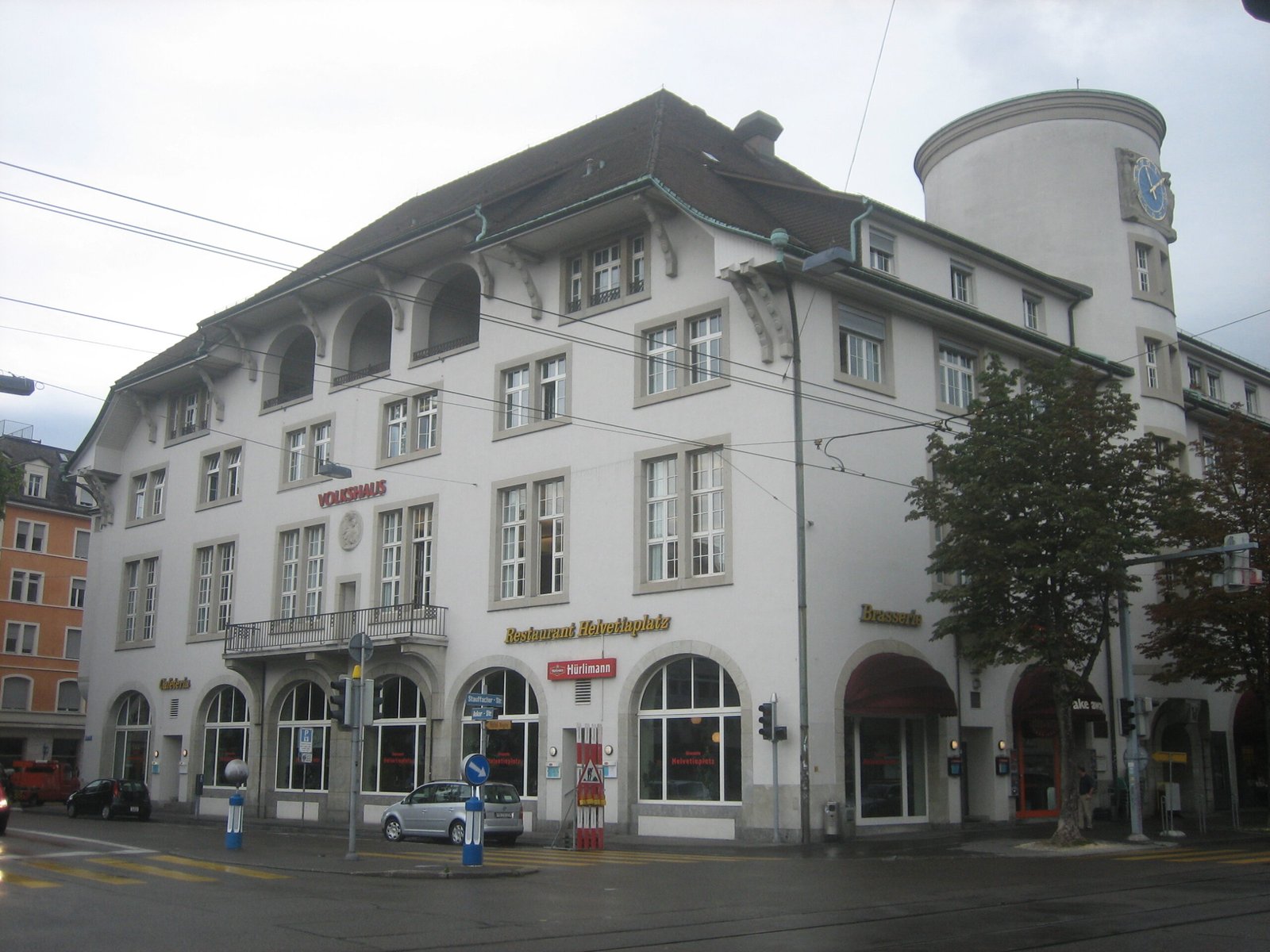
A 1,200-seat concert hall on Helvetiaplatz, completed in 1910, that remains a centerpiece of Zurich’s cultural life.
At a glance
The Volkshaus stands on Helvetiaplatz in central Zurich. Built to seat 1,200, it opened in 1910 as a venue for concerts and public gatherings. The hall continues to serve as an important cultural institution in Switzerland’s largest city.
History
Construction began in June 1909 and was completed within months. The hall opened to the public in 1910, establishing itself as a prominent venue during a period of rapid cultural development in Zurich.
What you see
The building accommodates an audience of 1,200. Its architecture reflects early 20th-century concert hall design, with a focus on functional elegance and acoustic performance suitable for orchestral music and public events.
Cultural significance
The Volkshaus has played a central role in Zurich’s concert life since its opening. As one of the city’s principal music venues, it reflects Switzerland’s strong cultural identity and commitment to public access to the arts.
Key facts
- Country: Switzerland
- City: Zurich, Canton of Zurich
- Coordinates: 47.3756, 8.5272
- Capacity: 1,200 seats
- Opened: 1910
Practical information & getting there
The Volkshaus is located on Helvetiaplatz in central Zurich, accessible by public transport. Check the venue’s website for current events, concert schedules, and ticketing information.
Sources & resources
Find it on the map
See this place and what’s around it →📷 Become a Cultural Heritage Online photographer
Share your photos of places: they stay published under your name as the author. The more they're seen, the more you get noticed — and soon a contest will reward the most appreciated photos.
Log in or sign up free to add a photoIs this page about you?
This page is read by travellers and heritage enthusiasts who find it on Google. Tell us how you are connected to this place and we will take it from there.