
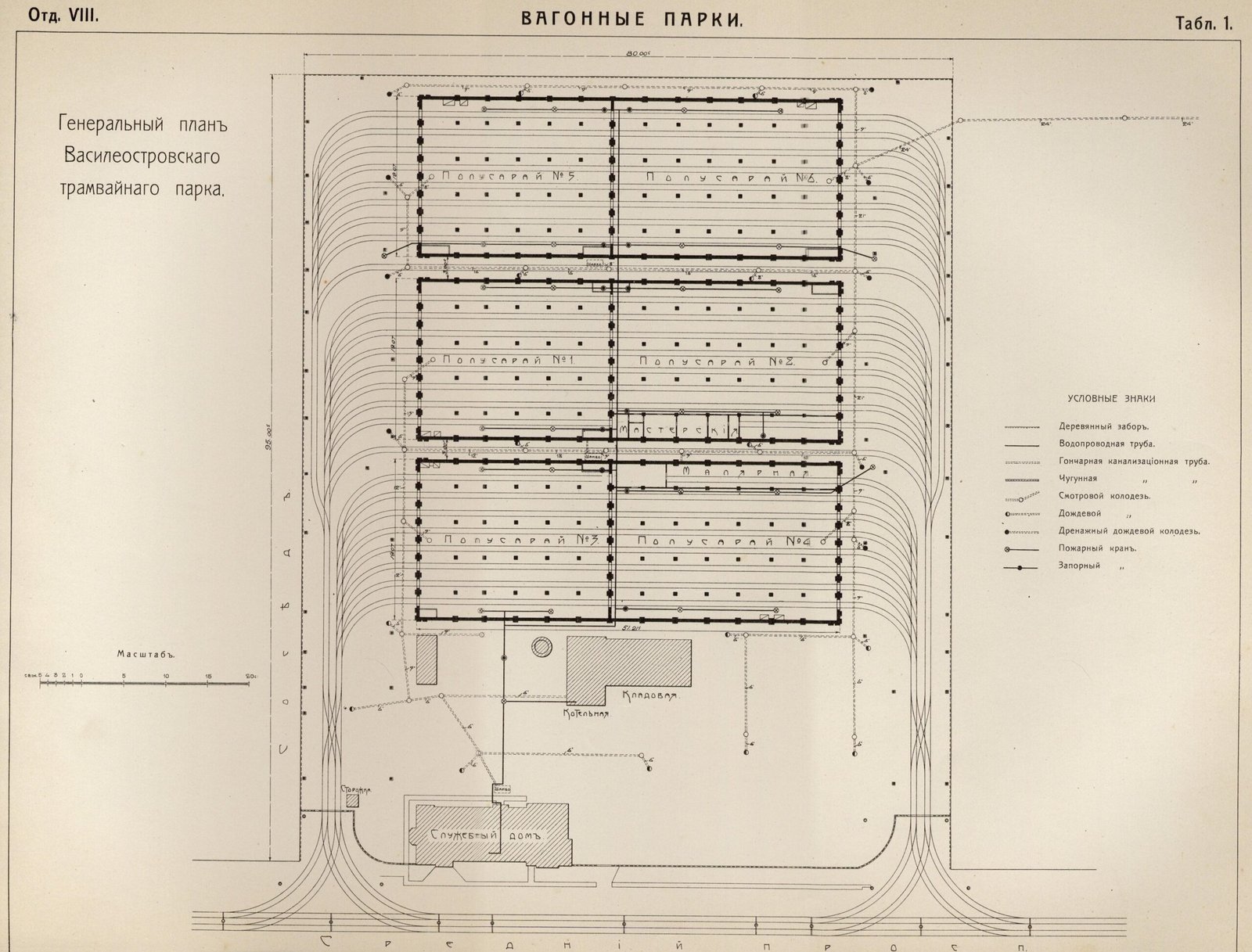
Saint Petersburg’s oldest tram depot, built by Westinghouse Electric as a functional hub for urban transport and now a living memorial to the city’s resilience during World War II.
At a glance
The Vasileostrovsky tram depot stands as both a working transportation facility and cultural landmark on Vasileostrovsky Island. Constructed between 1906 and 1908, it represents early-20th-century industrial engineering and remains the oldest structure of its kind in the city.
History
Built by Westinghouse Electric between 1906 and 1908, the depot served the growing needs of Saint Petersburg’s expanding tram network. During the Siege of Leningrad in World War II, the depot became a symbol of the city’s determination to maintain essential services under Nazi bombardment. Citizens regard it as a shrine associated with that unprecedented feat of endurance and survival.
What you see
The depot’s design reflects early industrial modernism, with functional structures purpose-built for tram maintenance and storage. Westinghouse’s engineering legacy is evident in the facility’s layout and engineering systems.
Cultural significance
For Saint Petersburg residents, the depot transcends its utilitarian role. It embodies the city’s wartime courage and the ordinary heroism of keeping Leningrad’s transport moving during one of history’s most devastating sieges. The Museum of Electrical Transport, now housed there, documents this heritage and the evolution of urban transit technology.
Key facts
- Country: Russia
- City: Saint Petersburg (Vasileostrovsky District)
- Built: 1906–1908
- Builder: Westinghouse Electric
- Coordinates: 59.938°N, 30.258°E
- Current use: Museum of Electrical Transport and active tram facility
Practical information & getting there
The depot is located in the Vasileostrovsky District on the north bank of the Neva River. It remains an active facility and museum; visiting hours and access should be confirmed in advance. Public transport connections serve the surrounding area.
Sources & resources
Find it on the map
See this place and what’s around it →📷 Become a Cultural Heritage Online photographer
Share your photos of places: they stay published under your name as the author. The more they're seen, the more you get noticed — and soon a contest will reward the most appreciated photos.
Log in or sign up free to add a photoIs this page about you?
This page is read by travellers and heritage enthusiasts who find it on Google. Tell us how you are connected to this place and we will take it from there.