

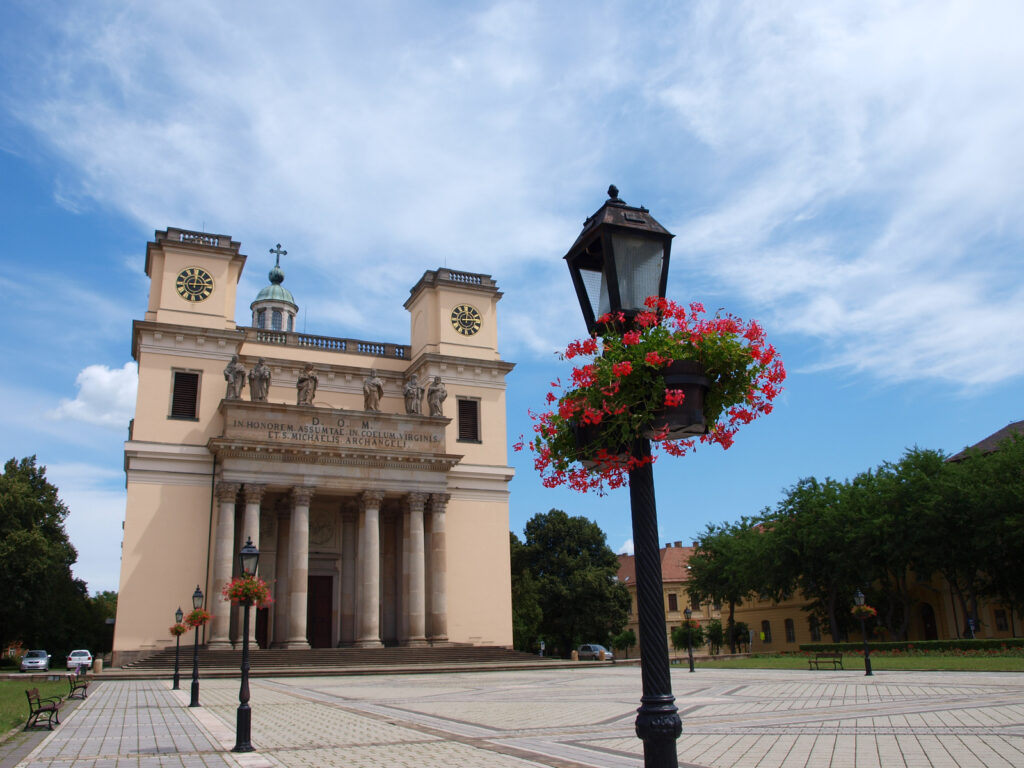
A Baroque cathedral in northern Hungary, rebuilt after Ottoman occupation and consecrated within a decade of its foundation.
At a glance
Vác Cathedral serves as the seat of the Diocese of Vác, established in 1004 under King Stephen I. The present structure is the fifth building on this site, completed in 1777 after construction began in 1761.
History
The first cathedral was erected in 1074, but fell to Mongol invasion in the fourteenth century. Ottoman occupation left only remnants of the medieval walls—traces still visible today. Reconstruction began only after the Ottomans departed Hungary.
Building commenced in 1761, and the cathedral was consecrated in 1772, five years before completion in 1777. During World War II, a Soviet bomb struck the dome in 1944 but failed to detonate, an event local parishioners regarded as miraculous.
What you see
The cathedral reflects Baroque architectural tastes of the eighteenth century. Its dome—the structure damaged but preserved during the 1944 bombing—remains a prominent feature of Vác’s skyline.
Cultural significance
Vác Cathedral embodies the resilience of Hungarian Catholic architecture across medieval, Ottoman, and modern eras. The cathedral’s rapid consecration and completion—within sixteen years—represents renewed religious commitment following centuries of foreign occupation and conflict.
Key facts
- Country: Hungary
- City: Vác
- Coordinates: 47.7759, 19.1314
- Construction: 1761–1777
- Consecrated: 1772
- Diocese founded: 1004
Practical information & getting there
Vác Cathedral is located in the town of Vác in northern Hungary, on the Danube Bend between Budapest and Eger. Specific visitor hours and entry details are best confirmed locally.
Franz Anton Maulbertsch painted the high altarpiece and the dome fresco; Bishop Kristóf Migazzi had the altarpiece replaced two years later, and the original re-emerged only in 1994, during restoration. Since June 2025 a lookout in the north tower, reached by 210 steps, is open to visitors.
Sources & resources
Find it on the map
See this place and what’s around it →📷 Become a Cultural Heritage Online photographer
Share your photos of places: they stay published under your name as the author. The more they're seen, the more you get noticed — and soon a contest will reward the most appreciated photos.
Log in or sign up free to add a photoIs this page about you?
This page is read by travellers and heritage enthusiasts who find it on Google. Tell us how you are connected to this place and we will take it from there.
This entry stays online and free either way — and a free account lets you add to it yourself.