
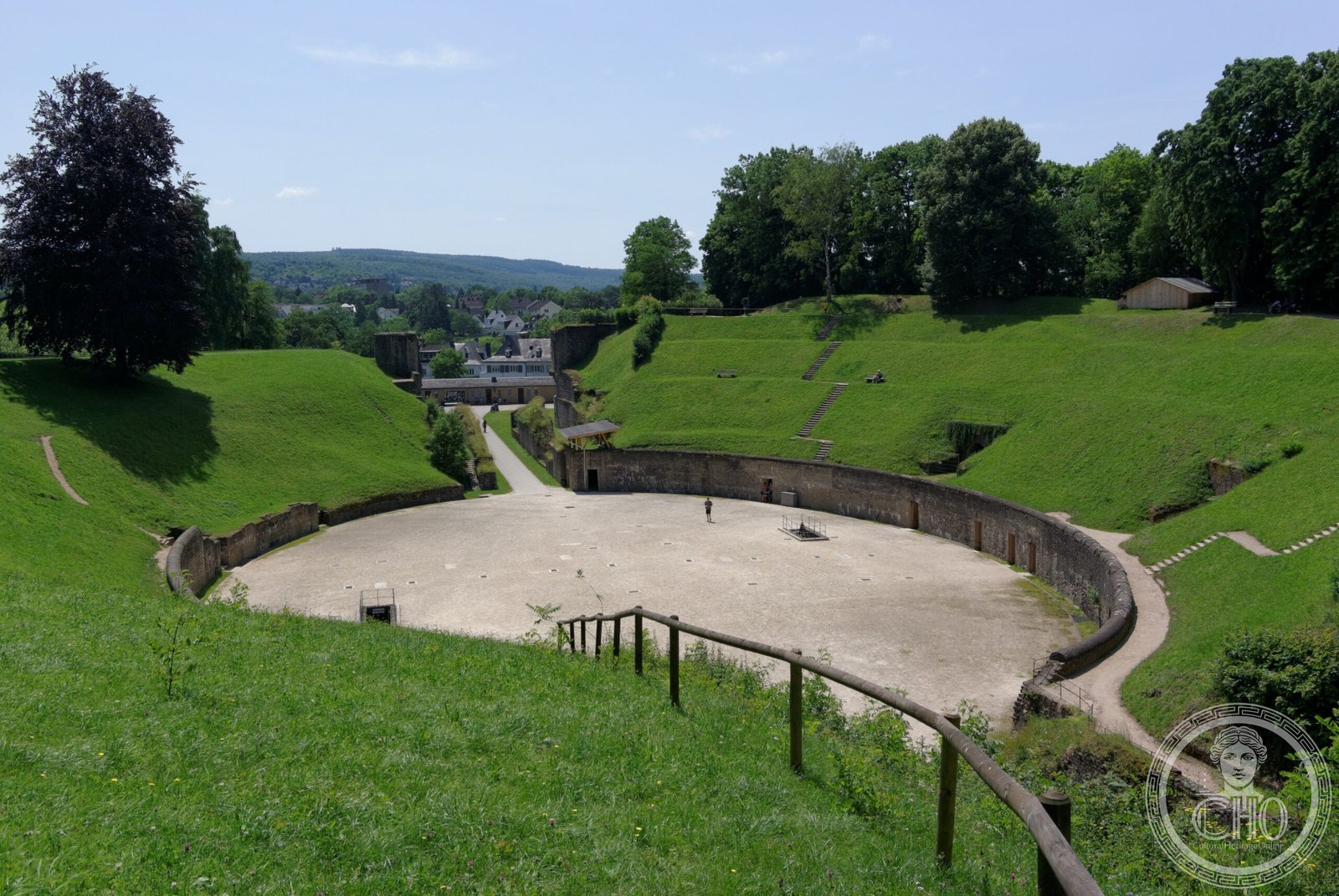
A Roman amphitheater standing as monumental proof of Trier’s status as a major imperial city north of the Alps, now part of a UNESCO World Heritage ensemble.
At a glance
The Trier Amphitheater is a Roman-era structure that testifies to the city’s former prominence as a leading urban center in the empire’s northern territories. Its inclusion in UNESCO recognition highlights the enduring significance of Trier’s classical heritage.
History
Built during the Roman period, the amphitheater reflects Trier’s role as a major settlement north of the Alps. The structure survives as material evidence of the city’s prosperity and cultural importance under Roman rule.
What you see
The amphitheater represents Roman engineering and entertainment architecture. Detailed architectural information from primary sources is limited; visitors are encouraged to consult on-site interpretive materials.
Cultural significance
The amphitheater anchors Trier’s identity as a major Roman city and underscores the empire’s cultural reach into northern Europe. Its designation as part of a UNESCO World Heritage Site recognizes its role within a broader ensemble that includes the Cathedral of St. Peter and the Church of Our Lady.
Key facts
- Country: Germany
- City: Trier
- Coordinates: 49.748086, 6.649054
- UNESCO World Heritage Site: Roman Monuments, Cathedral of St. Peter and Church of Our Lady in Trier
Practical information & getting there
The amphitheater is located in Trier, accessible to visitors exploring the city’s Roman heritage. For current visiting hours, admission details, and travel information, consult local tourism resources or the UNESCO site documentation.
Sources & resources
Find it on the map
See this place and what’s around it →📷 Become a Cultural Heritage Online photographer
Share your photos of places: they stay published under your name as the author. The more they're seen, the more you get noticed — and soon a contest will reward the most appreciated photos.
Log in or sign up free to add a photoIs this page about you?
This page is read by travellers and heritage enthusiasts who find it on Google. Tell us how you are connected to this place and we will take it from there.