
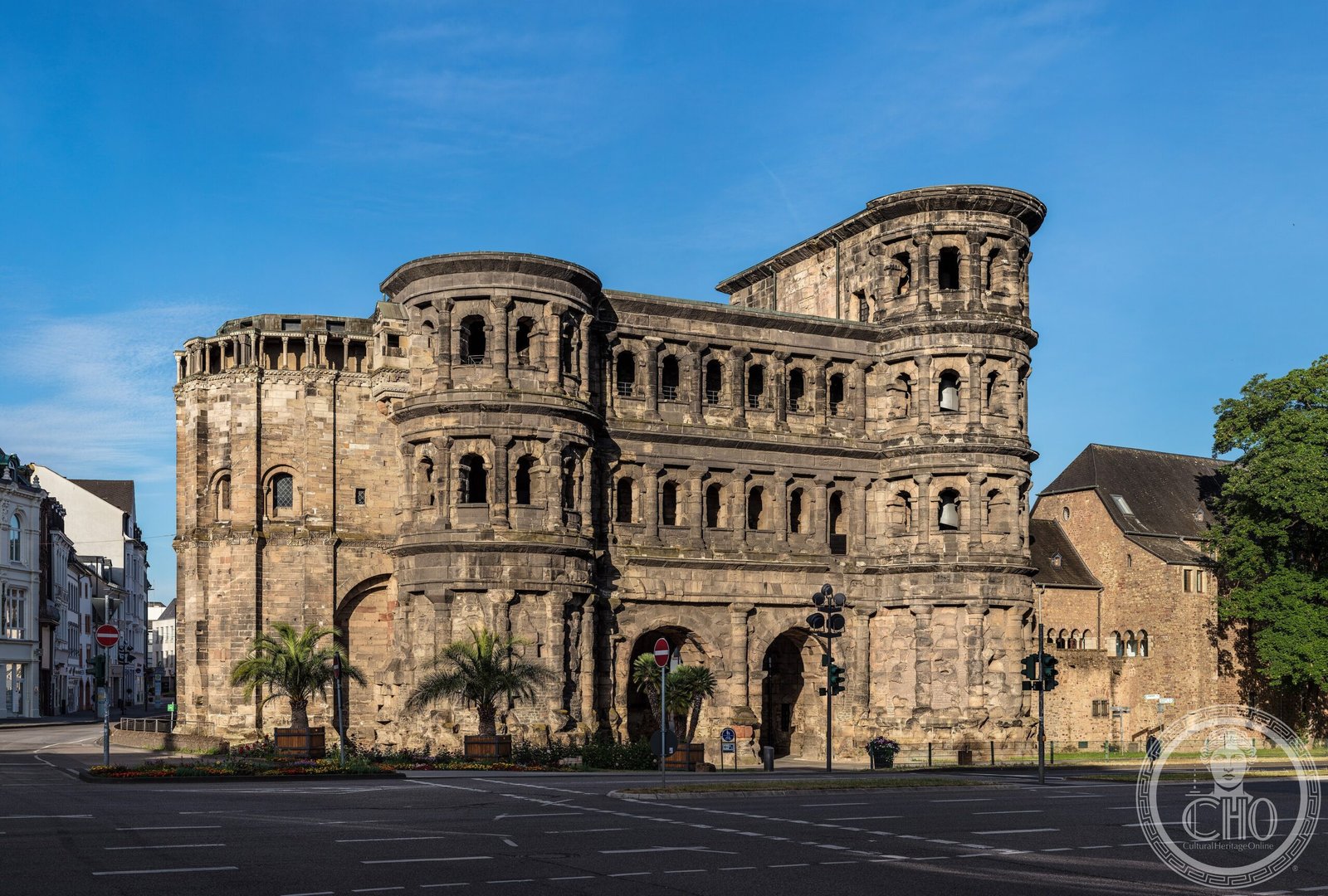
A monumental Roman gateway that has dominated Trier’s skyline for nearly two millennia, the Porta Nigra stands as a masterwork of military architecture and one of the finest surviving structures from the empire’s frontier defenses.
At a glance
The Porta Nigra is a substantial Roman city gate in Trier, Germany, and a UNESCO World Heritage Site. Its name—Latin for “black gate”—reflects the darkened stone that has accumulated over centuries, though its original Roman designation remains unknown.
History
Built during the Roman period as a monumental gateway to the city, the Porta Nigra served as both a functional military entrance and a symbolic declaration of imperial power. The medieval name originated from the stone’s darkened appearance, which has persisted through the ages. Its original Roman name has not been preserved in historical records.
What you see
The structure exemplifies Hellenistic military architecture of its era. Its monumental scale and craftsmanship demonstrate the engineering sophistication that characterized Roman frontier fortifications, with stonework that has withstood centuries of exposure and adaptation.
Cultural significance
As one of the best-preserved Roman city gates north of the Alps, the Porta Nigra embodies the architectural ambitions of Roman Trier at its height. It remains a powerful testament to the city’s importance as a Roman outpost and commercial hub on the Rhine frontier.
Key facts
- Location: Trier, Germany
- Coordinates: 49.75972222, 6.64388889
- UNESCO World Heritage Site
- Period: Roman
Practical information & getting there
The Porta Nigra is centrally located in Trier’s historic old town. Detailed visiting information is available from local Trier tourism services.
Sources & resources
Find it on the map
See this place and what’s around it →📷 Become a Cultural Heritage Online photographer
Share your photos of places: they stay published under your name as the author. The more they're seen, the more you get noticed — and soon a contest will reward the most appreciated photos.
Log in or sign up free to add a photoIs this page about you?
This page is read by travellers and heritage enthusiasts who find it on Google. Tell us how you are connected to this place and we will take it from there.