

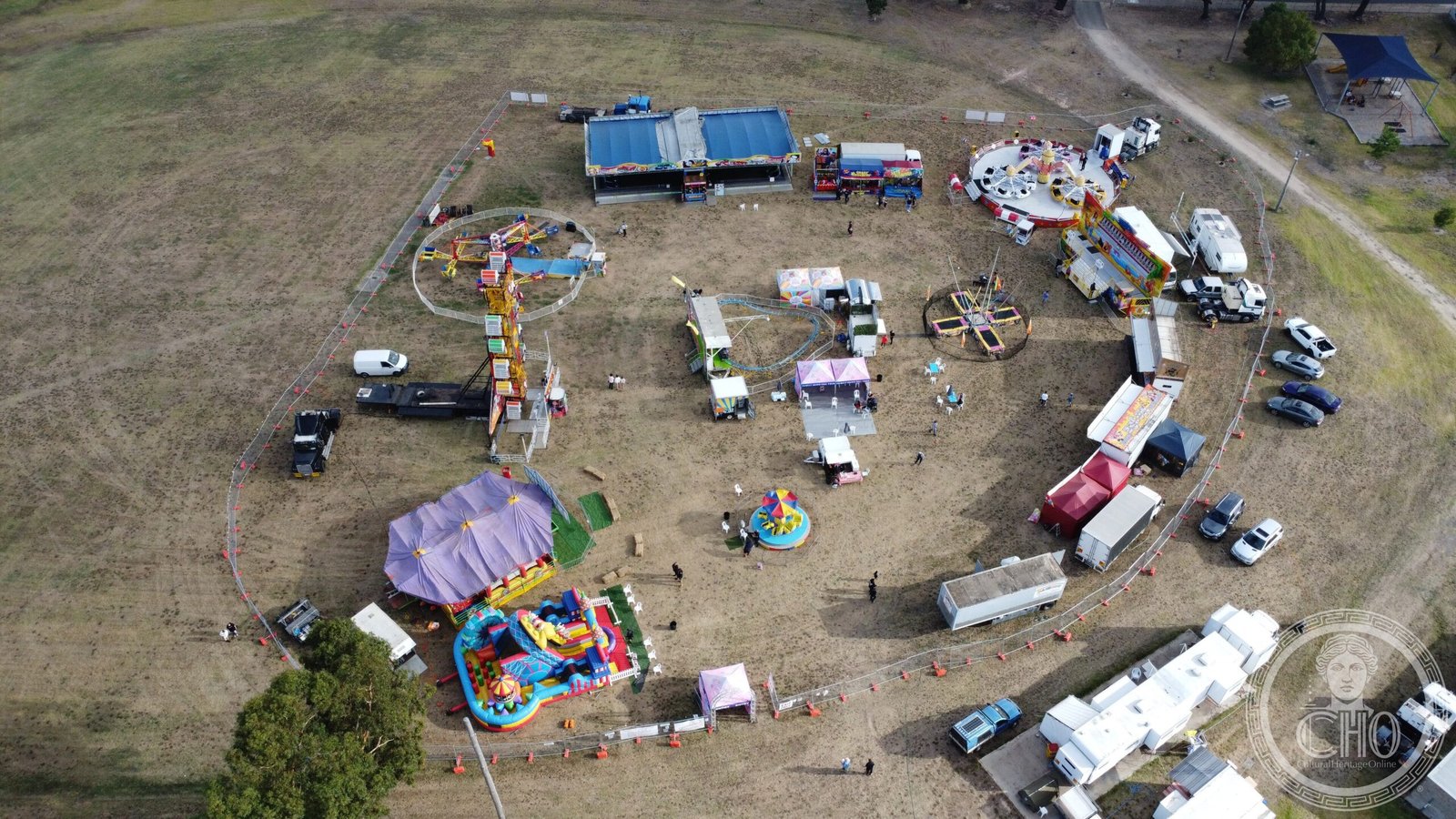
A mobile amusement spectacle that transforms public spaces with rides, games, food stalls, and performances, carrying forward a tradition rooted in 19th-century itinerant entertainment.
At a glance
The traveling carnival is a temporary amusement show that arrives in towns and cities, then moves on. Unlike permanent amusement parks, carnivals set up in open fields and public spaces for limited periods. They combine mechanical rides, food and merchandise vendors, games of chance and skill, thrill acts, and sometimes animal performances into a unified entertainment experience.
Origins and history
Traveling carnivals trace their roots to the 19th-century circus tradition. Both forms emerged as fitted-up entertainment in open fields near or within towns, staying briefly before relocating. Many modern carnivals retain circus elements, including performers and clown-inspired aesthetics, though the North American traveling carnival evolved independently from religious carnival celebrations, becoming a secular commercial enterprise.
The tradition today
Contemporary traveling carnivals remain mobile operations, transported between locations on a regular schedule. They assemble temporarily with mechanical rides, game booths offering prizes, food vendors serving carnival cuisine, and live performers. The setup typically occupies designated public grounds—fairgrounds, town squares, or vacant lots—creating a temporary but complete entertainment zone before dismantling and moving to the next destination.
Cultural significance
Traveling carnivals represent a living link to popular entertainment history and community celebration. They democratize access to amusement—arriving directly in towns rather than requiring travel to fixed venues. The tradition embodies entrepreneurial spirit and collective memory, marking seasonal rhythms and creating shared public experiences across generations. For many communities, the carnival’s arrival signals festivity and social gathering.
Key facts
- Country: Belgium
- Anchor community: Brussels
- UNESCO Intangible Cultural Heritage (Representative List): yes
- Type: Mobile amusement spectacle combining rides, games, food, and performance
Where to experience it
Traveling carnivals arrive periodically in Brussels and towns throughout Belgium. You can check local municipal websites and community calendars for carnival schedules and locations. Carnivals typically operate in spring and summer months, though dates vary by region and year.
Sources & resources
- Traveling carnival – Wikipedia
- Cultural Heritage Online
Find it on the map
See this place and what’s around it →📷 Become a Cultural Heritage Online photographer
Share your photos of places: they stay published under your name as the author. The more they're seen, the more you get noticed — and soon a contest will reward the most appreciated photos.
Log in or sign up free to add a photo