

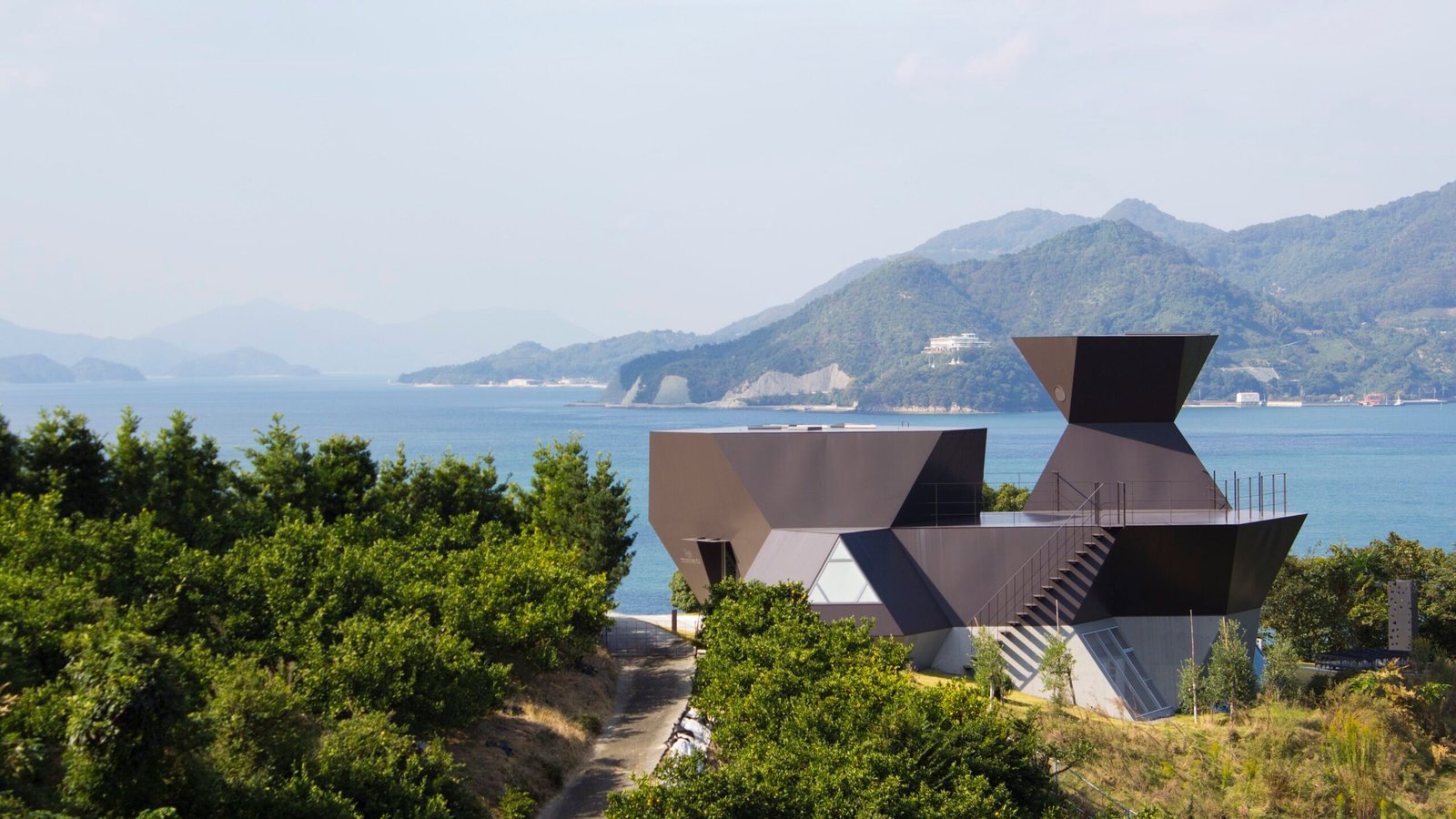
Two pavilions by Pritzker Prize–winning architect Toyo Ito stand on a promontory in the Seto Inland Sea, dedicated to his work and contemporary Japanese design.
At a glance
The museum comprises two small buildings—Steel Hut and Silver Hut—both designed by Toyo Ito. Set on Ōmishima, an island in the Seto Inland Sea, the structures embody the architect’s minimalist philosophy while serving as exhibition and educational spaces.
History
The museum opened in 2011. It was conceived to celebrate the practice of Toyo Ito, one of Japan’s most influential contemporary architects, while engaging with broader themes of regional development and Japanese architectural innovation.
What you see
Steel Hut and Silver Hut are characterized by their restrained forms and dialogue with landscape. Ito’s designs emphasize transparency and fluidity between interior and exterior spaces, allowing the Seto Inland Sea and surrounding natural environment to inform the visitor’s experience. The pavilions’ materiality—evident in their names—reflects the architect’s careful consideration of structural expression and material honesty.
Cultural significance
The museum functions as both archive and statement. By placing Ito’s own work within a contemporary architectural context, it demonstrates principles of Japanese design that balance human scale with natural forces. The location on a small island emphasizes the integration of architecture with landscape—a defining concern of Ito’s career and contemporary Japanese practice.
Key facts
- Location: Ōmishima island, Imabari, Ehime Prefecture, Japan
- Coordinates: 34.21382778°N, 132.95046944°E
- Opened: 2011
- Architect: Toyo Ito (Pritzker Prize winner)
- Buildings: Steel Hut and Silver Hut
Practical information & getting there
The museum is located on Ōmishima in the Seto Inland Sea near Imabari. For current opening hours, admission fees, and detailed directions, consult the museum’s official website or contact information.
Sources & resources
Find it on the map
See this place and what’s around it →📷 Become a Cultural Heritage Online photographer
Share your photos of places: they stay published under your name as the author. The more they're seen, the more you get noticed — and soon a contest will reward the most appreciated photos.
Log in or sign up free to add a photoIs this page about you?
This page is read by travellers and heritage enthusiasts who find it on Google. Tell us how you are connected to this place and we will take it from there.