
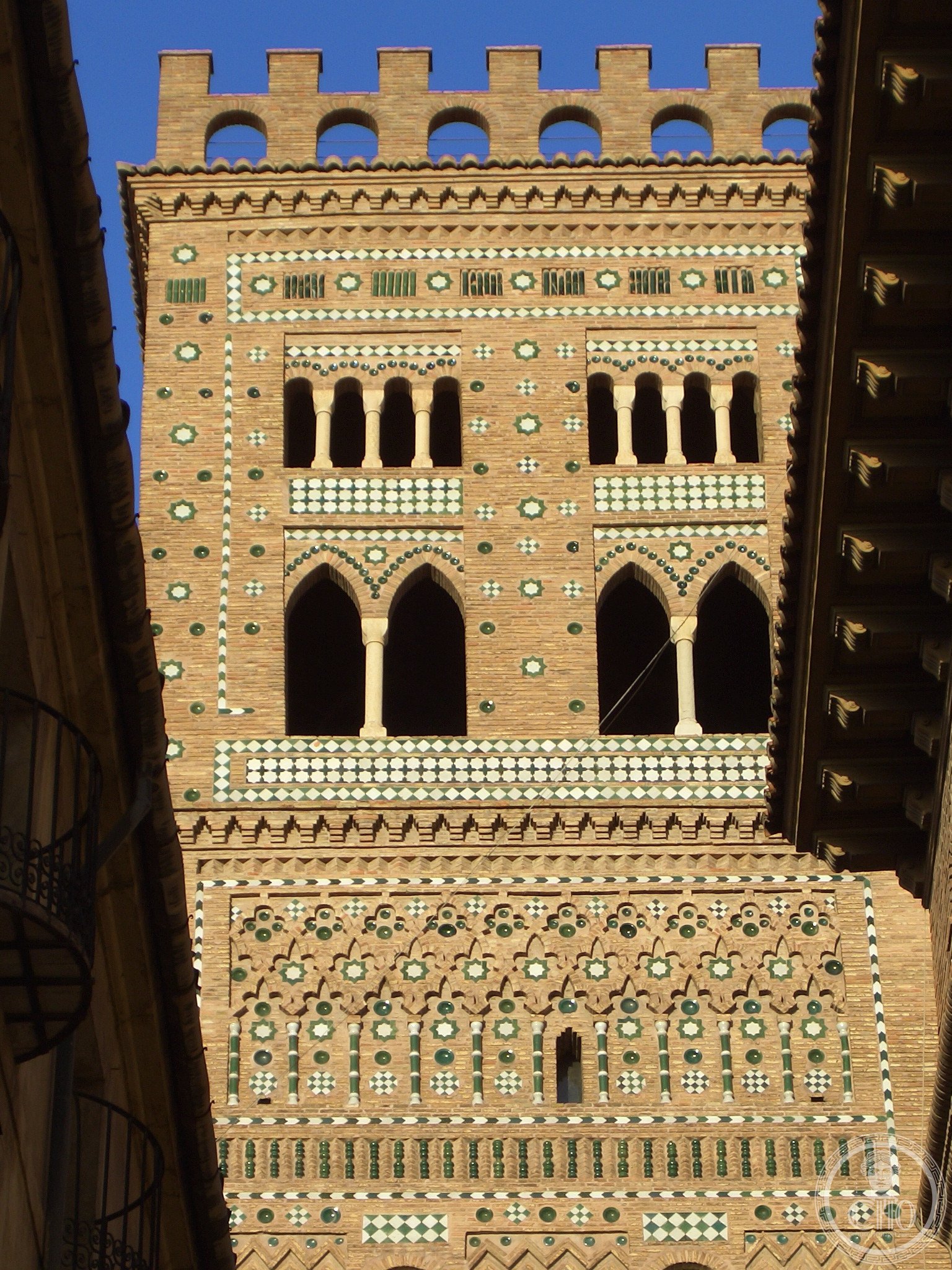
A masterwork of mudéjar bell tower architecture, this Teruel landmark rises above the city’s medieval streets with intricate decoration and refined structure, now home to an interpretation center devoted to Aragonese mudéjar style.
At a glance
The Tower of San Salvador is a mudéjar bell tower in Teruel, Spain, constructed in the early 14th century and now part of a UNESCO World Heritage Site. Its interior has been converted into the Centro de Interpretación del Mudéjar, offering visitors rare access to the interior architecture of Aragonese mudéjar towers and their decorative techniques.
History
Based on historical records in the Libro Verde de Teruel, the tower is believed to have been built during the first quarter of the 14th century—likely after 1315–1316, making it more recent than the adjacent San Martín Tower, which it imitates.
The tower stands connected to the baroque Church of El Salvador, whose earlier structure collapsed in 1677. Originally positioned just meters from the Portal of Guadalaviar within the city walls, the tower was designated a Bien de Interés Cultural in 1911. It was later included in the World Heritage Site originally titled “Mudéjar Architecture of Teruel.”
What you see
The tower rises prominently above the neighboring buildings along Calle de El Salvador. Its more elaborate decoration and refined structure distinguish it from earlier mudéjar towers in the region, exemplifying the stylistic evolution of Aragonese bell tower design.
The interior reveals the sophisticated construction techniques typical of mudéjar work, visible through the interpretation center’s exhibitions and explanatory displays. Visitors can access the tower through a modern entrance on the right from Paseo del Óvalo—not the original entrance, which descended from the church interior.
Cultural significance
The Tower of San Salvador represents a pivotal moment in Aragonese mudéjar architecture, blending Islamic geometric principles with Christian bell tower function. Its survival and preservation offer scholars and visitors rare opportunity to study how mudéjar towers were constructed and decorated across four centuries, from the 14th through 17th centuries.
Key facts
- Country: Spain
- City: Teruel, Aragon
- Period: Early 14th century (c. 1315–1320s)
- Coordinates: 40.342°N, 1.108°W
- Status: UNESCO World Heritage Site (Mudéjar Architecture of Teruel)
- Designation: Bien de Interés Cultural (1911)
- Current use: Centro de Interpretación del Mudéjar (Interpretation Center)
Practical information & getting there
The tower is open to visitors and houses an interpretation center with audiovisual presentations, exhibitions, and explanatory panels on mudéjar architecture. Entry is accessible via a door on the right side of Paseo del Óvalo, just before the interior passage. For current opening hours and admission details, contact local Teruel tourism offices.
Sources & resources
Find it on the map
See this place and what’s around it →📷 Become a Cultural Heritage Online photographer
Share your photos of places: they stay published under your name as the author. The more they're seen, the more you get noticed — and soon a contest will reward the most appreciated photos.
Log in or sign up free to add a photoIs this page about you?
This page is read by travellers and heritage enthusiasts who find it on Google. Tell us how you are connected to this place and we will take it from there.