

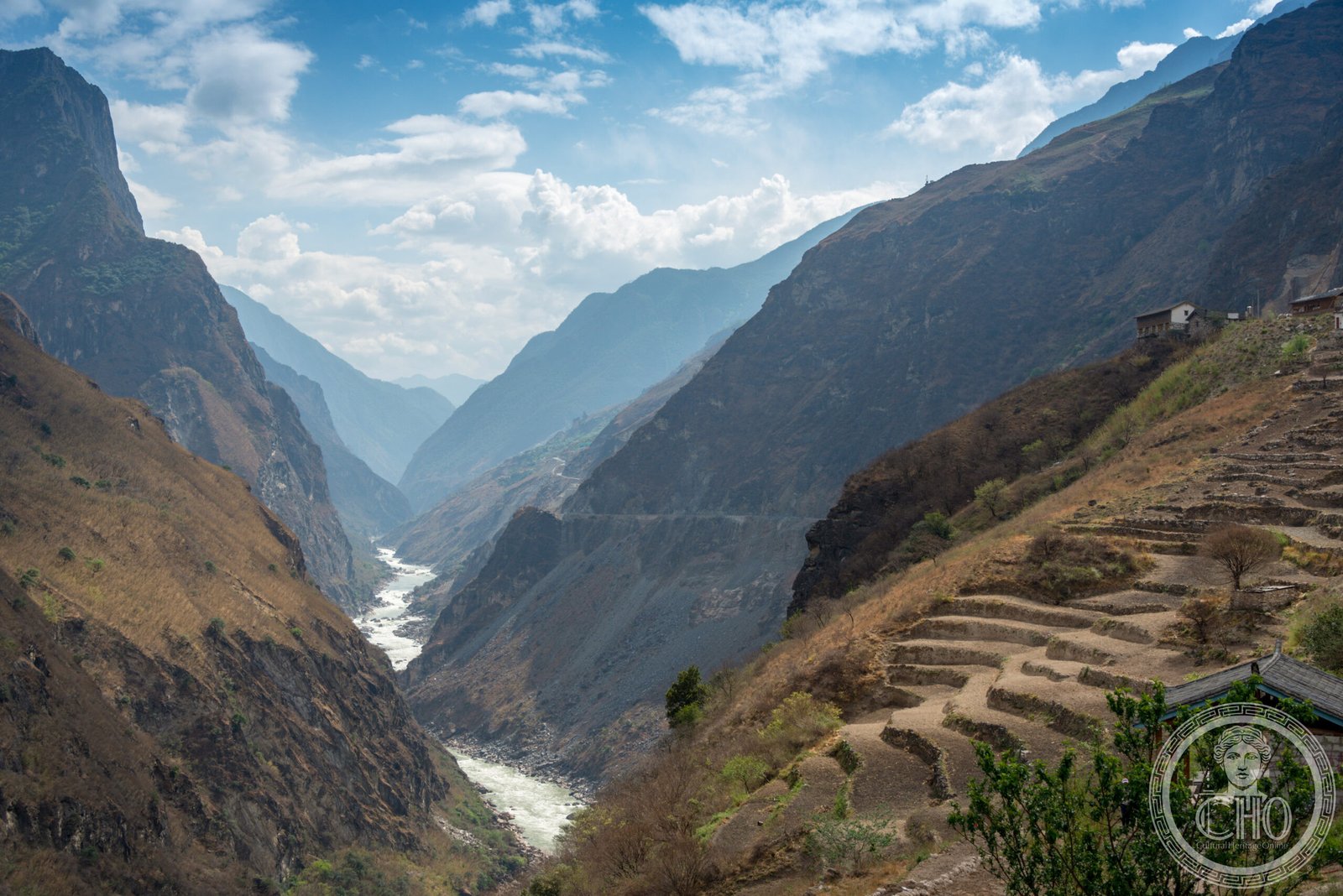
Three of Asia’s mightiest rivers flow in parallel through the Hengduan Mountains—a landscape of dramatic geological and ecological significance.
At a glance
A UNESCO World Heritage Site spanning vast mountain terrain in northwestern Yunnan, the Three Parallel Rivers region protects the upper drainage basins of the Jinsha (Yangtze), Lancang (Mekong), and Nujiang (Salween) rivers as they carve through the Hengduan Mountains.
History
The region’s recognition as a protected area reflects international commitment to preserving one of the world’s most geologically active and biologically diverse mountain systems. The designation acknowledges the area’s exceptional natural value and its role in regional hydrology and ecosystems.
What you see
Rather than human structures, the site’s features are geological and ecological. The three river valleys cut through the Hengduan Mountains with stark parallel courses, creating a landscape of extraordinary relief and diverse altitude zones. These parallel waterways—separated by mountain ridges—demonstrate the region’s tectonic complexity and hydrological drama.
Cultural significance
The Three Parallel Rivers area holds exceptional importance for biodiversity conservation and geological study. The region’s varied elevations and climate zones support distinct ecosystems that rank among the world’s richest. For the millions of people downstream across China, Southeast Asia, and the Mekong Basin, these rivers remain vital lifelines for water, power, and livelihoods.
Key facts
- Country: China (Yunnan Province)
- Rivers: Jinsha (Yangtze), Lancang (Mekong), Nujiang (Salween)
- Mountain range: Hengduan Mountains
- UNESCO World Heritage Site: yes
- Coordinates: 27.7379°N, 98.6672°E
Practical information & getting there
The site is extensive and mountainous; access varies by location. Much of the region is remote and challenging to visit. For detailed information about permits, guides, and accessible viewpoints, consult local tourism authorities in Yunnan or UNESCO’s official site documentation.
Sources & resources
- Three Parallel Rivers – Wikipedia
- Cultural Heritage Online
Find it on the map
See this place and what’s around it →📷 Become a Cultural Heritage Online photographer
Share your photos of places: they stay published under your name as the author. The more they're seen, the more you get noticed — and soon a contest will reward the most appreciated photos.
Log in or sign up free to add a photo