

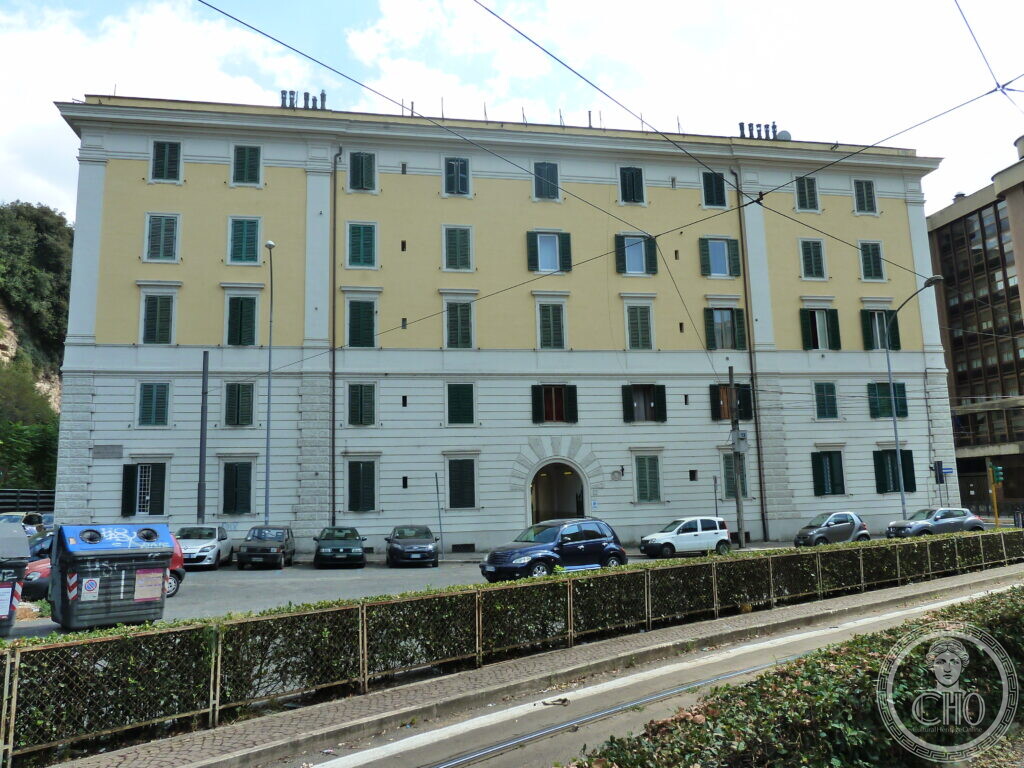
A single block remains from a public housing project begun in the early twentieth century between Via Flaminia and Viale Tiziano, designed by the socialist architect Quadrio Pirani.
At a glance
The building stands on Via Enrico Chiaradia in Rome, at the angle with Viale Tiziano. It is described by local sources as the only remaining structure of the ICP Flaminio I estate, built for the Istituto Case Popolari. The rest of the planned complex was demolished or never completed after a dispute over building on the strip between Via Flaminia and Viale Tiziano.
Key facts
- Where: Via Enrico Chiaradia, Roma
- What: Building
- When: 1905
- GPS: 41.9208, 12.4723 · Open in Google Maps
History
The building was erected in 1905 as part of the ICP Flaminio I complex, one of the first projects undertaken by the Istituto per le Case Popolari, which began addressing social housing in Rome in 1903. It was designed by Quadrio Pirani, the architect known for the San Saba district. According to Romapedia, Pirani was a socialist architect who attempted to design workers’ housing on a human scale, using decorative details in marble, brick and terracotta typical of the Marche region from which he came.
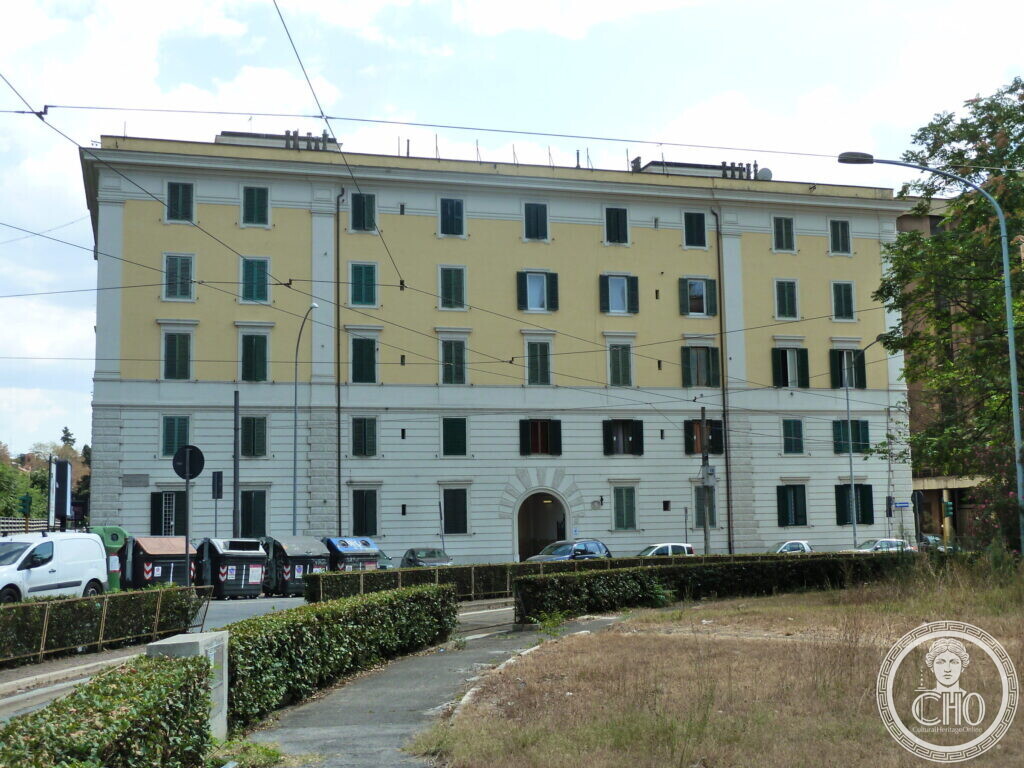
The complex was not part of a coordinated neighbourhood plan, which did not yet exist for the area. It was conceived in response to urgent housing needs and was meant to extend from Viale Tiziano down towards the Tiber bank at Albero Bello. The construction of this first block, however, raised significant objections linked to the urban planning rule prohibiting buildings on the strip between Via Flaminia and Viale Tiziano. These protests led to the halt of the construction works and to the demolition of other buildings that had already been partly built. The surviving block stands with a truncated end, described by Roma2pass as appearing to be there by chance, like a traffic divider. Demolition attempts have so far been unsuccessful because of the difficulty of offering residents housing in a position of comparable prestige.
What you see
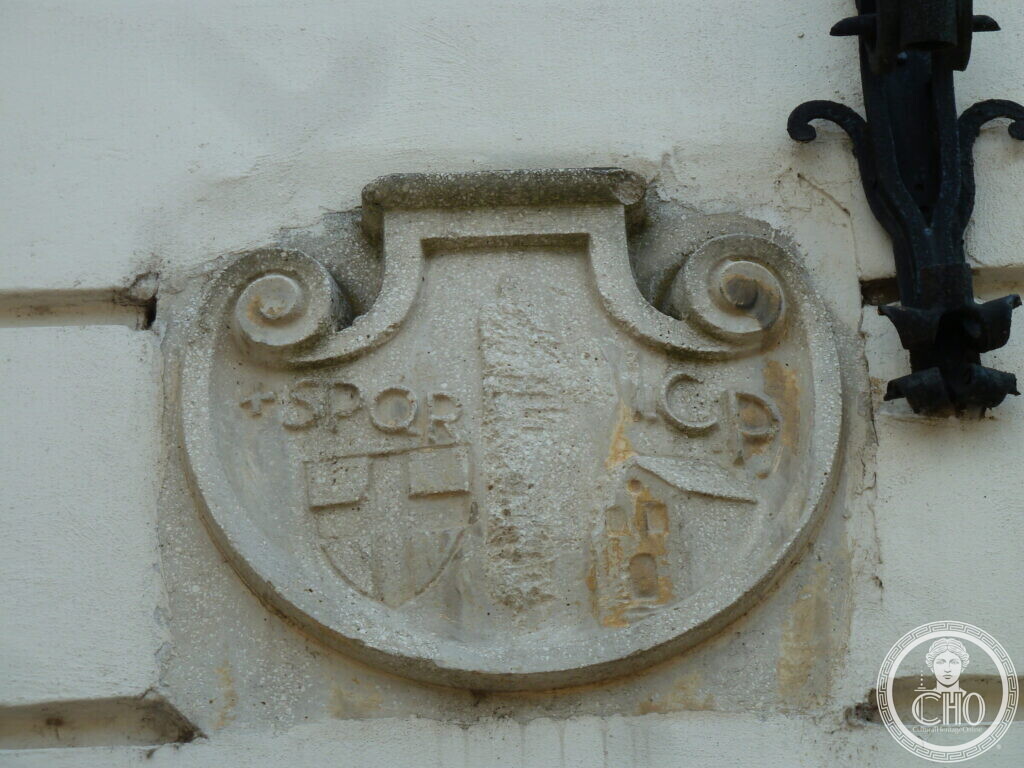
The photographs show a large multi-storey building with yellow upper floors rising above a white rusticated base. The elevation has repeated window bays and horizontal string courses. On the white plastered wall there is a weathered stone crest bearing the inscription SPQR, mounted beside an iron bracket. The street in front of the building is used for parked cars and has a tram track running along it. Wider views show the block from a distance, with overhead wires and street furniture including bins in the foreground.
Do you know more about this place?
If you know a date, a name, a document, a plaque or a photograph that tells its story, write to Sofia at sofia@culturalheritageonline.com or through the contact page. What arrives with a source goes into this page, with your name as the contributor.
Nearby
- Church of Sant’Andrea del Vignola — a small church close to the building, across the garden between Via Flaminia and Viale Tiziano
Gallery
Sources
- ROMAPEDIA, PUBLIC HOUSING COMPLEX ICP FLAMINIO I: name, date 1903/05, architect Quadrio Pirani, description of his approach and materials
- Roma2pass, Complesso Flaminio I: the 1905 date, location on Via Enrico Chiaradia, the polemics, the halt and demolitions, and the statement that this is the only remaining building
- Stefano Vigolo, photographs and notes to the editorial staff (2026): identification of the subject, the GPS link, and the 2010 photographs. Not a published source
Find it on the map
See this place and what’s around it →📷 Become a Cultural Heritage Online photographer
Share your photos of places: they stay published under your name as the author. The more they're seen, the more you get noticed — and soon a contest will reward the most appreciated photos.
Log in or sign up free to add a photoIs this page about you?
This page is read by travellers and heritage enthusiasts who find it on Google. Tell us how you are connected to this place and we will take it from there.