
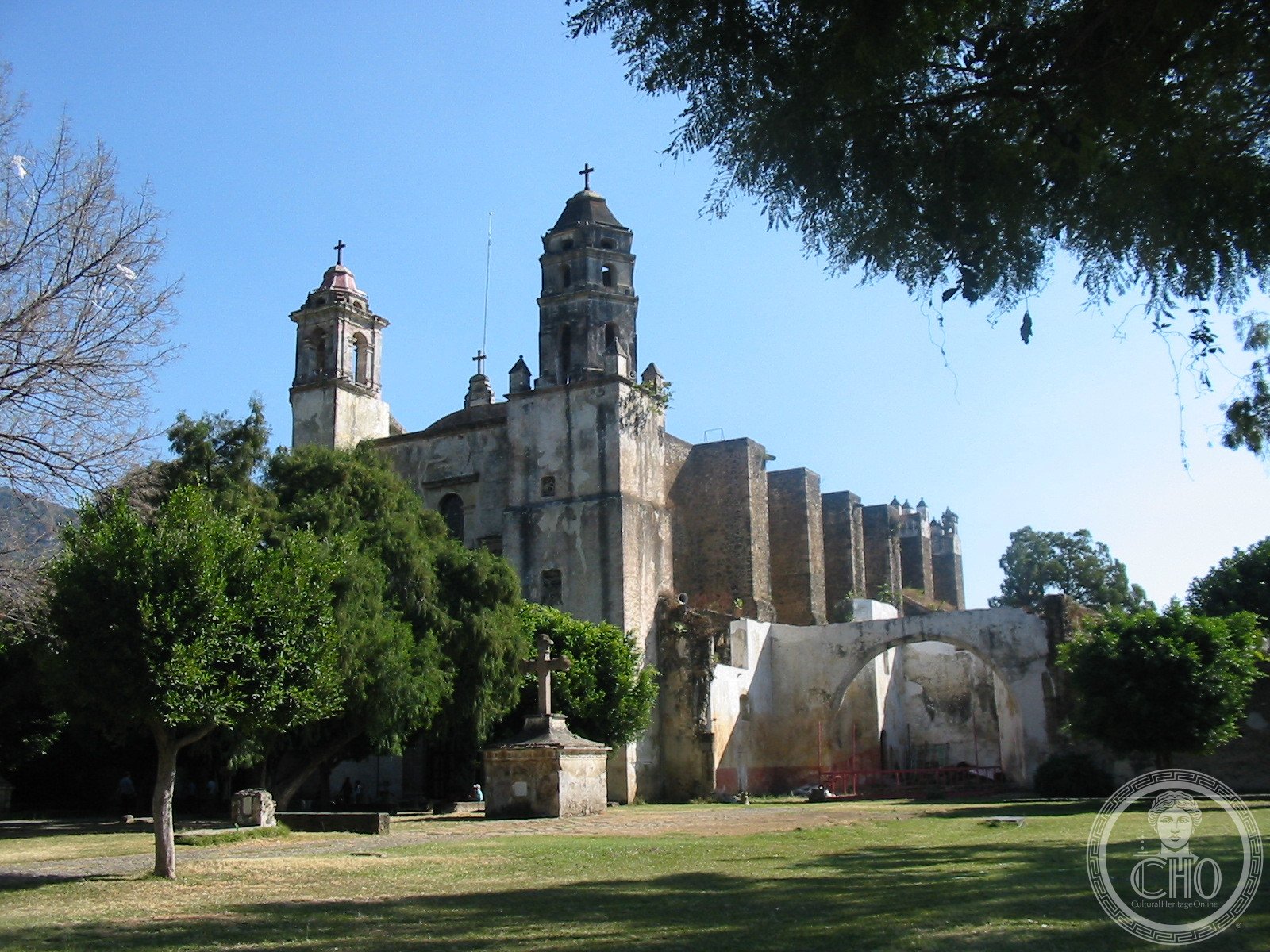
A Dominican monastery built by Indigenous workers stands as a masterwork of colonial syncretism, where indigenous craftsmanship meets European ecclesiastical architecture in the mountains of Morelos.
At a glance
This 16th-century monastery complex houses a parish church dedicated to the Virgin of the Nativity, a working museum, and a historical documentation center. Built between 1555 and 1580 by Tepoztecan Indians under Dominican direction, it exemplifies the architectural and spiritual fusion of the early colonial period in Mexico.
History
The monastery was constructed by indigenous workers under orders from Dominican friars during the early decades of Spanish settlement. The church was dedicated to the Virgin of the Nativity. In 1993, Mexico’s National Institute of Anthropology and History (INAH) launched a restoration project. UNESCO designated the site a World Heritage Site in 1994. The museum itself was inaugurated on November 26, 2000, on the upper floor of the complex.
What you see
The compound centers on a large atrium, formerly used as cemetery and gathering space, flanked by four capillas posas—small devotional chapels at the corners, a feature invented in New Spain for instructing large indigenous congregations. Only the northern pair remains well-preserved. Thick stone walls, joined with lime mortar and vegetable binders, are braced by buttresses—probably added as earthquake reinforcement. The towers were later additions; the northern tower sustained damage in the 1985 Mexico City earthquake.
Interior walls display paintings including the Virgin of the Rosary, Dominican emblems, and saints. A stone doorway bearing the Dominican shield leads to the abbey. The church interior remains dark despite large windows; notable artworks include an 18th-century Calvary painting and a 20th-century Sacred Heart of Jesus, which replaced an original destroyed during the Mexican Revolution.
The north-side abbey features walls four meters thick. Upstairs, ten monastic cells each offer views toward the surrounding landscape. Below lie the sacristy, archives, meditation room, refectory, kitchen, and storerooms. Three bells survive, including one cast in 1688 decorated with regional scorpions and lizards.
Cultural significance
The Ex Convento embodies the architectural vocabulary of evangelization in colonial Mexico—a dialogue between indigenous construction methods and European religious forms. Critic Manuel Toussaint praised it as “the perfect adaptation of a building with scenery, the unity of artistic conception with the environment.” The capillas posas pioneered here later spread throughout colonial Spanish America, shaping religious architecture across Guatemala, Colombia, Peru, and Bolivia.
Key facts
- Country: Mexico
- Coordinates: 18.9866, -99.0997
- Construction: 1555–1580
- UNESCO World Heritage Site: 1994
Practical information & getting there
The complex offers guided tours and maintains a research library. For current visiting hours and access details, contact the museum directly or consult local tourism resources in Tepoztlán, Morelos.
Sources & resources
Find it on the map
See this place and what’s around it →📷 Become a Cultural Heritage Online photographer
Share your photos of places: they stay published under your name as the author. The more they're seen, the more you get noticed — and soon a contest will reward the most appreciated photos.
Log in or sign up free to add a photoIs this page about you?
This page is read by travellers and heritage enthusiasts who find it on Google. Tell us how you are connected to this place and we will take it from there.