
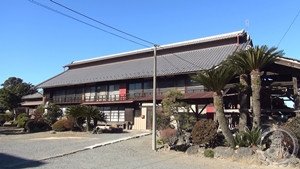
The former home of a visionary silk farmer whose revolutionary theories transformed Japanese sericulture, now a UNESCO-protected window into Meiji-era agricultural innovation.
At a glance
This modest farmhouse in Sakaishima, a neighborhood of Isesaki in Gunma Prefecture, preserves the residence and workspace of Tajima Yahei, a pioneering sericulturist whose methodologies established the framework for modern silk production. Designated a National Historic Site in 2012, it anchors the broader UNESCO World Heritage inscription recognizing Japan’s industrial contribution to global sericulture.
History
During the early Meiji period, Tajima Yahei synthesized empirical observation with emerging scientific principles to develop groundbreaking sericulture theory. His innovations directly shaped production practices that would define Japan’s dominance in the silk industry. The farm itself documents this transformative moment when traditional knowledge met industrial modernization.
What you see
The compound reflects the functional design of a working silk farm, with structures integrated to serve both domestic and agricultural purposes. The building’s layout reveals the intimate relationship between the household and the labor of sericulture.
Cultural significance
Tajima Yahei’s theoretical contributions established foundations still recognized in contemporary sericulture. His legacy connects rural Gunma to the international silk trade and Japan’s industrial heritage. The farm represents a critical transition point in agricultural science—where individual innovation influenced national production standards.
Key facts
- Location: Sakaishima, Isesaki, Gunma Prefecture, Japan
- Coordinates: 36.24638889°N, 139.23888889°E
- Designated National Historic Site: 2012
- UNESCO World Heritage status: Part of The Tomioka Silk Mill and Related Industrial Heritage (2013)
Practical information & getting there
The farm is located in the Sakaishima neighborhood of Isesaki. Details on opening hours, admission, and current visitor access are best verified directly with local tourism resources or the Isesaki city authority before planning your visit.
Sources & resources
Find it on the map
See this place and what’s around it →📷 Become a Cultural Heritage Online photographer
Share your photos of places: they stay published under your name as the author. The more they're seen, the more you get noticed — and soon a contest will reward the most appreciated photos.
Log in or sign up free to add a photoDo you manage this place?
This page is read by travellers and heritage enthusiasts who find it on Google. Keep it accurate — and make it work for you. Free for non-profit heritage institutions.