
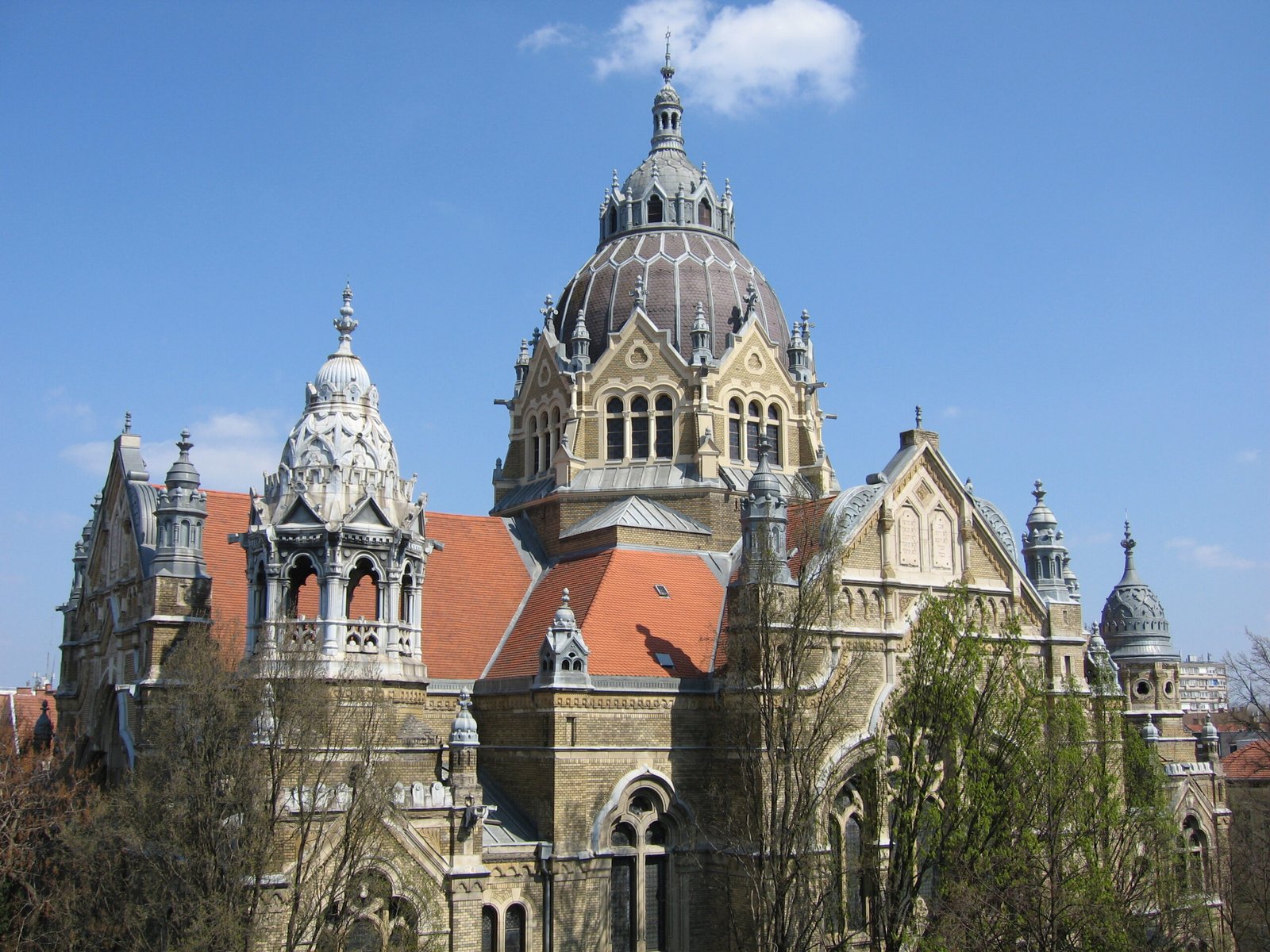
A domed landmark of Hungarian Art Nouveau, built for a Neolog congregation and still very much alive with music, tourists and prayer.
At a glance
Standing at Jósika utca 10, the Great Synagogue of Szeged is one of Hungary’s most striking religious buildings. Completed in 1902 to designs by Lipót Baumhorn, it ranks as the second largest synagogue in the country, after Budapest’s Dohány Street Synagogue, and one of the largest anywhere. Today it functions as a place of occasional worship, a concert venue and a major draw for visitors to the city.
History
Baumhorn won the commission through a design competition held in 1897. Construction followed quickly, and the building opened in 1902 for Szeged’s Neolog Jewish community. Neolog Judaism, a distinctly Hungarian reform movement, favored architecture that was grand and forward-looking rather than austere. The synagogue was conceived as both a house of worship and a civic statement. Its scale reflected a confident, prosperous community at the turn of the century. That confidence shows in every surface of the building.
What you see
The dome rises 48.5 meters. Inside, styles overlap rather than compete. Roman columns hold up the galleries. A rib-like wall above the organ nods to Gothic Revival forms. Moorish Revival details mingle with Art Nouveau ornament throughout, part of the fin-de-siècle idiom Hungarians called Magyar or Sezession style. Artist Miksa Róth created the dome’s interior painting and all of the stained glass, flooding the space with color. The Torah Ark carries deeper symbolism. It is built from sittim wood sourced along the Nile, referencing the material specified for Solomon’s Temple in the Book of Kings. Its hinges take the shape of hyssop, the plant once used in Temple ritual. Every element points somewhere historical.
Cultural significance
The synagogue embodies a particular moment in Hungarian Jewish life, when Neolog congregations built with ambition and artistic confidence. It remains a touchstone of that era’s architecture, blending Jewish liturgical requirements with the decorative language of European Art Nouveau. Beyond religious use, the building now hosts concerts and public events, extending its role as a cultural venue for the wider city. Few synagogues anywhere combine devotional purpose with such theatrical interior design.
Key facts
- Location: Jósika utca 10, Szeged, Hungary
- Architect: Lipót Baumhorn, selected via 1897 competition
- Completed: 1902
- Style: Art Nouveau, Moorish Revival, Historicist (Magyar/Sezession)
- Dome height: 48.5 meters (159 feet)
- Stained glass and dome painting: Miksa Róth
- Rank: second-largest synagogue in Hungary, among the largest in the world
Practical information & getting there
You can reach the synagogue easily on foot within central Szeged, a city well served by rail and road links in southern Hungary. It functions as both a tourist site and an active congregation space, so visiting hours may vary around religious observances and scheduled concerts. Checking ahead is sensible before planning a visit.
Sources & resources
Find it on the map
See this place and what’s around it →📷 Become a Cultural Heritage Online photographer
Share your photos of places: they stay published under your name as the author. The more they're seen, the more you get noticed — and soon a contest will reward the most appreciated photos.
Log in or sign up free to add a photoIs this page about you?
This page is read by travellers and heritage enthusiasts who find it on Google. Tell us how you are connected to this place and we will take it from there.