
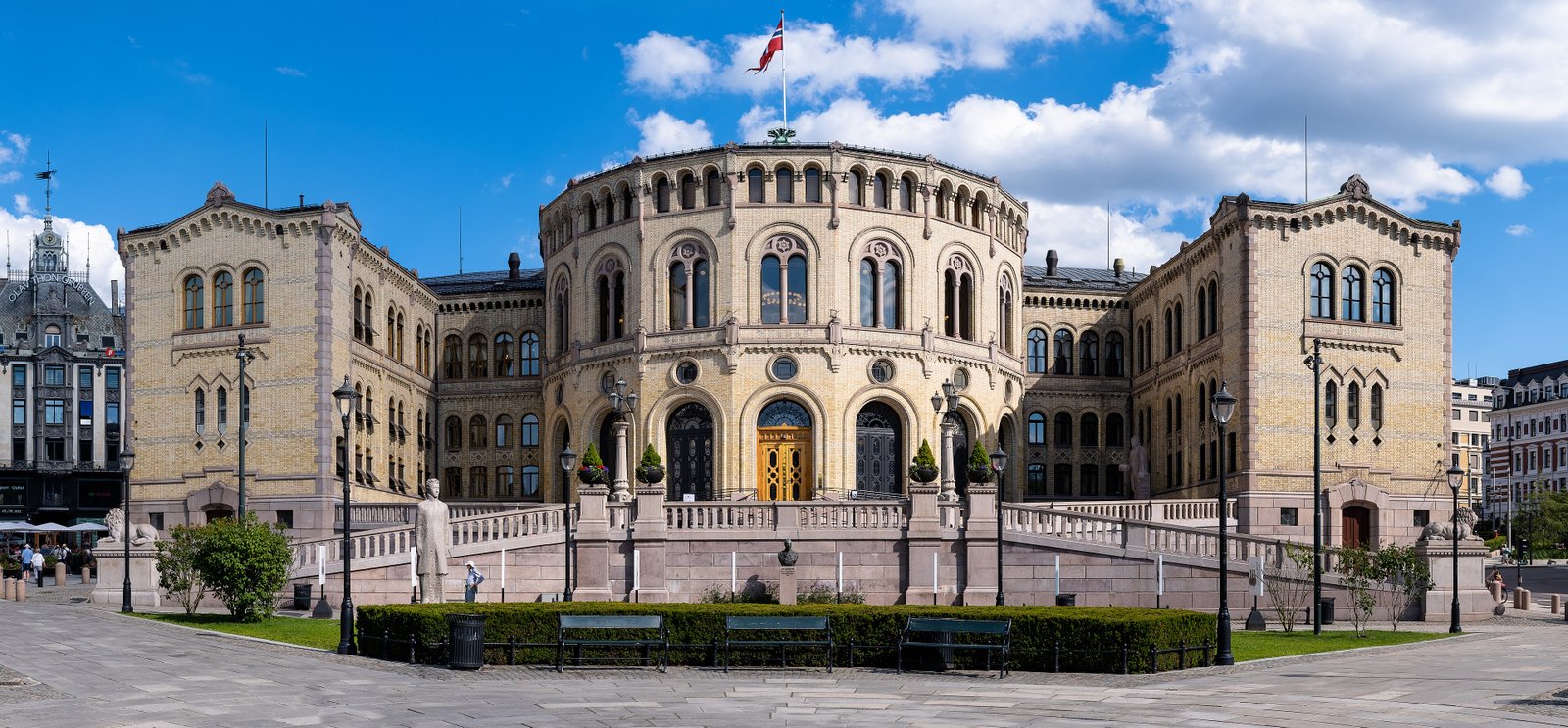
The seat of Norway’s parliament, this neoclassical structure on Karl Johans gate has housed the Storting since 1866.
At a glance
The Storting building stands at the heart of Oslo’s government quarter, serving as the working home of Norway’s legislative assembly. Designed by Swedish architect Emil Victor Langlet, it opened its doors in the mid-nineteenth century and remains one of the capital’s most significant civic buildings.
History
The building was taken into use on 5 March 1866, marking a milestone for Norwegian parliamentary governance. Swedish architect Emil Victor Langlet designed the structure, bringing his architectural expertise across the border to shape this important national institution.
What you see
The building exemplifies the neoclassical architectural language favored for important public buildings of its era. Its prominent position on Karl Johans gate, Oslo’s principal thoroughfare, reflects the centrality of parliament to the nation’s identity and civic life.
Cultural significance
The Storting building embodies Norway’s democratic traditions and governmental continuity. For over 150 years, it has hosted the debates, legislation, and deliberations that shape Norwegian society, making it a symbol of the nation’s parliamentary heritage.
Key facts
- Location: Karl Johans gate 22, Oslo Municipality, Norway
- Opened: 5 March 1866
- Architect: Emil Victor Langlet (Swedish)
- Coordinates: 59.91305556, 10.74
Practical information & getting there
The Storting building occupies a central location on Karl Johans gate in downtown Oslo, making it readily accessible by public transport and on foot. Visitors should check ahead regarding access and guided tour availability.
Sources & resources
Find it on the map
See this place and what’s around it →📷 Become a Cultural Heritage Online photographer
Share your photos of places: they stay published under your name as the author. The more they're seen, the more you get noticed — and soon a contest will reward the most appreciated photos.
Log in or sign up free to add a photoIs this page about you?
This page is read by travellers and heritage enthusiasts who find it on Google. Tell us how you are connected to this place and we will take it from there.