
In 1989, discovering a city on foot rather than from a coach window was an odd idea. Stattreisen München built an association on it, and has been walking visitors through the city ever since.
At a glance
Stattreisen München e.V. is a registered non-profit association that runs guided walks through Munich. It offers open tours anyone can join, private tours booked for a chosen date, and a school programme called Schule unterwegs. Around fifty guides work with the association, and the catalogue runs to more than a hundred different walks grouped into twelve themed strands. The association describes its own aim plainly: to experience Munich in an entertaining way, with the historical and the contemporary held together rather than a list of dates recited on the pavement.
Key facts
- Founded — 1989, as a registered association (eingetragener Verein)
- Guides — around 50, with backgrounds in history, art history, education, geography, architecture and politics
- Programme — more than 100 walks across 12 themed strands
- Themes — Munich for beginners, time travel through the city’s history, districts with a character of their own, rallies, walks for children, food, art, green spaces, literary Munich, notable citizens, seasonal walks
- Formats — open tours for individuals and small groups, private group bookings on request, school programmes
- Leadership — Dr Katharina Martini (director), Carola Mörtl (deputy director), Madeleine Müller (marketing and communications)
- Base — Nymphenburger Straße 149, Neuhausen-Nymphenburg, Munich
An unusual idea in 1989
The association puts its founding moment in one sentence: exploring a city on foot rather than by bus was, in 1989, a rather unusual idea. Munich made it possible. The city had spent the previous two decades pedestrianising the streets between the Karlstor and Marienplatz, and by the late eighties the centre had become a place where a group could stop, look up and talk without a coach engine idling behind them.
What began as a small operation has run for more than three decades. The association grew into a body of around fifty guides, drawn from different disciplines rather than from a single tourism school, and it treats their continuing training as part of the work. The mix is deliberate: an art historian and a political scientist do not walk the same street in the same way, and the catalogue of twelve themed strands is what that difference looks like in practice.
The approach the association claims for itself is less about erudition than about company. It looks for guides who combine subject knowledge with the talent, as it puts it, for turning a walk into a shared experience. That is also why the programme reaches well beyond the postcard centre, into districts with their own character, into the green spaces, and into the food halls where a city is easiest to taste.
What the walks cover
The twelve strands run from the obvious to the particular. Munich for beginners covers the old town for a first visit; the historical walks move through the city’s harder centuries; the district walks go out to neighbourhoods that most visitors never reach. There are walks built around art and single masterpieces, around parks and green corridors, around the writers who lived and worked here, and around the citizens whose names survive on the street signs.
Two strands sit slightly apart. The children’s tours and the rallies turn the city into something to be solved rather than listened to, and the school programme extends that into classroom work. The food walks do the opposite: they slow the group down. Together they explain the association’s own formulation, that a city should be met with all the senses — heard, smelled, tasted, and only then admired.
Practical information
- Booking — open tours and group bookings through stattreisen-muenchen.de
- Office hours — Monday to Friday 9.30–12.00; Monday to Thursday 13.00–16.00; Friday 13.00–15.00
- Telephone — +49 89 54 40 42 30
- Languages — the published programme is in German; ask the office about other languages for private groups
- Newsletter — the association sends its programme, news and special walks once a month
Getting there
The office is at Nymphenburger Straße 149 in Neuhausen-Nymphenburg, north-west of the centre and served by the U1 line. Most walks, however, begin in the old town or in the district they cover, and the meeting point is given with each booking. GPS: 48.1518° N, 11.5360° E — open in Google Maps.
Nearby
- Munich’s old town, the pedestrianised core between Karlsplatz and Marienplatz, is the setting for the beginners’ walks
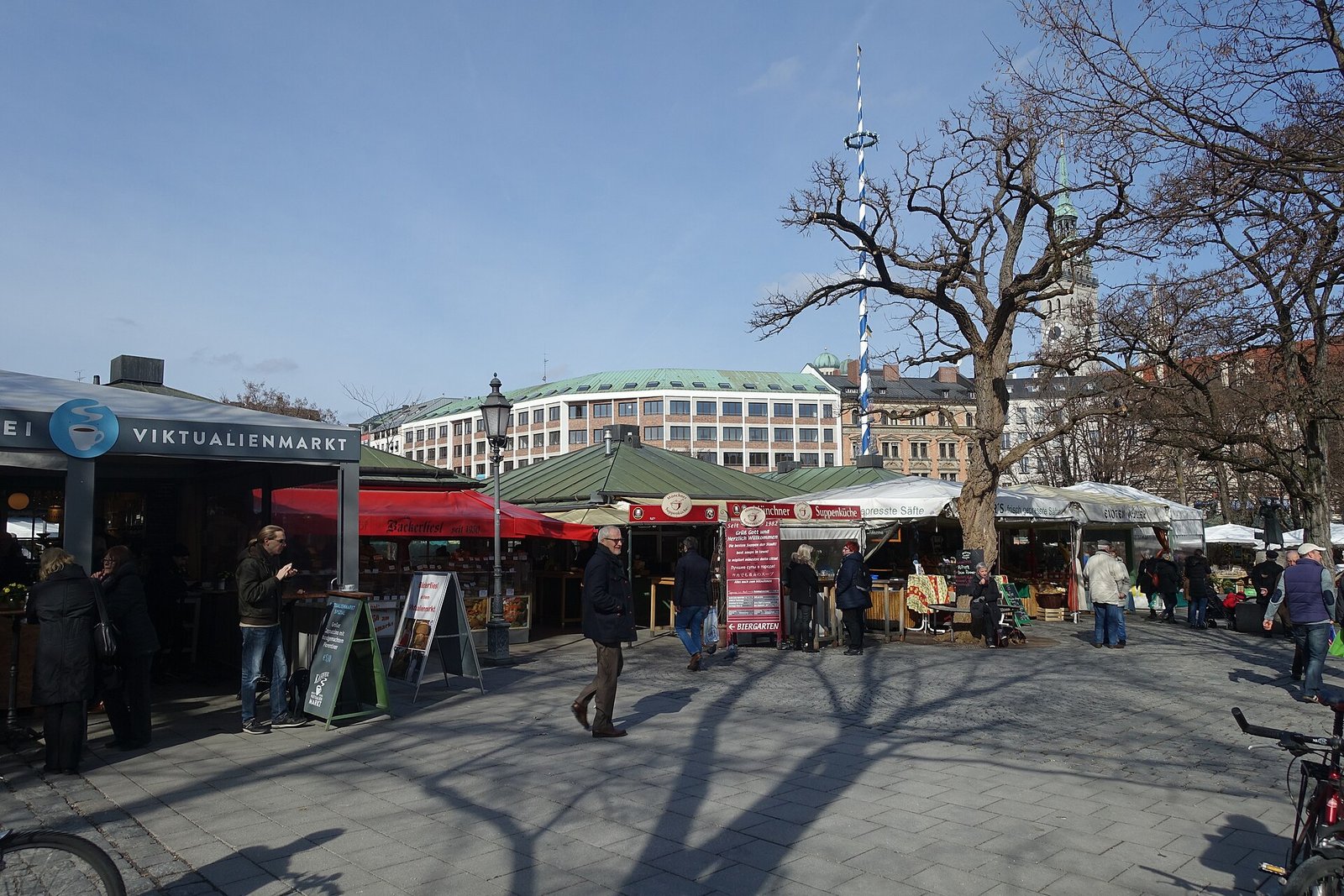
- The Viktualienmarkt, the open-air food market at the edge of the old town
- Nymphenburg Palace and its park, a short ride west along the association’s own street
Sources
- Stattreisen München e.V. — Wir über uns (founding year, guides, leadership, philosophy)
- Stattreisen München e.V. — programme and themes
- Stattreisen München e.V. — Impressum (legal form, address)
- OpenStreetMap — Stattreisen München e.V., Nymphenburger Straße 149 (coordinates)
Find it on the map
See this place and what’s around it →📷 Become a Cultural Heritage Online photographer
Share your photos of places: they stay published under your name as the author. The more they're seen, the more you get noticed — and soon a contest will reward the most appreciated photos.
Log in or sign up free to add a photoIs this page about you?
This page is read by travellers and heritage enthusiasts who find it on Google. Tell us how you are connected to this place and we will take it from there.