
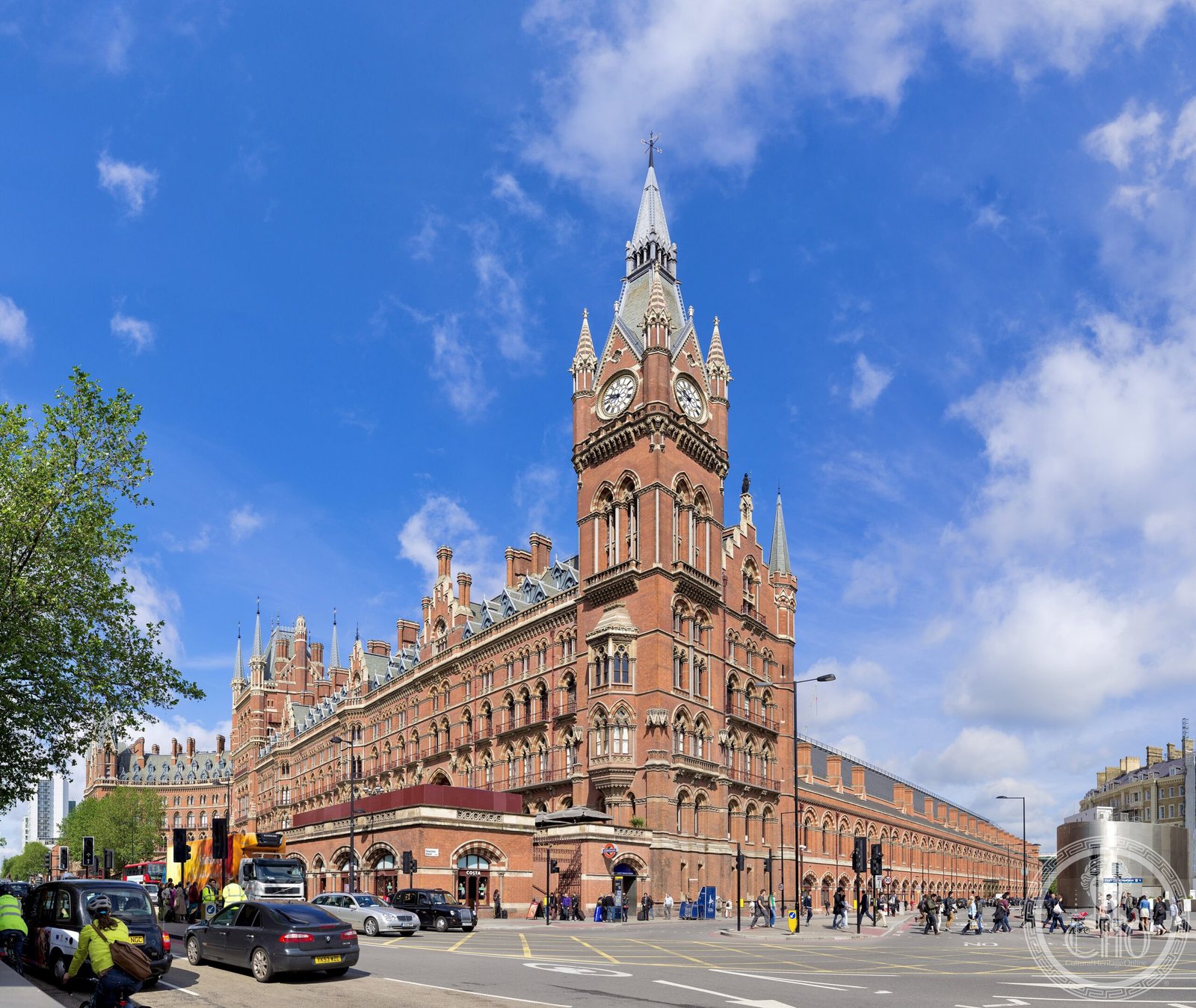
A Victorian railway terminus transformed into Europe’s gateway, St Pancras combines engineering audacity with Gothic grandeur. Its soaring wrought-iron roof once enclosed the world’s largest interior space; today it welcomes millions crossing the Channel Tunnel to mainland Europe.
At a glance
St Pancras International stands on Euston Road as one of London’s largest transport hubs, serving Eurostar passengers to Belgium, France and the Netherlands alongside domestic rail networks reaching the Midlands, North England, Kent, and the South Coast. The 1868 terminus sits adjacent to King’s Cross station and shares an underground connection via King’s Cross St Pancras tube station.
History
The Midland Railway commissioned the station after traffic congestion following the 1862 International Exhibition convinced directors they needed their own dedicated London terminus. Architect William Henry Barlow designed a revolutionary single-span roof 689 feet long, 240 feet wide, and 100 feet high—the largest enclosed space in the world when completed.
The station opened on 1 October 1868. The Midland Grand Hotel rose on its façade shortly after, its ornate Gothic red-brick design winning a competition judged by George Gilbert Scott.
St Pancras faced demolition in the 1960s. A campaign led by the Victorian Society, preservationist Jane Hughes Fawcett, and Poet Laureate John Betjeman succeeded in securing Grade I listed status just ten days before scheduled destruction. Wartime bomb damage in both World Wars preceded this reprieve.
A comprehensive £800 million refurbishment began at the century’s turn, preparing the station for Eurostar’s arrival. Queen Elizabeth II opened the restored terminus in November 2007, completing its reinvention as a European transport gateway.
What you see
Barlow’s wrought-iron roof remains the architectural marvel. Its elegant span—unsupported by pillars in the train shed—demonstrates Victorian engineering at its zenith. The proportions are breathtaking: vast, soaring, rational.
Scott’s Midland Grand Hotel dominates the street frontage with polychromatic brick, spires, and Gothic details. The restored complex now contains thirteen numbered platforms, two lettered platforms for Eurostar, a shopping centre, and coach facilities accommodating contemporary passenger volumes.
Cultural significance
St Pancras exemplifies Victorian confidence in progress and industrial design. Its survival represents a pivotal moment in British conservation—when preservation advocates challenged demolition logic and won. The station’s rescue catalysed broader appreciation for Victorian architecture.
Today it embodies the Channel Tunnel’s promise of continental connectivity, yet anchors London’s identity through its uncompromised architectural heritage.
Key facts
- Location: Euston Road, London Borough of Camden, United Kingdom
- Coordinates: 51.53°N, 0.125°W
- Opened: 1 October 1868
- Architect: William Henry Barlow (station); George Gilbert Scott (Midland Grand Hotel)
- Roof span: 689 feet (210 m) long × 240 feet (73 m) wide × 100 feet (30 m) high
- Listed status: Grade I (awarded 1967)
- Refurbishment: £800 million (completed November 2007)
- Ownership: HS1 Ltd; managed by Network Rail (High Speed)
Practical information & getting there
St Pancras International is accessible via the London Underground at King’s Cross St Pancras station (lines: Circle, Hammersmith & City, Metropolitan, Northern, Piccadilly, Victoria). National and international services depart from multiple platforms throughout the day. For current timetables and journey planning, consult National Rail Enquiries or Eurostar directly.
Sources & resources
Find it on the map
See this place and what’s around it →📷 Become a Cultural Heritage Online photographer
Share your photos of places: they stay published under your name as the author. The more they're seen, the more you get noticed — and soon a contest will reward the most appreciated photos.
Log in or sign up free to add a photoIs this page about you?
This page is read by travellers and heritage enthusiasts who find it on Google. Tell us how you are connected to this place and we will take it from there.