

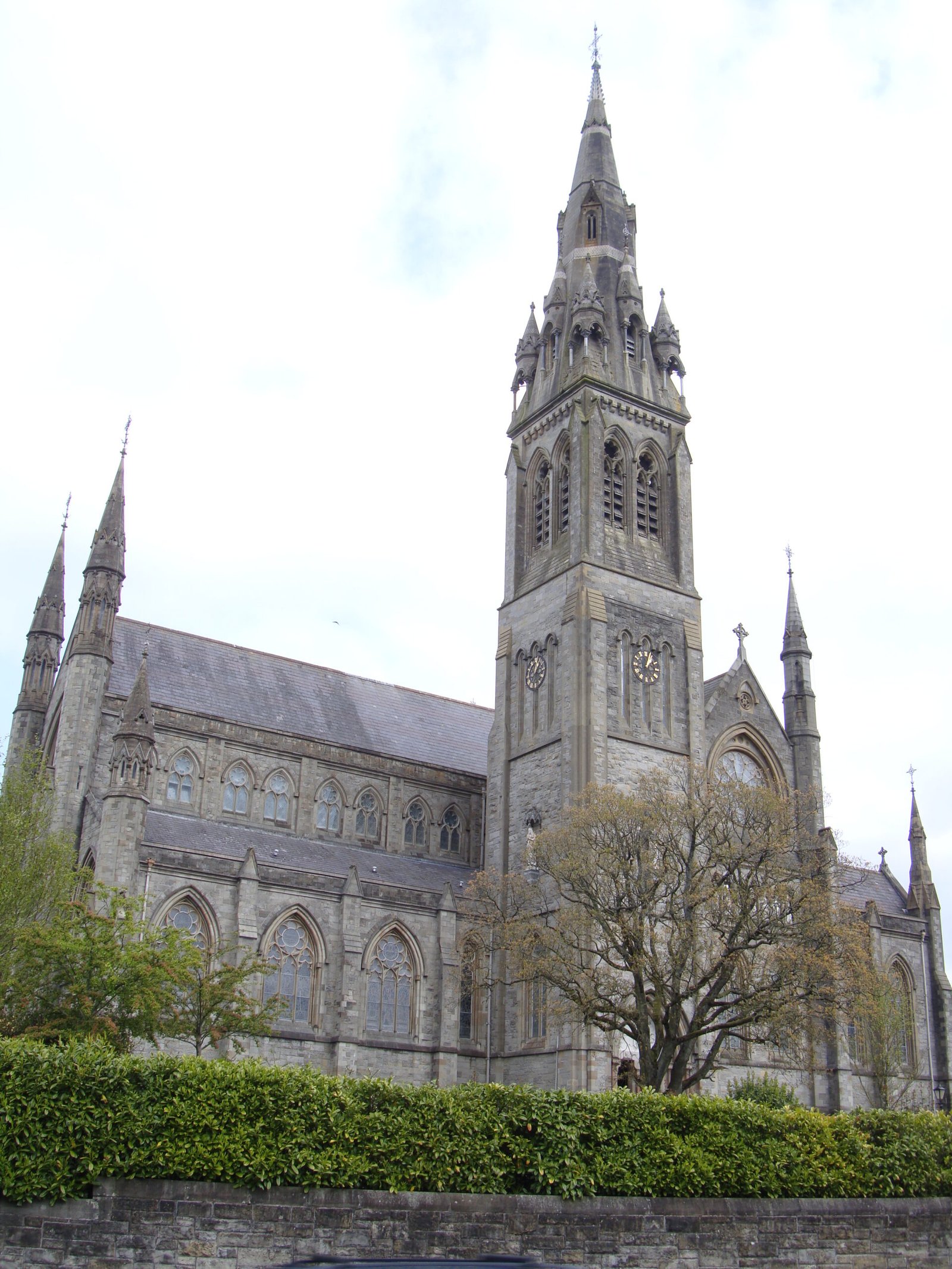
The cathedral church of the Roman Catholic Diocese of Clogher, St Macartan’s stands as Monaghan’s only cathedral and a landmark of Victorian ecclesiastical ambition in Ulster.
At a glance
A substantial Victorian cathedral completed over three decades. Built to serve the spiritual life of the Catholic diocese, it remains the principal church of its region and an architectural statement of 19th-century religious confidence.
History
Construction began in 1861 and continued until 1893, a 32-year project reflecting the scale of ambition and the resources mobilised by the Diocese of Clogher. The extended building campaign suggests iterative design choices and evolving architectural vision across the Victorian era.
What you see
St Macartan’s embodies the architectural language of mid-to-late Victorian church design. As Monaghan’s sole cathedral, it commands presence in the townland of Latlurcan within the town proper.
Cultural significance
The cathedral represents a pivotal moment in Irish Catholic institutional development during the post-Famine era, when the Church reasserted its presence and influence across the island through ambitious building programmes. It continues to anchor religious and community life in Monaghan.
Key facts
- Country: Ireland
- City: Monaghan
- Diocese: Roman Catholic Diocese of Clogher
- Built: 1861–1893
- Coordinates: 54.24444°N, 6.95833°W
Practical information & getting there
St Macartan’s is located in Monaghan town, in the ecclesiastical parish of Monaghan and Rackwallace. For visiting hours, service times and visitor information, contact the Diocese of Clogher directly.
Sources & resources
Find it on the map
See this place and what’s around it →📷 Become a Cultural Heritage Online photographer
Share your photos of places: they stay published under your name as the author. The more they're seen, the more you get noticed — and soon a contest will reward the most appreciated photos.
Log in or sign up free to add a photoIs this page about you?
This page is read by travellers and heritage enthusiasts who find it on Google. Tell us how you are connected to this place and we will take it from there.