
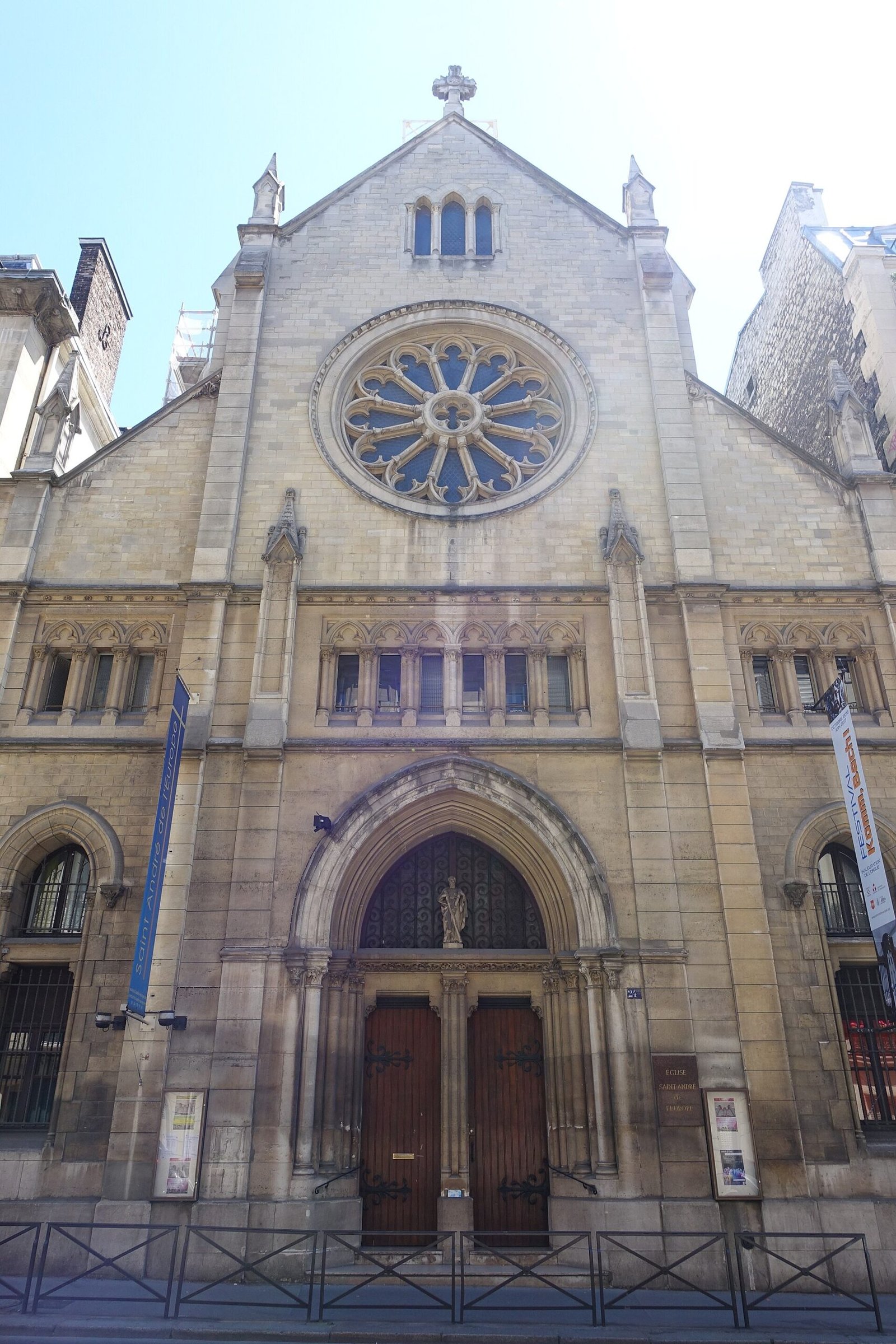
A modest Catholic chapel built for a religious community in mid-nineteenth-century Paris, this church exemplifies the modest devotional architecture of the Second Empire.
At a glance
Saint-André-de-l’Europe is a Catholic church in the 8th arrondissement, built as a chapel for the convent of the Missionary Oblates of Mary Immaculate. Designed by architect Lucien Douillard and completed in 1860, it remains a working parish church.
History
The chapel was constructed in 1860 by architect Lucien Douillard. It was commissioned to serve the convent of the Missionary Oblates of Mary Immaculate, a religious community dedicated to pastoral work and missionary activity.
What you see
The church was designed by Lucien Douillard and reflects the architectural tastes of the Second Empire period. As a chapel originally built for convent use, its design prioritized functional simplicity suited to communal worship.
Cultural significance
The church represents the expansion of Catholic institutional life in Paris during the 1860s, a period of renewed religious building across the capital. It demonstrates the role of religious orders in shaping the spiritual infrastructure of nineteenth-century urban Paris.
Key facts
- Location: 24 Rue de Saint-Pétersbourg, 8th arrondissement, Paris
- Country: France
- Date completed: 1860
- Architect: Lucien Douillard
- Original purpose: Chapel for the convent of the Missionary Oblates of Mary Immaculate
- Coordinates: 48.88152, 2.32585
Practical information & getting there
The church is located on Rue de Saint-Pétersbourg in the 8th arrondissement. For visiting hours and current information, consult local resources or the church directly.
Sources & resources
Find it on the map
See this place and what’s around it →📷 Become a Cultural Heritage Online photographer
Share your photos of places: they stay published under your name as the author. The more they're seen, the more you get noticed — and soon a contest will reward the most appreciated photos.
Log in or sign up free to add a photoIs this page about you?
This page is read by travellers and heritage enthusiasts who find it on Google. Tell us how you are connected to this place and we will take it from there.