
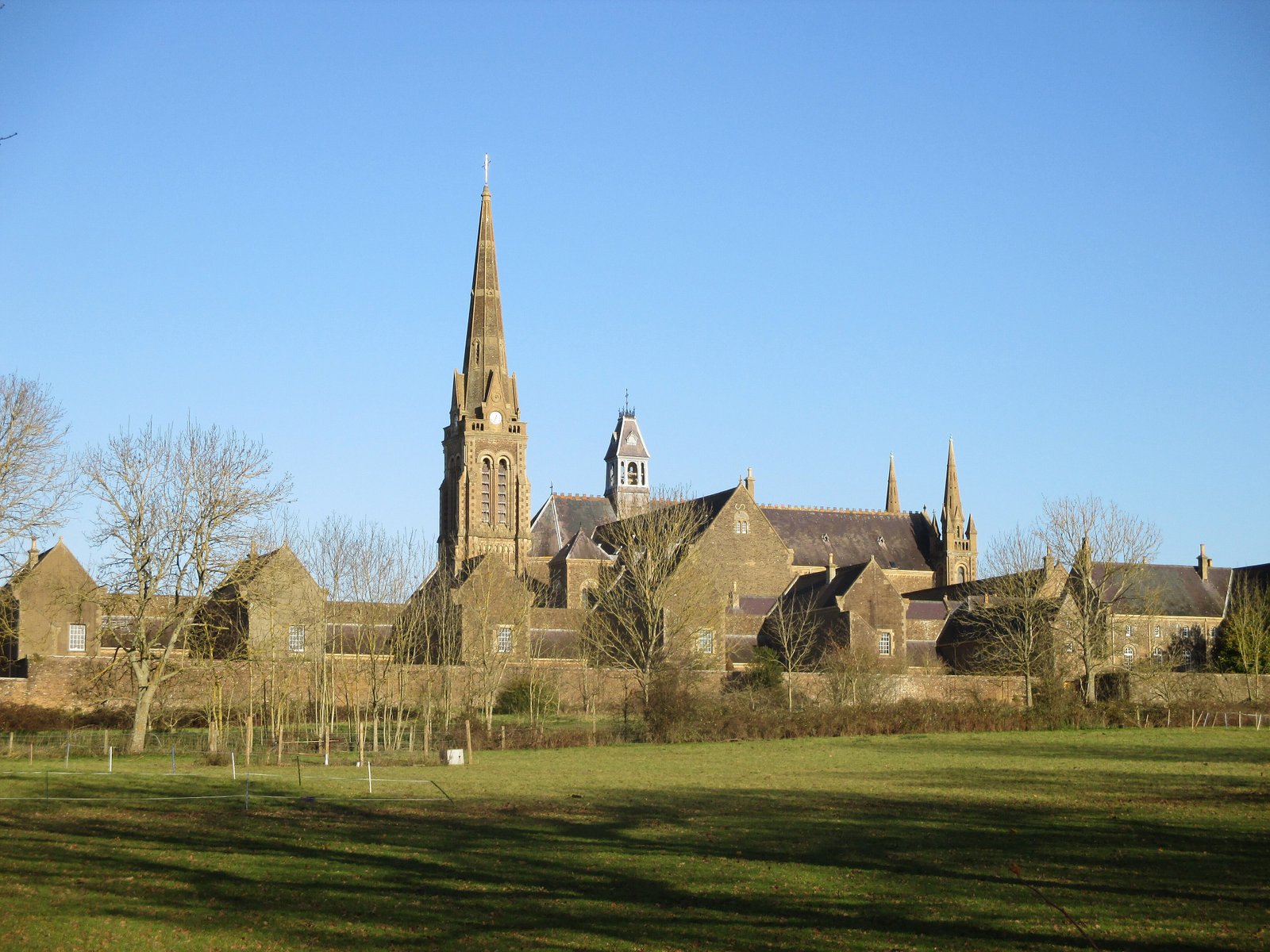
England’s sole post-Reformation Carthusian monastery, St Hugh’s Charterhouse stands as a rare survival of monastic life after the dissolution of the monasteries.
At a glance
St Hugh’s Charterhouse, also known as Parkminster, is a working Carthusian monastery in the parish of Cowfold, West Sussex. It represents a unique historical continuity in British religious architecture and practice, being the only Carthusian house established after the Reformation in the United Kingdom.
History
Founded after the Reformation, St Hugh’s Charterhouse broke centuries of disruption to the monastic Carthusian tradition in Britain. The monastery represents a remarkable revival of contemplative religious life in post-medieval England, maintaining the austere practices and communal structures of the Carthusian order into the modern era.
What you see
The monastery comprises the built structures necessary for Carthusian life, traditionally organized around individual cells for monks alongside communal spaces for worship and administration. The Grade II* listed designation reflects the architectural and historical importance of the complex.
Cultural significance
St Hugh’s Charterhouse holds exceptional significance as evidence of religious continuity and revival. It testifies to the persistence of the Carthusian contemplative tradition and demonstrates how monastic life adapted and endured in Protestant England, offering insights into post-Reformation Catholic resilience and spirituality.
Key facts
- Location: Cowfold, West Sussex, United Kingdom
- Coordinates: 50.97°N, 0.28°W
- Heritage status: Grade II* listed building
- Distinction: Only post-Reformation Carthusian monastery in the UK
Practical information & getting there
St Hugh’s Charterhouse is located in West Sussex, accessible via Cowfold. The monastery remains an active religious community; visitors should contact the monastery directly regarding access, as the contemplative nature of Carthusian life limits public visiting hours.
Sources & resources
Find it on the map
See this place and what’s around it →📷 Become a Cultural Heritage Online photographer
Share your photos of places: they stay published under your name as the author. The more they're seen, the more you get noticed — and soon a contest will reward the most appreciated photos.
Log in or sign up free to add a photoIs this page about you?
This page is read by travellers and heritage enthusiasts who find it on Google. Tell us how you are connected to this place and we will take it from there.