
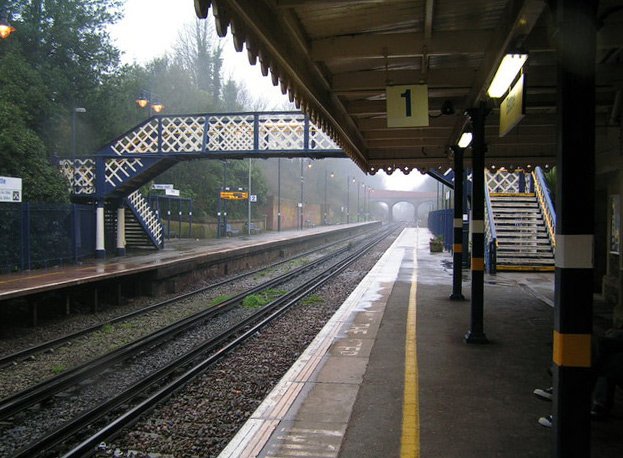
A Victorian Gothic station on the Hastings line, where Victorian architecture meets modern rail travel 89 kilometres south of London.
At a glance
Battle railway station opened in January 1852 as part of the Hastings railway line. The Grade II listed station building was designed by William Tress in the Gothic style and remains one of the line’s most distinctive architectural features. Today, Southeastern operates all services through the station.
History
The station opened on 1 January 1852, with the main line to Hastings following a month later. The Victorian infrastructure has been substantially modified to meet modern railway demands. In 1986, British Rail electrified the line, prompting the extension of both platforms to accommodate eight-carriage trains.
What you see
William Tress’s Gothic-style station building, Grade II listed, anchors the site with period character. Two staggered platforms are connected by a footbridge with steps on both sides. The station house contains a ticket office and waiting room. Originally serviced by multiple sidings, the railway yard has been transformed: the sidings have been removed and now form part of the car park.
Cultural significance
Battle station represents the railway architecture of mid-Victorian England. Its Gothic design reflects the aesthetic confidence of the 1850s railway boom, while its structural modifications trace the technological evolution of British railways through electrification and capacity expansion.
Key facts
- Opened: 1 January 1852
- Designer: William Tress
- Style: Gothic
- Operator: Southeastern
- Distance from London Charing Cross: 89.4 km (55 miles 46 chains)
- Listed status: Grade II
- Location: 50.913°N, 0.495°E
Practical information & getting there
Battle station is served by Southeastern trains on the Hastings line. Train information is displayed via automated announcements, digital displays, and printed timetables. The station includes basic facilities: ticket office and waiting room. A footbridge with steps on both sides provides platform access.
Sources & resources
Find it on the map
See this place and what’s around it →📷 Become a Cultural Heritage Online photographer
Share your photos of places: they stay published under your name as the author. The more they're seen, the more you get noticed — and soon a contest will reward the most appreciated photos.
Log in or sign up free to add a photoIs this page about you?
This page is read by travellers and heritage enthusiasts who find it on Google. Tell us how you are connected to this place and we will take it from there.