
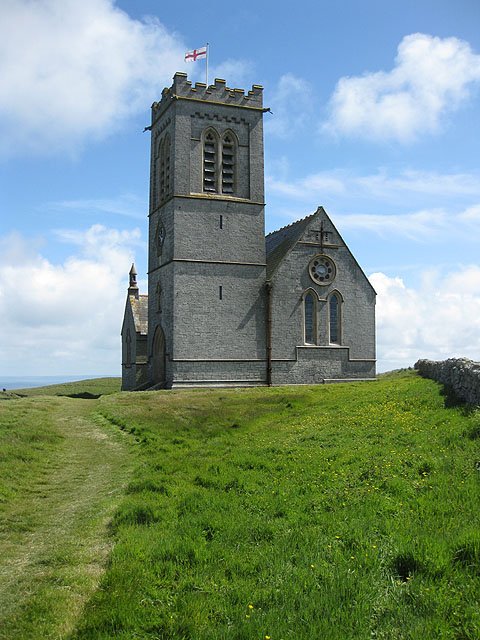
A modest Anglican parish church on a remote island in the Bristol Channel, serving the isolated community of Lundy with irregular services and open hospitality to visitors.
At a glance
St Helen’s Church stands on Lundy, a 445-hectare island 19 kilometres off the north Devon coast. The island’s isolation means the church operates without a resident priest, yet it remains an active place of worship and welcome. Part of the Diocese of Exeter, it reflects the spiritual life of one of England’s most remote inhabited islands.
History
The church’s origins and construction date are not detailed in available sources. Its long presence on the island marks centuries of Christian practice among Lundy’s small, fluctuating population.
What you see
St Helen’s is a parish church of modest proportions, built to serve the island’s community. Architectural details and stylistic features await fuller documentation.
Cultural significance
The church represents continuity of faith and community on one of Britain’s most isolated inhabited islands. Its irregular schedule reflects the practical challenges of island life while maintaining its role as a spiritual anchor for residents and a point of pilgrimage for visitors. The church exemplifies how religious institutions adapt to extreme remoteness.
Key facts
- Location: Lundy Island, 19 km (12 miles) off the north Devon coast
- Island size: 445 hectares (1,100 acres)
- Denomination: Anglican parish church
- Diocese: Exeter
- Coordinates: 51.16°N, 4.66°W
- Country: United Kingdom
- County: Devon
Practical information & getting there
Lundy is reached by boat from Bideford or Ilfracombe on the Devon coast; crossing takes 50 minutes to two hours. St Helen’s Church is open to visitors, though services are held irregularly due to the absence of a resident priest. Check ahead with island authorities for service times and accessibility before planning a visit.
Sources & resources
Find it on the map
See this place and what’s around it →📷 Become a Cultural Heritage Online photographer
Share your photos of places: they stay published under your name as the author. The more they're seen, the more you get noticed — and soon a contest will reward the most appreciated photos.
Log in or sign up free to add a photoIs this page about you?
This page is read by travellers and heritage enthusiasts who find it on Google. Tell us how you are connected to this place and we will take it from there.