
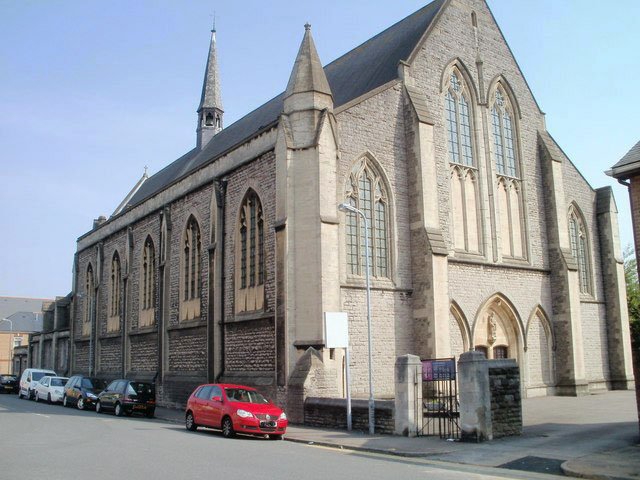
A Grade I Listed parish church in Cardiff’s Adamsdown district, dedicated to St Germanus of Auxerre and a landmark of nineteenth-century Welsh ecclesiastical architecture.
At a glance
St German’s Church stands at the corner of Star Street and Metal Street in Adamsdown. Built in the nineteenth century, it remains one of Cardiff’s significant religious structures and is protected as a Grade I Listed building.
History
The church was constructed during the nineteenth century to serve the parish of St German’s in Cardiff. It is dedicated to St Germanus of Auxerre, known in Welsh tradition as Garmon Sant, a fifth-century bishop whose veneration extended into Wales through medieval religious practice.
What you see
The building occupies a prominent corner site in the industrial district of Adamsdown. Its Grade I listing reflects architectural merit and historical importance within Cardiff’s built heritage.
Cultural significance
St German’s Church represents nineteenth-century parish church provision during Cardiff’s period of urban expansion. The church serves as a monument to Welsh religious tradition and the veneration of early Christian saints within the Welsh church.
Key facts
- Country: United Kingdom
- City: Cardiff
- Coordinates: 51.4845, -3.1595
- Grade I Listed building
- Located at corner of Star Street and Metal Street, Adamsdown
Practical information & getting there
St German’s Church is located in the Adamsdown neighbourhood of Cardiff, accessible via Star Street and Metal Street. For current visiting hours and services, contact the church or local Cardiff tourism information.
Sources & resources
Find it on the map
See this place and what’s around it →📷 Become a Cultural Heritage Online photographer
Share your photos of places: they stay published under your name as the author. The more they're seen, the more you get noticed — and soon a contest will reward the most appreciated photos.
Log in or sign up free to add a photoIs this page about you?
This page is read by travellers and heritage enthusiasts who find it on Google. Tell us how you are connected to this place and we will take it from there.