
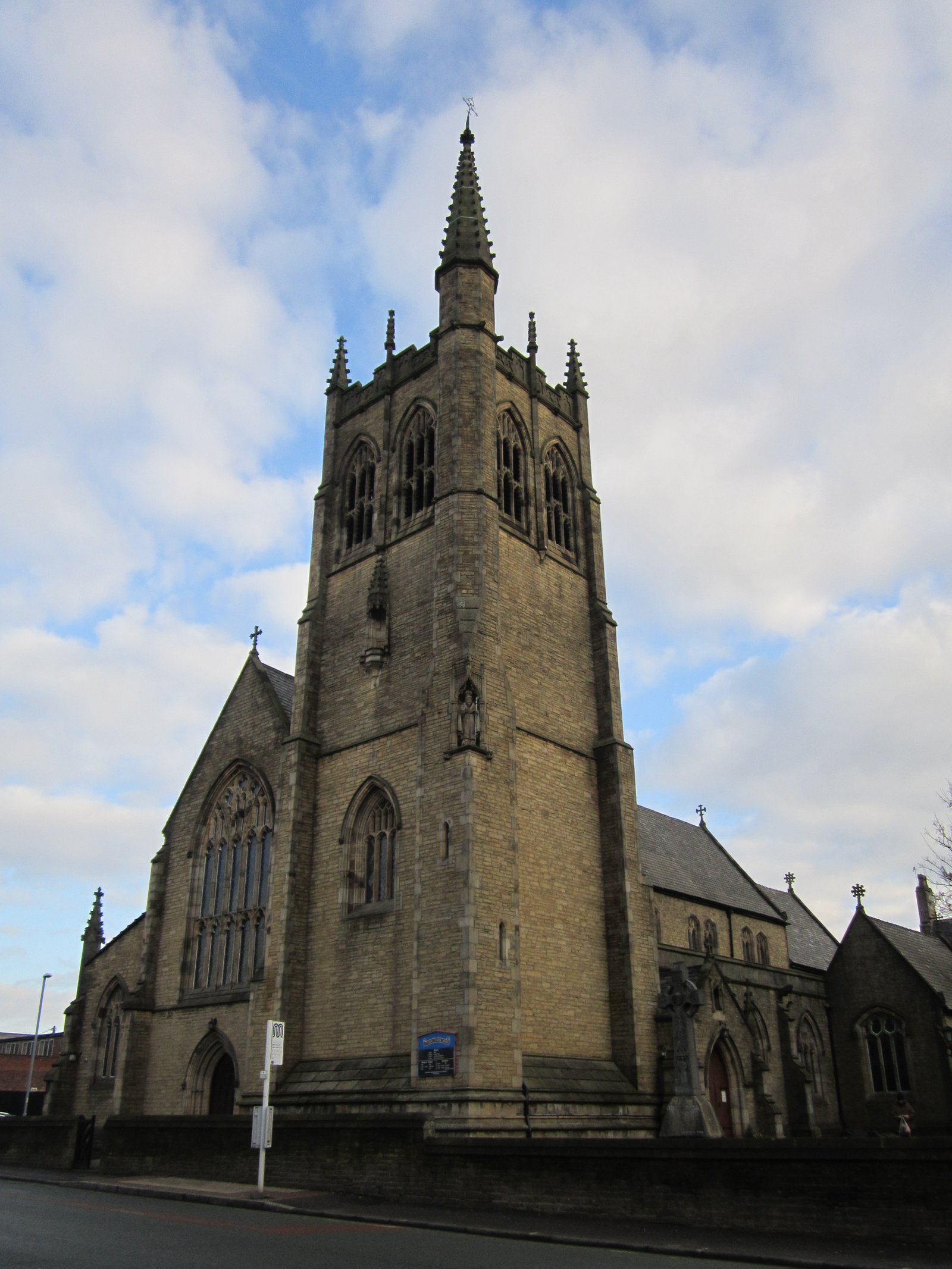
A Grade II listed Catholic church in Cheetham Hill, Manchester Oratory stands as a modest but significant expression of 19th-century English Catholic faith and architecture.
At a glance
Manchester Oratory is a Catholic church located on the east side of Cheetham Hill Road in the Cheetham Hill district of Manchester. Built in the mid-19th century, it remains a functioning parish church under the Roman Catholic Diocese of Salford and carries Grade II listed status.
History
The church was constructed between 1846 and 1847, a period of growing Catholic emancipation and expansion in England following the Catholic Relief Act of 1829. Its establishment in Manchester reflects the city’s expanding Catholic community during the Industrial Revolution. The parish continues to serve the local Catholic population under the Diocese of Salford.
What you see
As a Grade II listed building, Manchester Oratory retains architectural features representative of mid-Victorian Catholic church design. The structure occupies a prominent position on Cheetham Hill Road, marking a significant landmark in the neighborhood’s religious landscape.
Cultural significance
Manchester Oratory represents an important chapter in English Catholic history, embodying the community’s growing visibility and institutional presence following decades of legal restriction. The church’s survival and Grade II listing underscore its value as a historical and architectural record of 19th-century Manchester.
Key facts
- Country: United Kingdom
- City: Manchester
- Coordinates: 53.4923, -2.2399
- Built: 1846–1847
- Grade II listed status
- Diocese: Roman Catholic Diocese of Salford
Practical information & getting there
Manchester Oratory is located in the Cheetham Hill area on the east side of Cheetham Hill Road. For current visiting hours, Mass times, and special events, contact the parish directly or consult the Diocese of Salford website.
Sources & resources
Find it on the map
See this place and what’s around it →📷 Become a Cultural Heritage Online photographer
Share your photos of places: they stay published under your name as the author. The more they're seen, the more you get noticed — and soon a contest will reward the most appreciated photos.
Log in or sign up free to add a photoIs this page about you?
This page is read by travellers and heritage enthusiasts who find it on Google. Tell us how you are connected to this place and we will take it from there.