
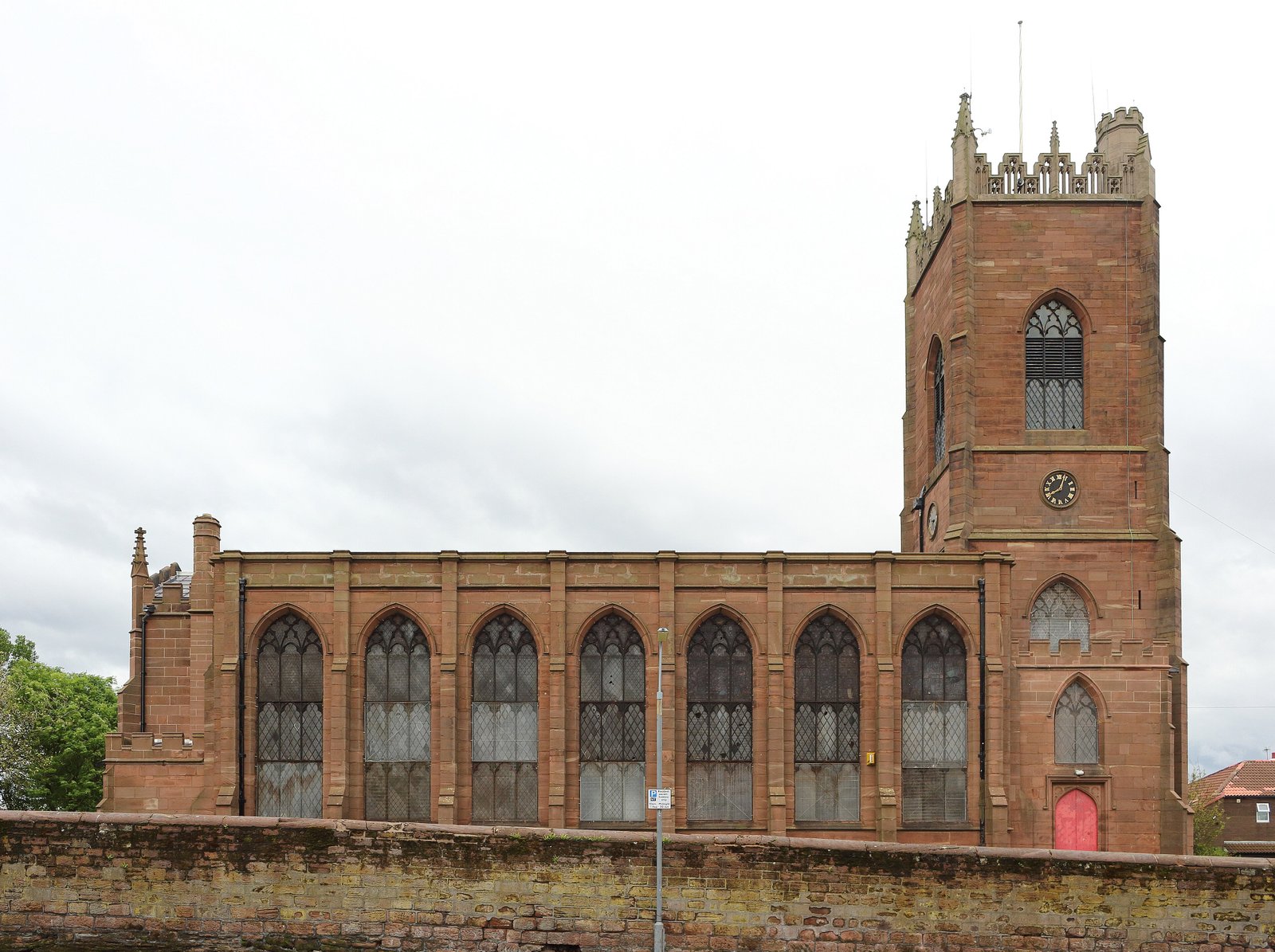
A pioneering Anglican church in Liverpool distinguished by its innovative use of cast-iron architectural components, designed by engineer-architect John Cragg.
At a glance
St George’s stands as an active Anglican parish church in Everton, a district of Liverpool. Designated Grade I listed, it represents an early experiment in industrial materials applied to ecclesiastical architecture. The church belongs to the Diocese of Liverpool, within the Liverpool archdeaconry and Liverpool North deanery.
History
John Cragg, a pioneering designer who operated the Mersey Iron Foundry, designed St George’s as the earliest of three churches he built in Liverpool. His vision incorporated cast-iron components throughout the structure—a bold departure from traditional masonry that reflected the industrial ambitions of early-nineteenth-century Liverpool.
What you see
The church’s most distinctive feature is Cragg’s extensive use of cast iron in its architectural elements. Rather than relying solely on stone and timber, he incorporated iron components manufactured at his own foundry, creating a structure that married engineering innovation with religious purpose.
Cultural significance
St George’s represents a transitional moment in architectural history, when industrial production began reshaping the built environment. Its Grade I listing recognises both its historical importance and the ingenuity of Cragg’s approach to church design. The building testifies to Liverpool’s industrial heritage and the broader nineteenth-century dialogue between manufacturing and design.
Key facts
- Country: United Kingdom
- City: Liverpool, Merseyside
- Coordinates: 53.4253, -2.9715
- Grade I listed building
- Architect: John Cragg
- Active Anglican parish church
Practical information & getting there
St George’s Church is located in Everton, Liverpool. As an active parish church, it welcomes visitors; specific visiting hours and services can be confirmed through local Anglican diocesan information or the church directly.
Sources & resources
Find it on the map
See this place and what’s around it →📷 Become a Cultural Heritage Online photographer
Share your photos of places: they stay published under your name as the author. The more they're seen, the more you get noticed — and soon a contest will reward the most appreciated photos.
Log in or sign up free to add a photoIs this page about you?
This page is read by travellers and heritage enthusiasts who find it on Google. Tell us how you are connected to this place and we will take it from there.